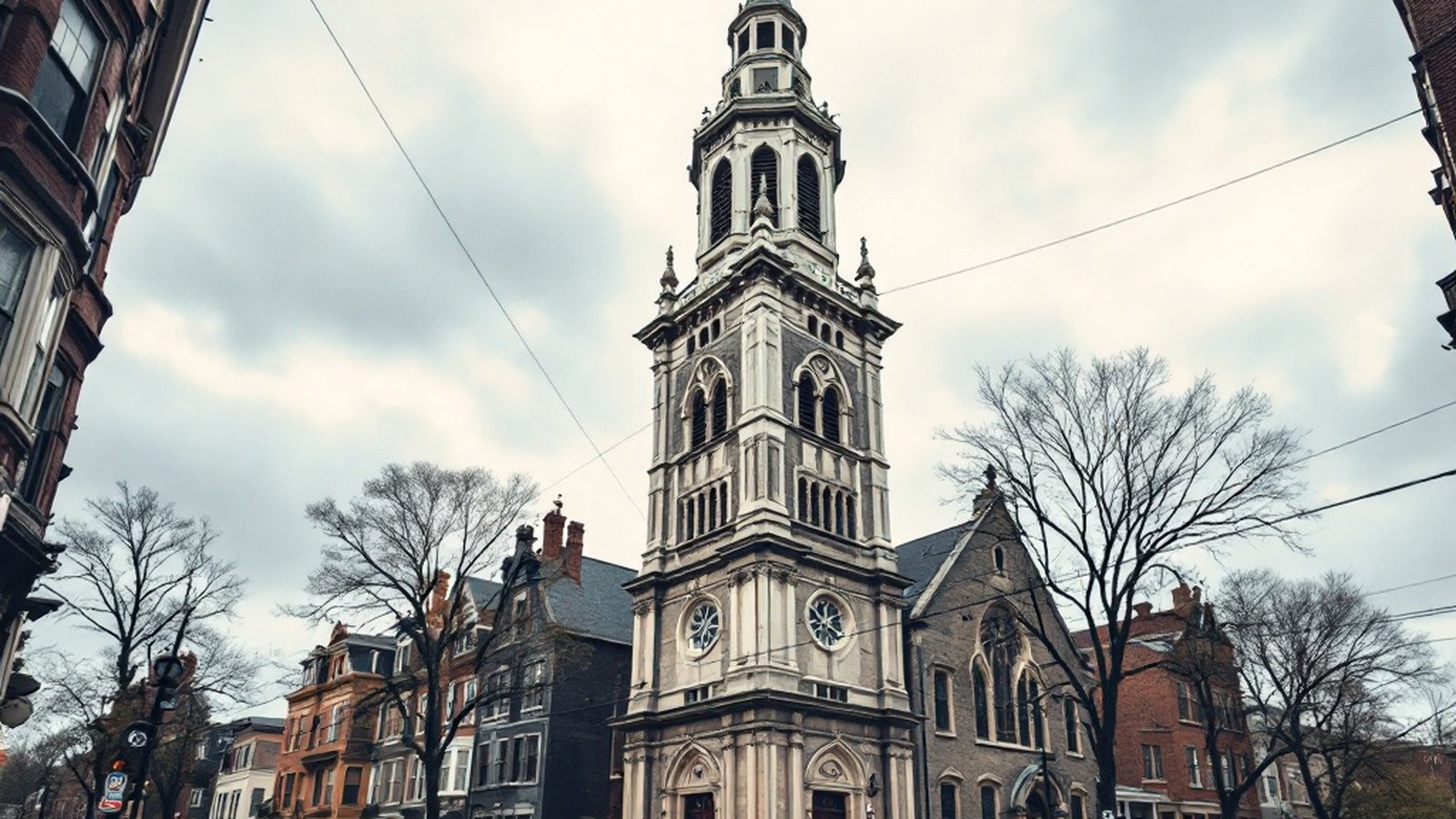
The mill city's ethnic parish grid is one of New England's most legible architectural histories — written in stone, one neighborhood at a time.
Reading the Skyline on Foot
Worcester built itself in layers: each wave of arriving workers — Irish, Swedish, Lithuanian, Polish, French-Canadian, Italian — staked its claim not with a neighborhood name but with a church tower. The result is a grid of parishes that doubles as an ethnic map of industrialisation, and it rewards walking more than most New England cities do. The formula repeats across every hillside: three-decker tenements climbing toward a steeple, a rectory tucked beside it, a parochial school behind. The built hierarchy is almost domestic in scale, yet unmistakably grand.
Start in the Grafton Hill district, where the Gothic Revival stonework of Polish and Lithuanian parishes rises above streets of clapboard three-deckers in a juxtaposition that is pure Worcester. The churches here were conceived as monuments — deliberately oversized for the lots they occupy — because for immigrant congregations without political leverage or economic capital, the building was the statement. Every carved limestone portal and every lancet window was an assertion of permanence in a city that had no particular reason to welcome these newcomers.
Move west toward Main South and the density shifts but the logic holds. French-Canadian parishes favoured a more ornate Beaux-Arts vocabulary; the Italians of the East Side built with campanile accents that would not look out of place in a Veneto hill town. The clergy who served these congregations understood the parish church as both spiritual and civic anchor. Here as elsewhere, their buildings were sized to hold the whole neighbourhood on a Sunday morning.
What makes the walk genuinely instructive is the contrast between exterior bravado and the neighbourhood fabric around it. Worcester's three-decker streets are a vernacular masterclass — stacked porches, narrow lots, tiny yards — and the churches erupt from them like geysers. Neither dwarfs the other; they need each other to make sense. The tenements explain why the towers exist; the towers explain why the tenements cohered into communities rather than just housing.
Several of Worcester's ethnic parishes have merged or closed in recent decades, their buildings repurposed as condominiums or community centres — a melancholy but not uncommon fate. What survives, architecturally, is still remarkable: a city where the built heritage of successive immigrant generations remains legible in stone and brick, neighbourhood by neighbourhood, tower by tower.
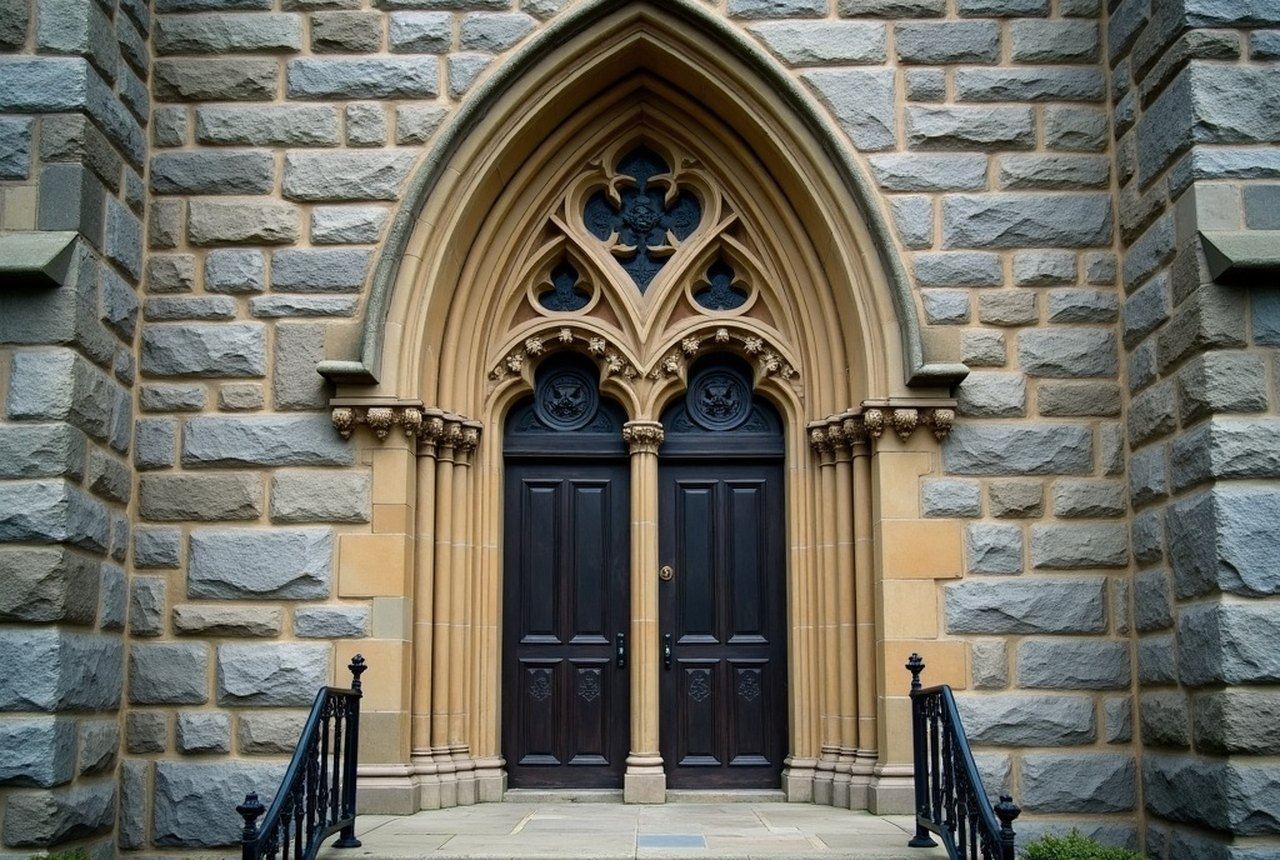
The result is a grid of parishes that doubles as an ethnic map of industrialisation, and it rewards walking more than most New England cities do
