A Tale of Two Parishes
Springfield's industrial boom drew tens of thousands of immigrants into its neighborhoods during the late nineteenth and early twentieth centuries. Among the most architecturally assertive were the French Canadians and the Polish, each community raising churches that announced, with considerable confidence, exactly who they were and where they intended to stay.
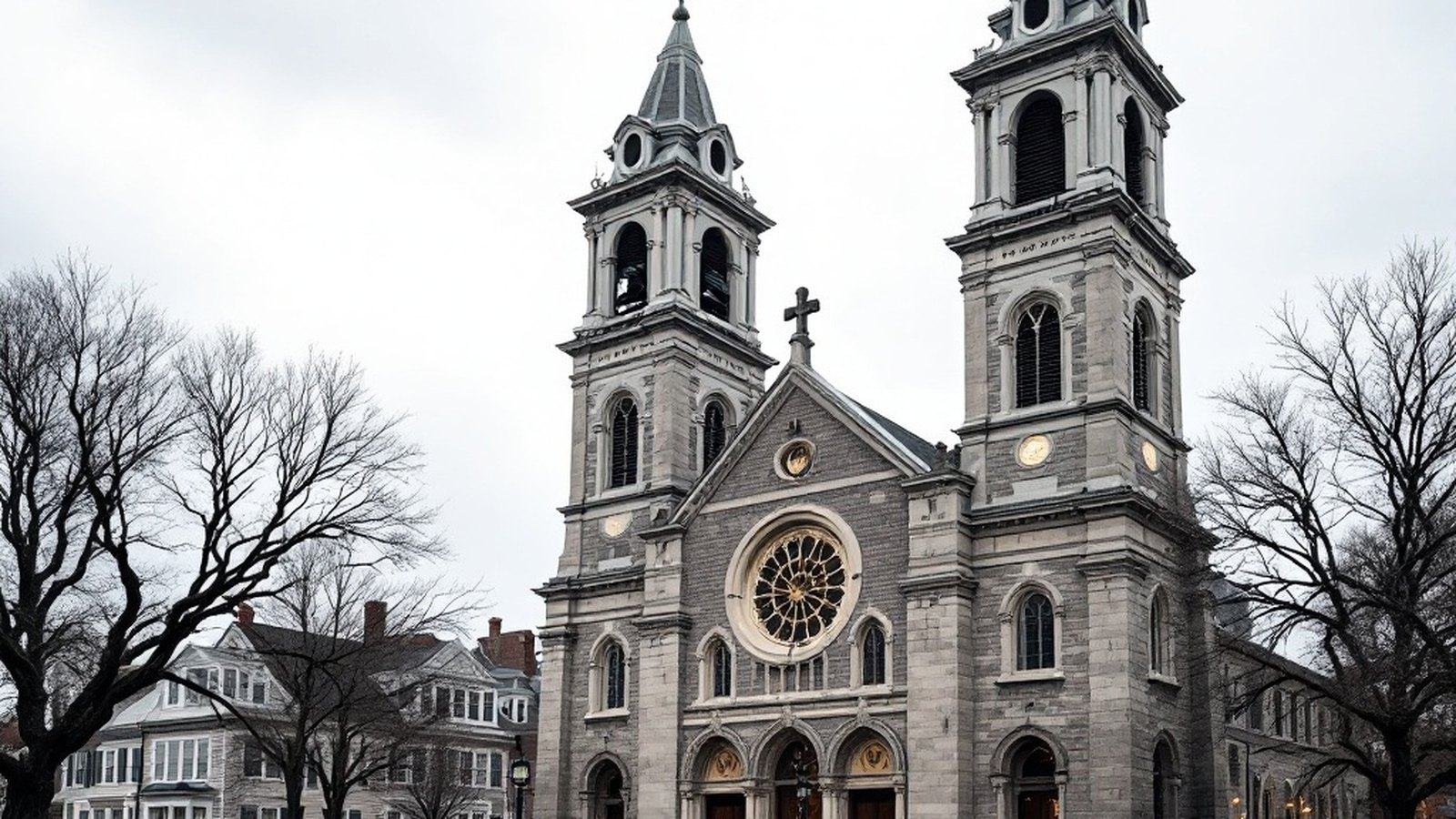
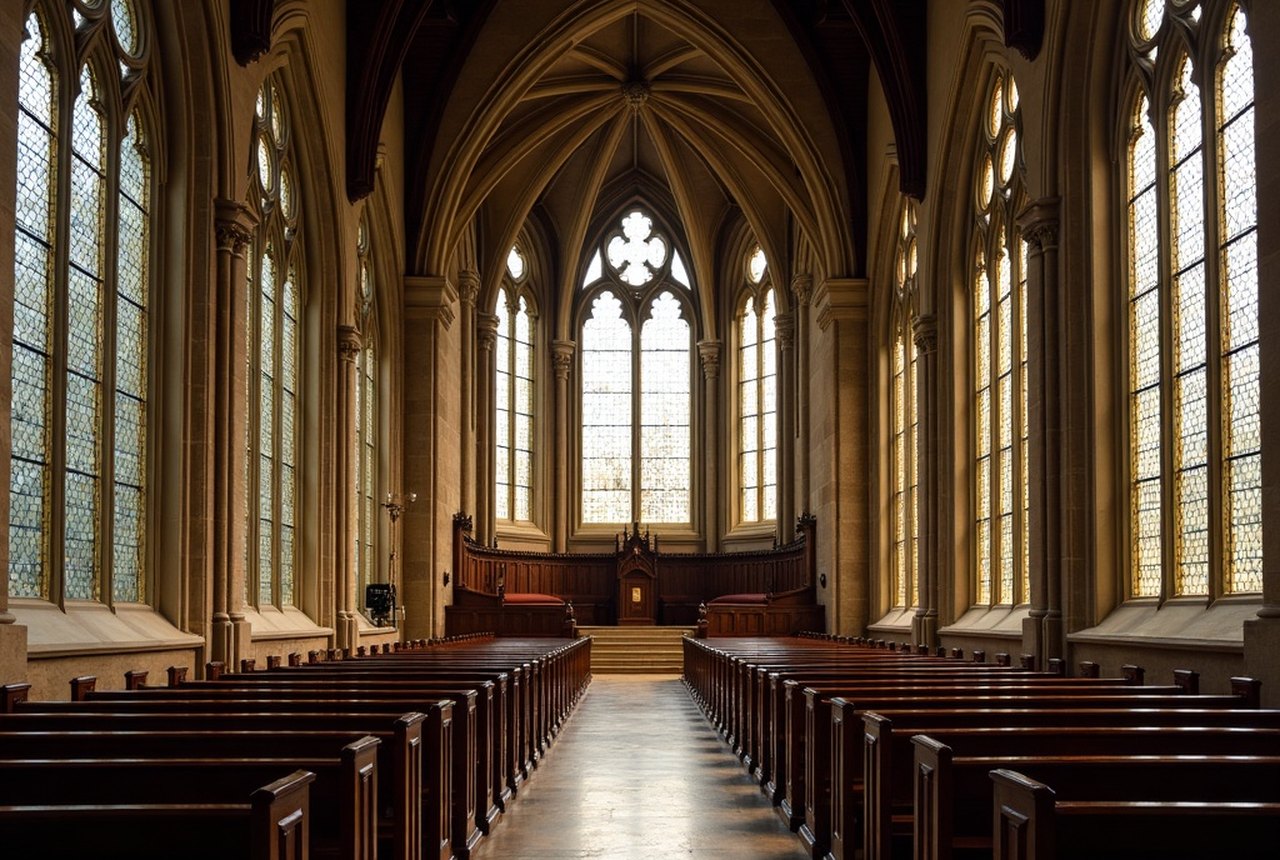
The walk begins at Our Lady of Hope Church in the city's old French quarter, a dignified Romanesque Revival structure whose rounded arches and paired bell towers set the tone for what Franco-American parish life meant in the Diocese of Springfield. The interior rewards a careful look: the clerestory windows bathe the nave in warm amber, and the saints depicted in the stained glass read as a deliberately French roster — Thérèse, Jean Vianney, the Blessed Mother under titles favored by Quebec devotion. The whole ensemble reflects the instinct of French Canadian parishes to reproduce, as faithfully as means allowed, the religious world they had carried south from the St. Lawrence valley.
Stone, Symbol, and the Polish Parish
Three blocks east, the architectural register shifts entirely. St. Stanislaus Bishop and Martyr Church — Springfield's anchor Polish parish, established as that community found its footing in the city's factory wards — presents a facade that leans toward the more ornate, continental Gothic idiom favored by Polish Catholic builders across New England. The verticality is the point: soaring lancet windows, stone detailing at the entrance portal, and a nave proportioned to feel cathedral-like even in a working-class neighborhood. Murals and painted stations of the cross inside carry distinctly Eastern European iconographic conventions — flatter, more icon-adjacent, warmer in palette than the academic realism common in Irish-founded parishes nearby.
The parishioners of both churches sourced labor and craftwork from within their own communities where possible, making these buildings unusually direct records of immigrant skill and aspiration alongside immigrant devotion.
Walking the Quarter
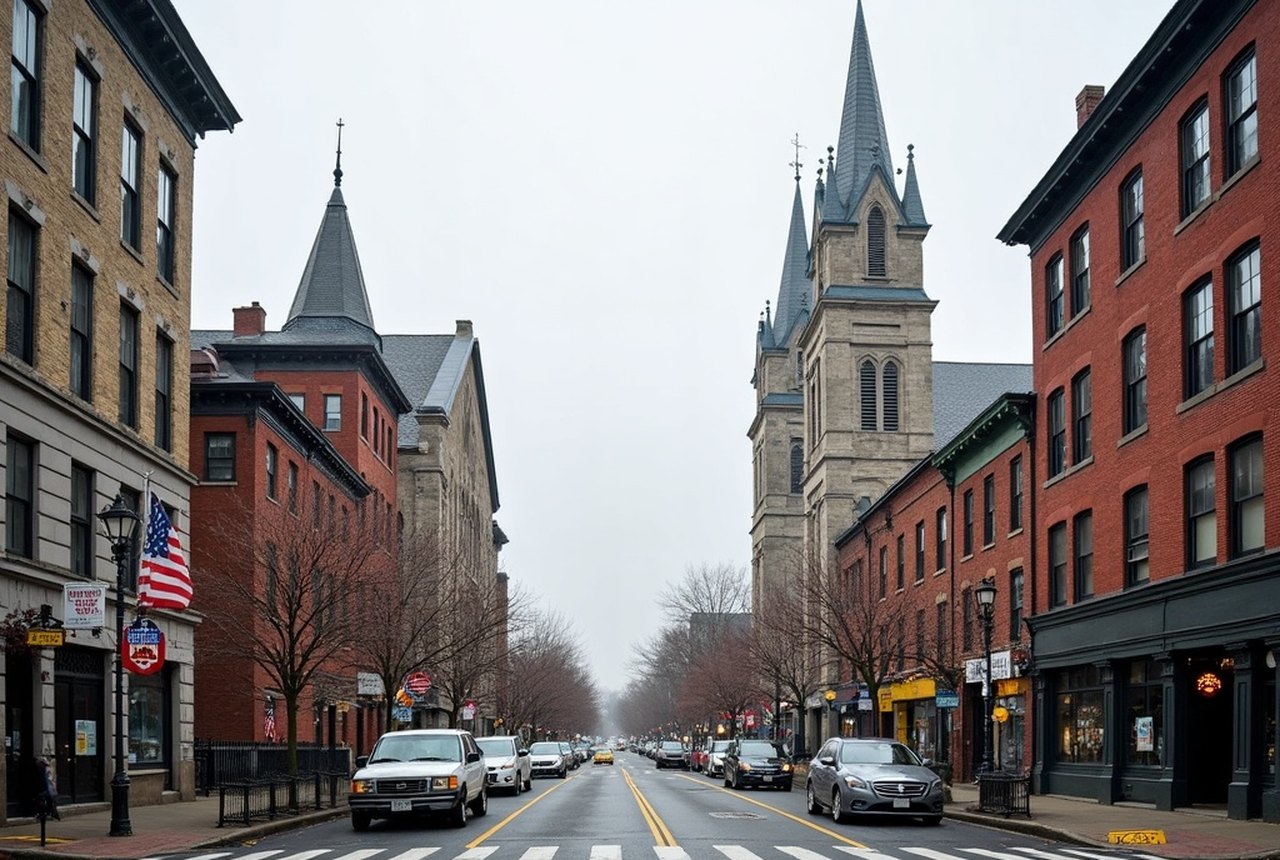
The route between the two churches is short enough for a single afternoon. Allow extra time to examine the streetscape: the remnant triple-deckers, the old fraternal lodge buildings, and the occasional storefront with French or Polish lettering still legible under later paint. Springfield's urban fabric has been hard-used, but enough survives to make the quarter legible as a landscape of arrival and settlement. Both churches remain active parishes under the Diocese of Springfield, and both welcome visitors.
Springfield's industrial boom drew tens of thousands of immigrants into its neighborhoods during the late nineteenth and early twentieth centuries