Where the Whaling Money Went
New Bedford was, for a generation, the richest city per capita in the United States. That wealth came up from the sea in barrels of oil, and it went — in no small part — into stone. The Quaker counting-houses and Federal-style mansions of the County Street hill are well known; less visited, but equally remarkable, are the Catholic churches that rose in the streets below and beyond them, built not by whaling captains but by the men who crewed the ships.
From the Azores — São Miguel, Faial, Pico — they came in waves across the nineteenth and twentieth centuries, drawn by the same vessels that stopped at the islands for provisions and labor. The Azorean and broader Portuguese community that settled New Bedford brought with them a Marian devotion rooted in island Catholicism: festa processions, the cult of the Holy Ghost, handmade regalia, and a fierce loyalty to the parish as the nucleus of community life. The churches they built are their autobiography in stone and glass.
The Walk
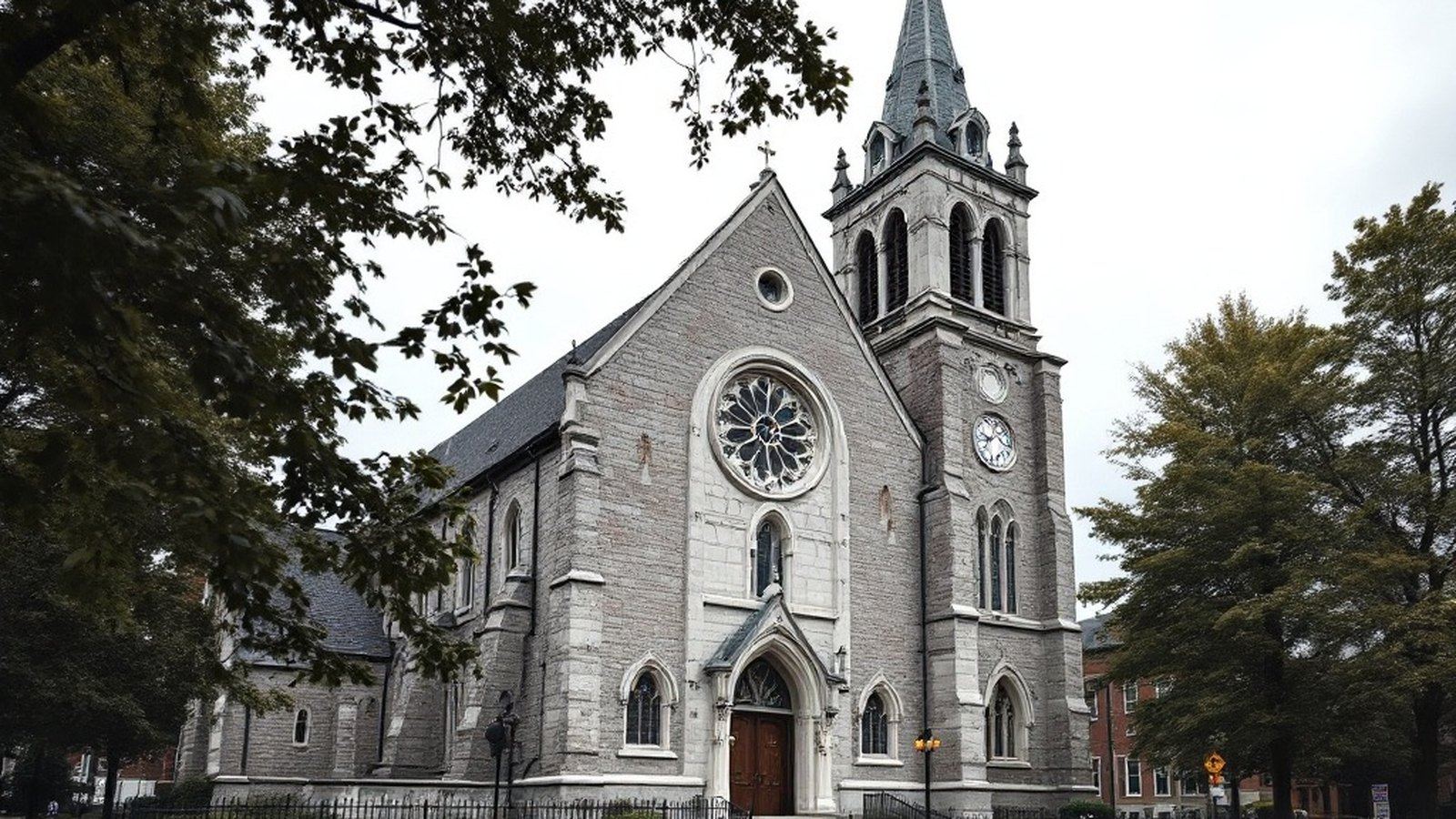
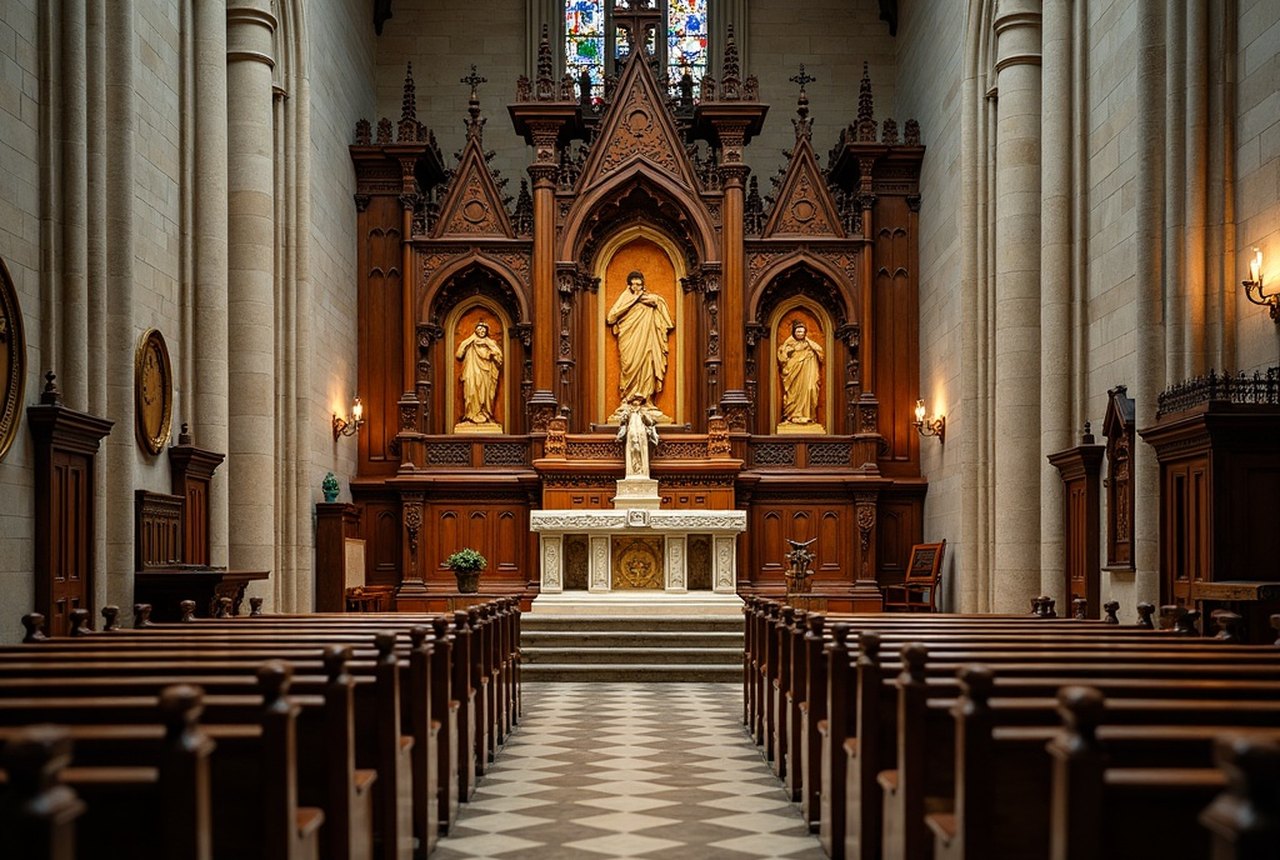
Begin at Our Lady of the Immaculate Conception, on the corner of Earle and County Streets — the oldest Portuguese Catholic parish in the continental United States, founded in 1869. The congregation grew so rapidly that a larger church was eventually erected to replace the original; the building you see today is a substantial granite structure whose interior rewards close attention. The carved wooden reredos and the devotional side altars speak directly to Azorean taste: elaborate, warm, unapologetically ornate against New England restraint.
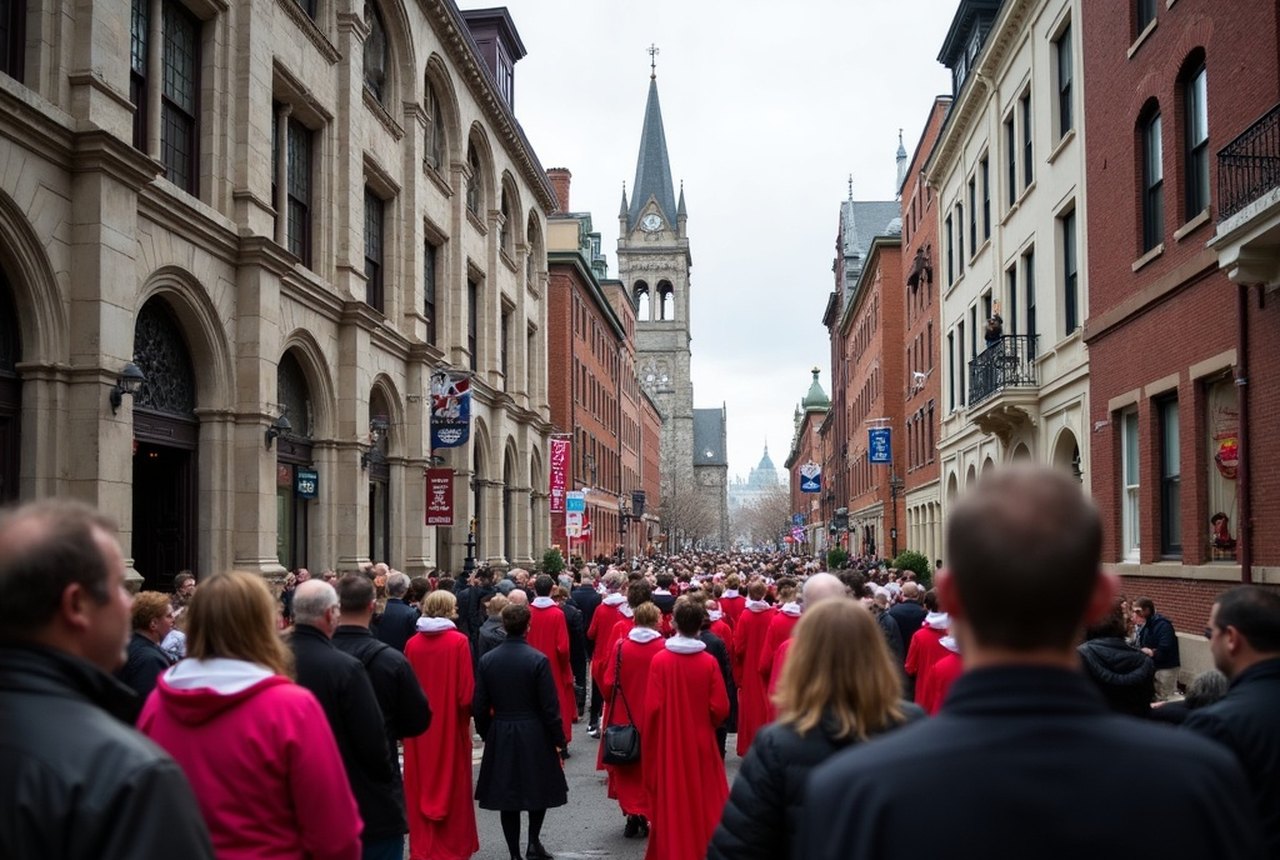
A short walk leads to St. John the Baptist Church, long the heart of Portuguese New Bedford's religious and civic calendar. Its annual Feast of the Blessed Sacrament — held each August and drawing hundreds of thousands of visitors — is the largest Portuguese festival in North America, a living demonstration of how thoroughly a transplanted faith can take root in American soil. The church's interior reflects successive generations of immigrant ambition: pews packed for Sunday Mass, Portuguese sung alongside Latin, the statuary and ex-votos of a community that bargained hard with heaven.
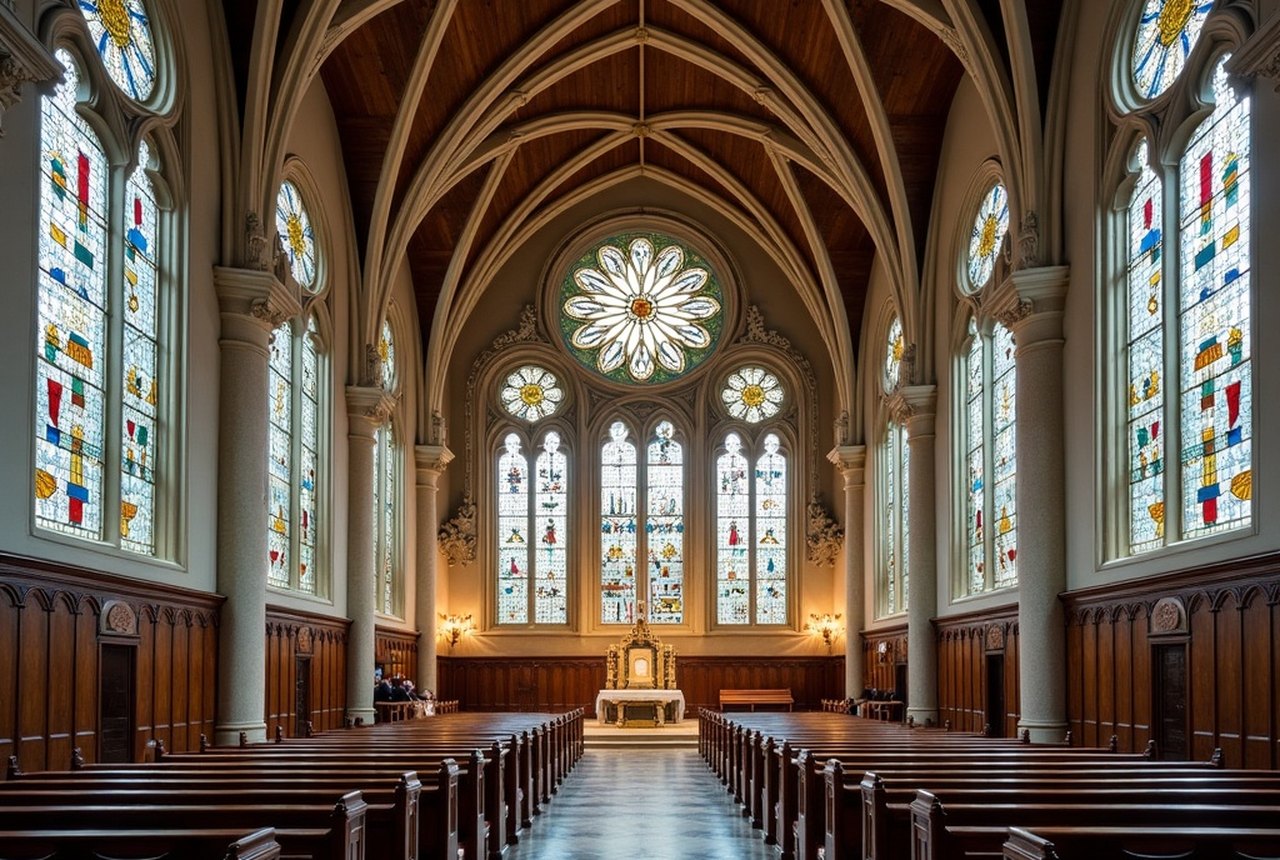
Continue toward the South End to find smaller neighborhood chapels that served pockets of the community too distant or too recently arrived for the anchor parishes. These modest buildings often display the most intimate sacred art: hand-painted tiles, donated by families from specific Azorean villages, function almost as a cartography of origins. Glazed azulejo panels and locally commissioned stained glass exist side by side here, a layering that no single founding moment can explain.
The walk is not only Portuguese. New Bedford's Catholic landscape also includes significant Irish- and French Canadian–built churches from the same era — sturdy Gothic Revival piles in the Patrick Charles Keely tradition, with pointed lancet windows and brick facades that have weathered a century and a half of coastal weather. Reading them against the Portuguese churches sharpens your eye: the contrast between Northern European ecclesiastical sobriety and South Atlantic exuberance is architectural argument without words.
Practical and Historical Notes
New Bedford's historic district — a National Historic Landmark encompassing the waterfront and adjacent streets — provides an unusually walkable corridor. The churches lie within roughly a mile of one another, and most can be viewed from the exterior at any hour; interiors are generally accessible before and after Sunday Masses and during posted visiting hours, though schedules vary seasonally.
The Whaling Museum on Johnny Cake Hill is worth half a day in its own right, and it contextualizes everything the parish walk asks you to feel: the economics that created the labor demand, the routes that brought Azoreans north, the social world in which the parishes functioned as far more than places of worship — as credit networks, mutual-aid societies, and the keepers of sacramental records that were, for many immigrants, their only official documentation.
Come in August if you can. The Feast of the Blessed Sacrament transforms the streets around St. John the Baptist into something that feels genuinely transplanted from the Portuguese islands: charcoal smoke, folk brass bands, enormous quantities of caçoila and linguiça, and a religious procession that stops traffic without apology. Sacred architecture is best understood when you can watch it still in use.
That wealth came up from the sea in barrels of oil, and it went — in no small part — into stone
- 1869Our Lady of the Immaculate Conception parish founded, New Bedford
- 19th–20th centurysuccessive waves of Azorean immigration to New Bedford via whaling routes
- August, annuallyFeast of the Blessed Sacrament at St. John the Baptist, largest Portuguese festival in North America
These modest buildings often display the most intimate sacred art: hand-painted tiles, donated by families from specific Azorean villages, function almost as a cartography of origins