Why Massachusetts
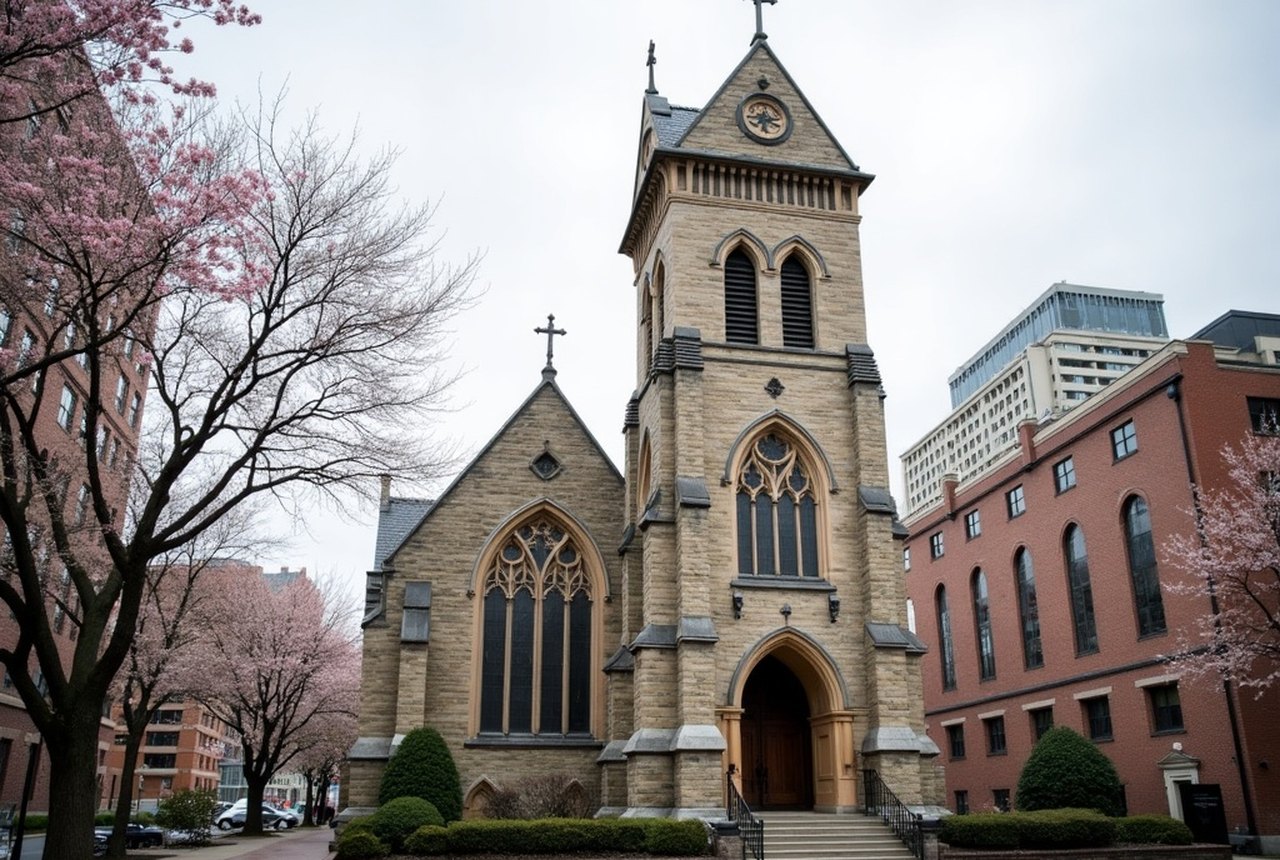
Roughly one-third of Massachusetts residents identify as Catholic — a proportion that has shaped its politics, its neighborhoods, and, most visibly, its built environment. Church spires punctuate the skylines of Boston, Worcester, Springfield, and dozens of smaller cities; each building is a layered record of immigrant ambition and community resilience. The stonework, stained glass, and interior programs on display here rank among the finest ecclesiastical ensembles in North America. The four buildings below are chosen for their historical significance, architectural distinction, and the richness of experience they offer the curious visitor.
The Four Churches
St. Leonard of Port Maurice Church, Boston. Tucked at the corner of Hanover and Prince Streets in the North End, St. Leonard's holds a remarkable distinction: it is the first Roman Catholic church built by Italian immigrants in the United States. Architect William Holmes designed the building in a warm Romanesque Revival idiom, and the interior repays a long, slow look — painted ceiling murals in the Italian Renaissance tradition, confidently layered color, and a decorative program carried through with real discipline. The building's history extends well beyond worship: when the influenza epidemic of 1918 swept through Boston, St. Leonard's sheltered orphaned children, a response that eventually formalized into the separate Italian Home for Children. The grounds include a Peace Garden and what is reputedly the oldest shrine in Boston — a quieter counterpoint to the animated street life just beyond the gate.
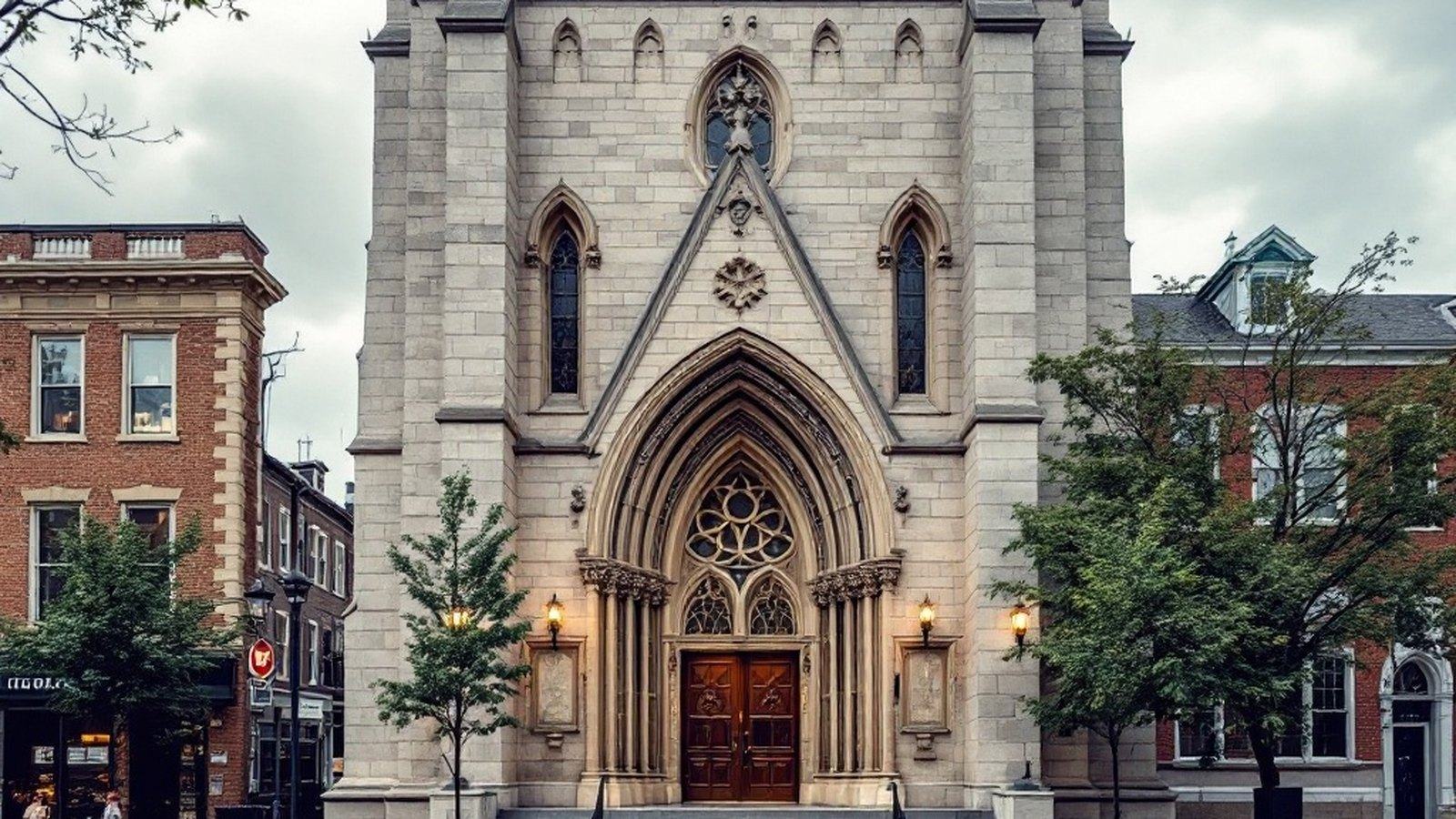
Cathedral of the Holy Cross, Boston. On Washington Street in the South End, the Cathedral of the Holy Cross is the largest Roman Catholic church in New England and the seat of the Roman Catholic Archdiocese of Boston. Patrick Charles Keely — one of the most prolific church architects of nineteenth-century America — designed it in the Gothic Revival style. The exterior, in blue-grey granite, is severe and powerful; inside, pointed arcades, clerestory windows, and sheer volume produce an effect that is genuinely monumental. The main nave accommodates more than 2,000 people; a lower-level oratory serves smaller, more intimate gatherings. Construction began in 1866, and the cathedral was consecrated in 1875 — a moment that marked a decisive shift in the religious and demographic character of Boston. In 1927, Cardinal William O'Connell commissioned Cathedral High School on the adjacent lot; its brick massing remains in quiet dialogue with Keely's Gothic stonework today.
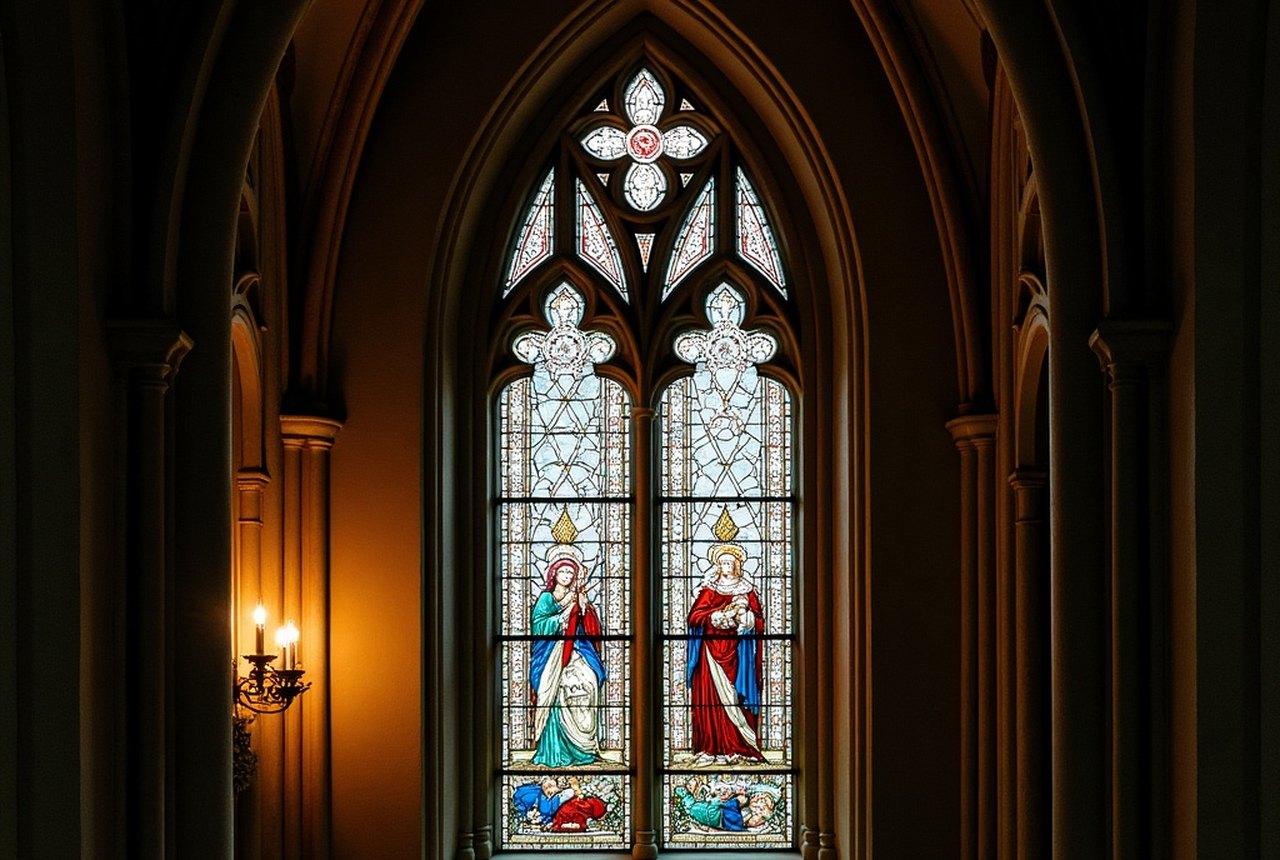
St. Stanislaus Kostka Church, Adams. In the Berkshire mill town of Adams, St. Stanislaus Kostka stands as a monument to the Polish immigrant community that built it. The interior is genuinely transporting: soaring ceiling, finely detailed altar, and delicately executed murals that combine to produce an atmosphere of concentrated craftsmanship. The particular glory of the space is its stained glass — panels depicting Christ blessing his disciples, the Nativity, and the Adoration of the Shepherds, all drawn and colored at a level that rewards a specialist's attention, not merely a tourist's glance. St. Stanislaus is among the least-visited major ecclesiastical buildings in Massachusetts despite its quality; any Berkshires itinerary that skips Adams misses one of the region's most rewarding interiors.
Old South Church, Boston. On Boylston Street at Copley Square, Old South Church is one of the great Victorian Gothic buildings in American architecture. Designed by Charles Amos Cummings and Willard T. Sears, it draws on Northern Italian Gothic precedent — the striped stonework, the campanile, and the polychrome decorative program all point toward Lombardy rather than the English Gothic that dominates most American church architecture of the period. Italian cherry woodwork runs through the nave, and several of the stained glass windows are exceptional. The building still houses an active congregation, so the interior can usually be visited during daylight hours.

Planning Your Visit
All four churches are active places of worship. Quiet voices, appropriate dress, and awareness of services in progress are expected. Photography policies vary; when in doubt, ask before raising a camera. St. Leonard's, the Cathedral of the Holy Cross, and Old South Church are all accessible by MBTA. St. Stanislaus Kostka in Adams requires a car or coordinated travel from the Pittsfield rail stop. Morning visits are generally recommended — the architectural programs of murals, stained glass, and carved stone are best read in natural light.
Patrick Charles Keely — one of the most prolific church architects of nineteenth-century America — designed it in the Gothic Revival style
- 1866Cathedral of the Holy Cross construction begins (designed by Patrick Charles Keely)
- 1875Cathedral of the Holy Cross consecrated; largest Catholic church in New England
- 1918St. Leonard's shelters children orphaned by the influenza epidemic
- 1927Cardinal William O'Connell commissions Cathedral High School adjacent to Holy Cross
Roughly one-third of Massachusetts residents identify as Catholic — a proportion that has shaped its politics, its neighborhoods, and, most visibly, its built environment