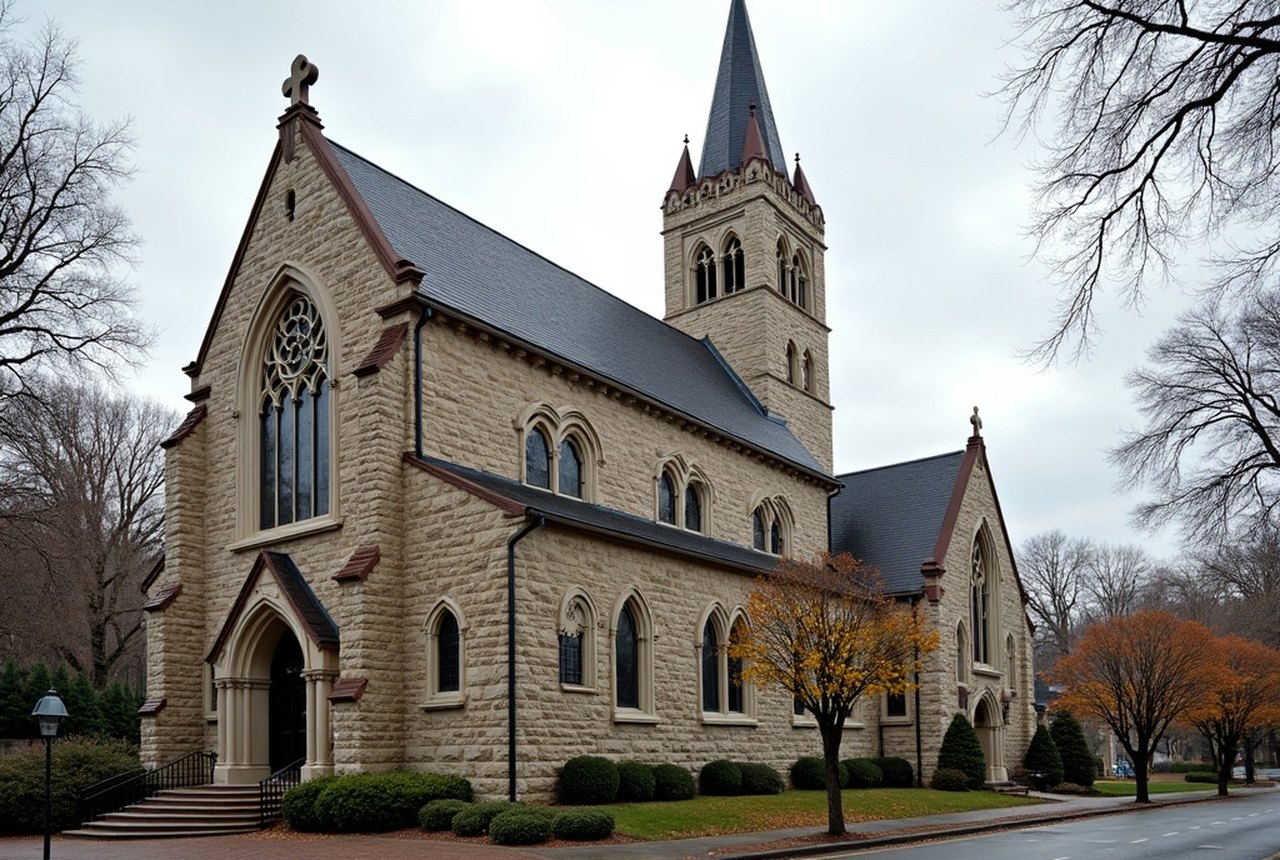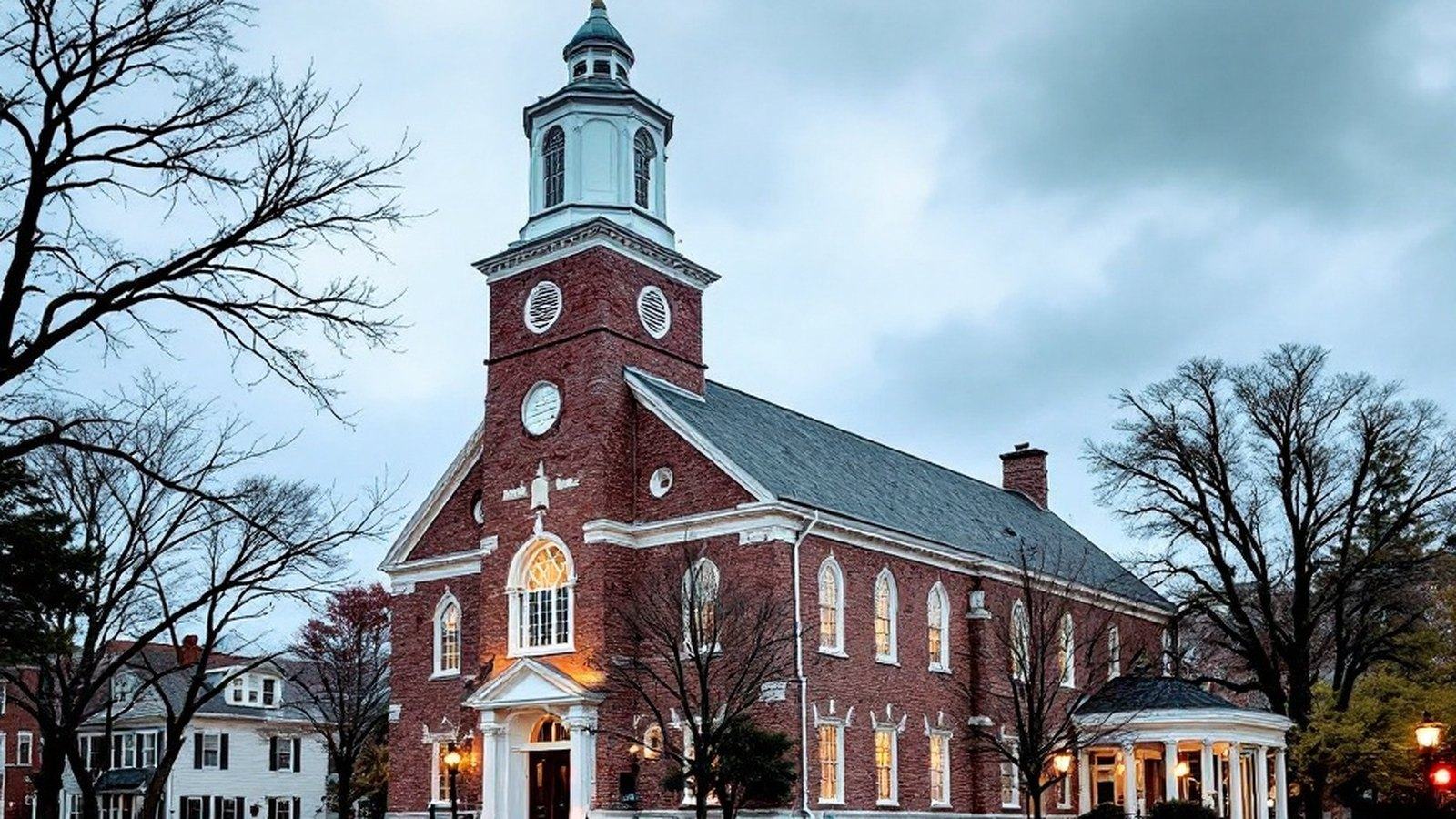
St. Stephen's Church, North End, Boston
Of all the Catholic churches in Boston, St. Stephen's carries perhaps the most layered history — and the most striking Federal-style façade. Built in 1804 by architect Charles Bulfinch, it was originally a Congregationalist meetinghouse before becoming a Catholic parish in 1862, when the North End's population had shifted dramatically toward Irish and, later, Italian immigrants. The exterior's restrained brick front, arched windows, and delicate cupola bear a clear family resemblance to the nearby Old North Church — an Anglican landmark made famous by Paul Revere's midnight ride in 1775. That visual kinship is not coincidence: both buildings draw on the same Boston Federal tradition.
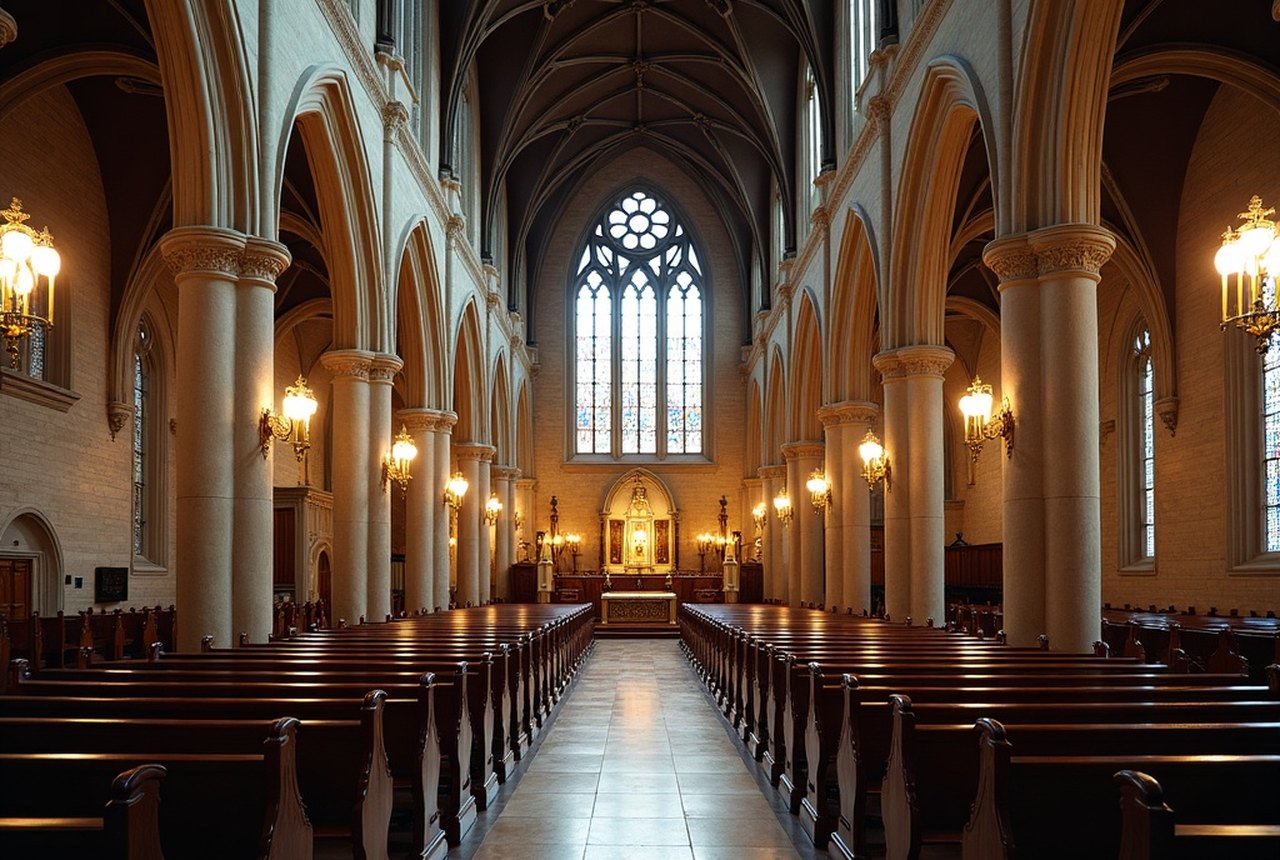
Inside, the proportions are exceptional — a galleried nave where classical American restraint and a sense of gathered community coexist without strain. Cardinal Cushing oversaw a major restoration in 1965, and a further campaign in the 1980s brought the interior closer to Bulfinch's original intentions, recovering the clear palette and disciplined ornament that had been obscured over time. For architecture enthusiasts, the building is a rare chance to see Federal church design preserved within a working Catholic parish.
St. Mark's Parish
St. Mark's rewards visitors willing to look carefully. The interior is distinguished by ornate wooden craftsmanship — carved detailing that takes on different qualities depending on the light — alongside quietly elegant chandeliers and a handsome altar arrangement that draws the eye through the nave without demanding it. The pews are well-preserved, and the overall atmosphere belongs to that particular register of Massachusetts Catholic building: earnest, warm, neither showy nor spartan.
Now well over a century old, the building has embedded itself in its neighborhood in the way the best parish churches do — not as a monument held at arm's length but as a place with visible use and real continuity. For heritage visitors, that lived quality is often more affecting than grandeur.
Chapel of Our Lady of Good Voyage
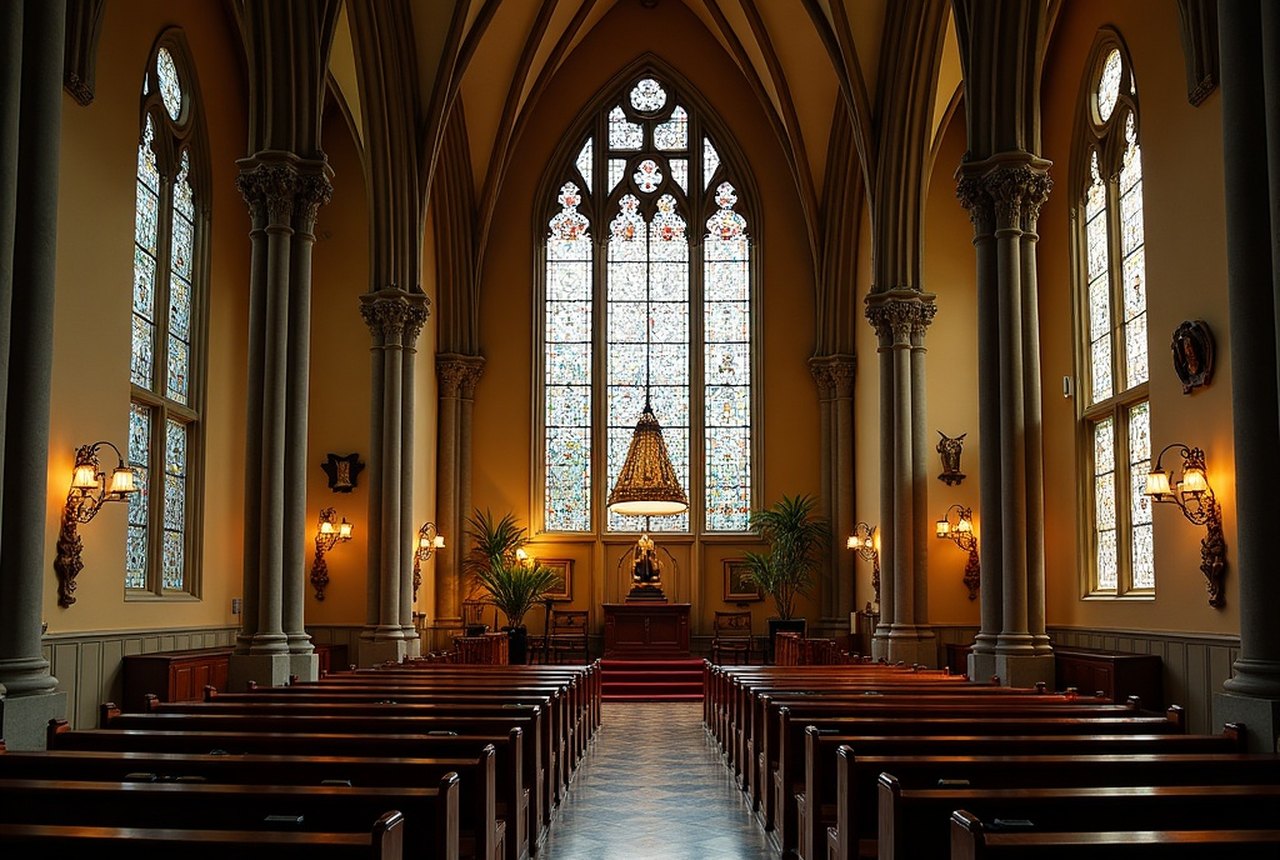
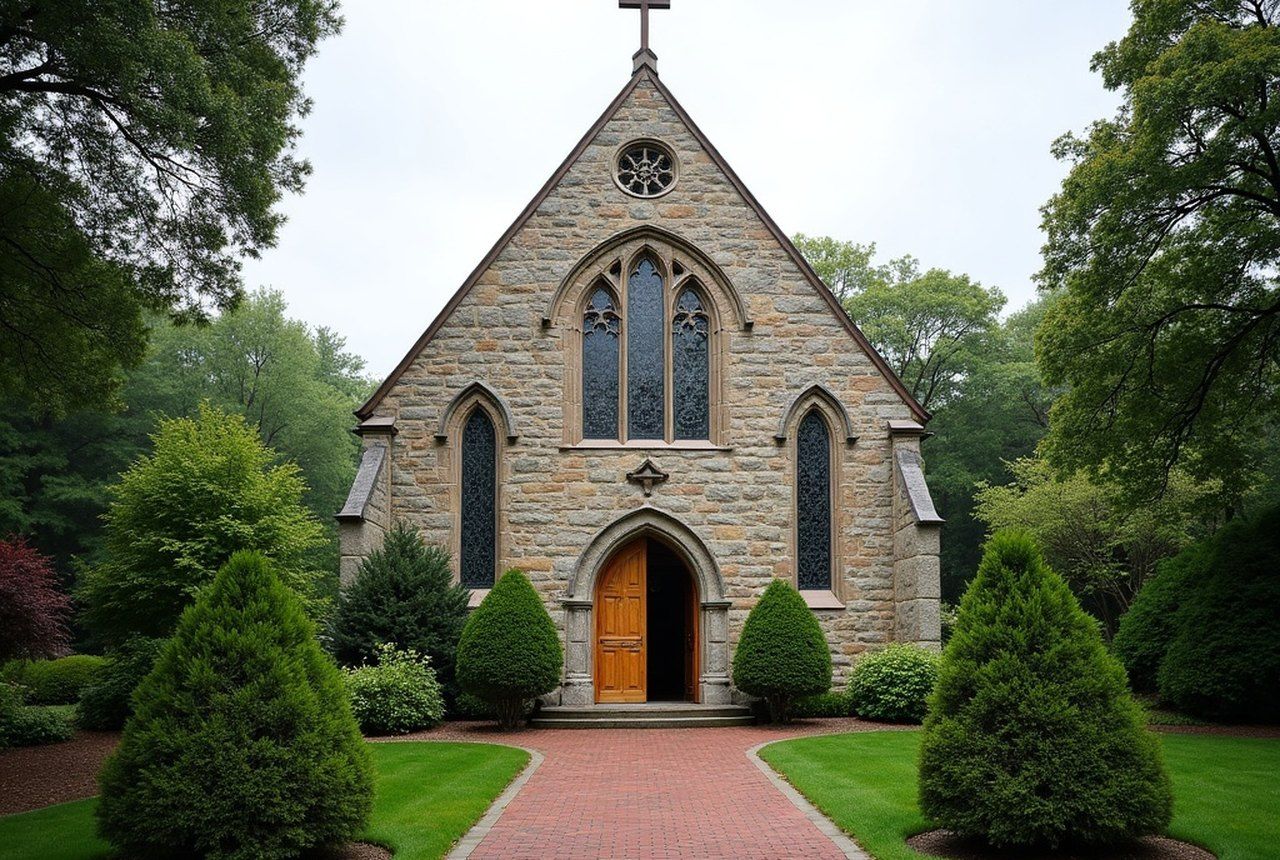
Few religious buildings in Massachusetts are as immediately distinctive as the Chapel of Our Lady of Good Voyage. Its stained-glass windows carry a consistent nautical theme — an unusually specific iconographic program that reflects the seafaring communities the chapel has historically served. Inside, model ships and antique steering wheels occupy corners and ledges, making the maritime identity impossible to miss and genuinely moving once you understand the tradition: these are offerings and memorials from fishing families, tokens of danger and gratitude placed before the Virgin in her role as protector of those at sea.
The chapel's scale is intimate, which suits it perfectly. A small garden alongside the building — shaded trees, long grasses softening the edges — gives the site an unhurried quality rare in any urban religious precinct. This is a place that repays a slow visit.
Stephen's carries perhaps the most layered history — and the most striking Federal-style façade
St. Ignatius Church, Chestnut Hill
St. Ignatius Church, run by the Society of Jesus, occupies a quieter register than Boston's grander landmarks, and that restraint is one of its virtues. The interior is decorated with careful attention — seasonal flowers contribute warmth without sentimentality — and the modest scale ensures that nothing feels distant or ceremonial in the wrong way. Jesuit parish churches in New England tend toward the intellectually serious rather than the architecturally spectacular, and St. Ignatius is true to that tradition: a building that focuses attention rather than capturing it.
The congregation is diverse and multigenerational, drawn partly by the church's proximity to Boston College, and partly by the quality of the parish's liturgical life. For visitors, the welcome is genuine and the building offers real architectural pleasures for those who look beyond the obvious.
Taken together, these four buildings span a wide arc of Massachusetts Catholic heritage — from Federal civic elegance adapted for immigrant worship, to a fishermen's chapel dense with maritime memory, to a Jesuit church whose restraint is its own kind of argument. None requires a long detour; all reward the effort.
- 1804Charles Bulfinch builds St. Stephen's as a Congregationalist meetinghouse
- 1862Building transferred to Catholic use as North End demographics shift
- 1965Cardinal Cushing oversees major restoration of St. Stephen's
- 1980sFurther restoration campaign returns interior closer to Bulfinch's original
For heritage visitors, that lived quality is often more affecting than grandeur