Stone from the Ground Beneath the City
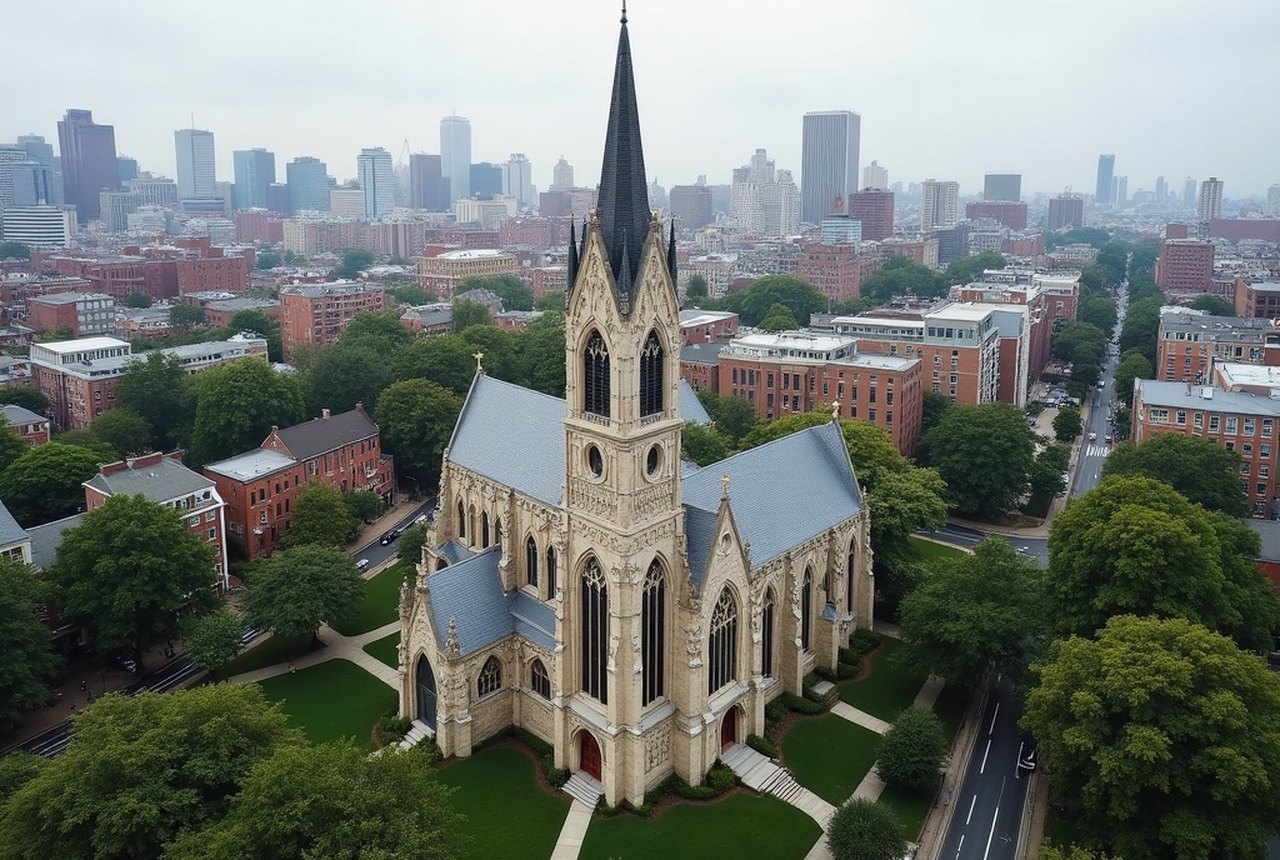
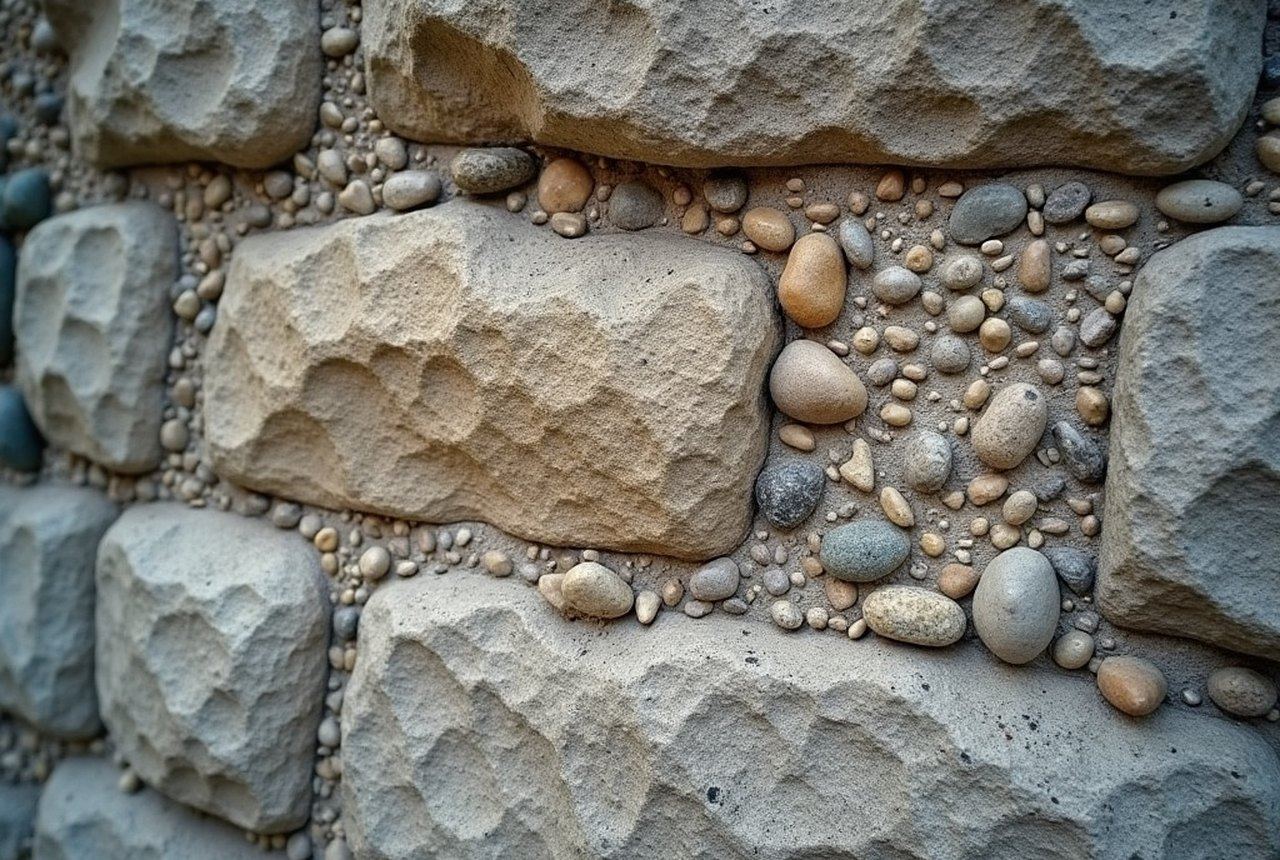
There is a rock that belongs exclusively to Boston. Puddingstone — technically a Roxbury conglomerate — is a rough, beautiful sedimentary formation: pebbles of quartzite and jasper locked into a dark matrix of sandy stone, the whole thing looking, as generations of Bostonians have observed, exactly like a suet pudding with plums pressed into it. It outcrops across the Roxbury neighborhood and provided the material for some of the city's most characteristic nineteenth-century buildings. When the Redemptorists began constructing their great church on Mission Hill in 1876, they reached for the stone underfoot, and the result is a building that seems to have grown directly from the Boston earth.
The Basilica and Shrine of Our Lady of Perpetual Help — almost universally called "the Mission Church" by neighborhood residents — stands at the corner of Tremont Street and Calumet Street in what was once a separate municipality of Roxbury, annexed to Boston in 1868. The Redemptorists, a religious order founded to preach missions to the poor, had established themselves in Boston in the 1850s. Mission Hill was developing fast, filling with Irish and then German Catholic workers, and the community needed a church commensurate with its ambitions. What they eventually built was anything but modest.
Building the Mission Church
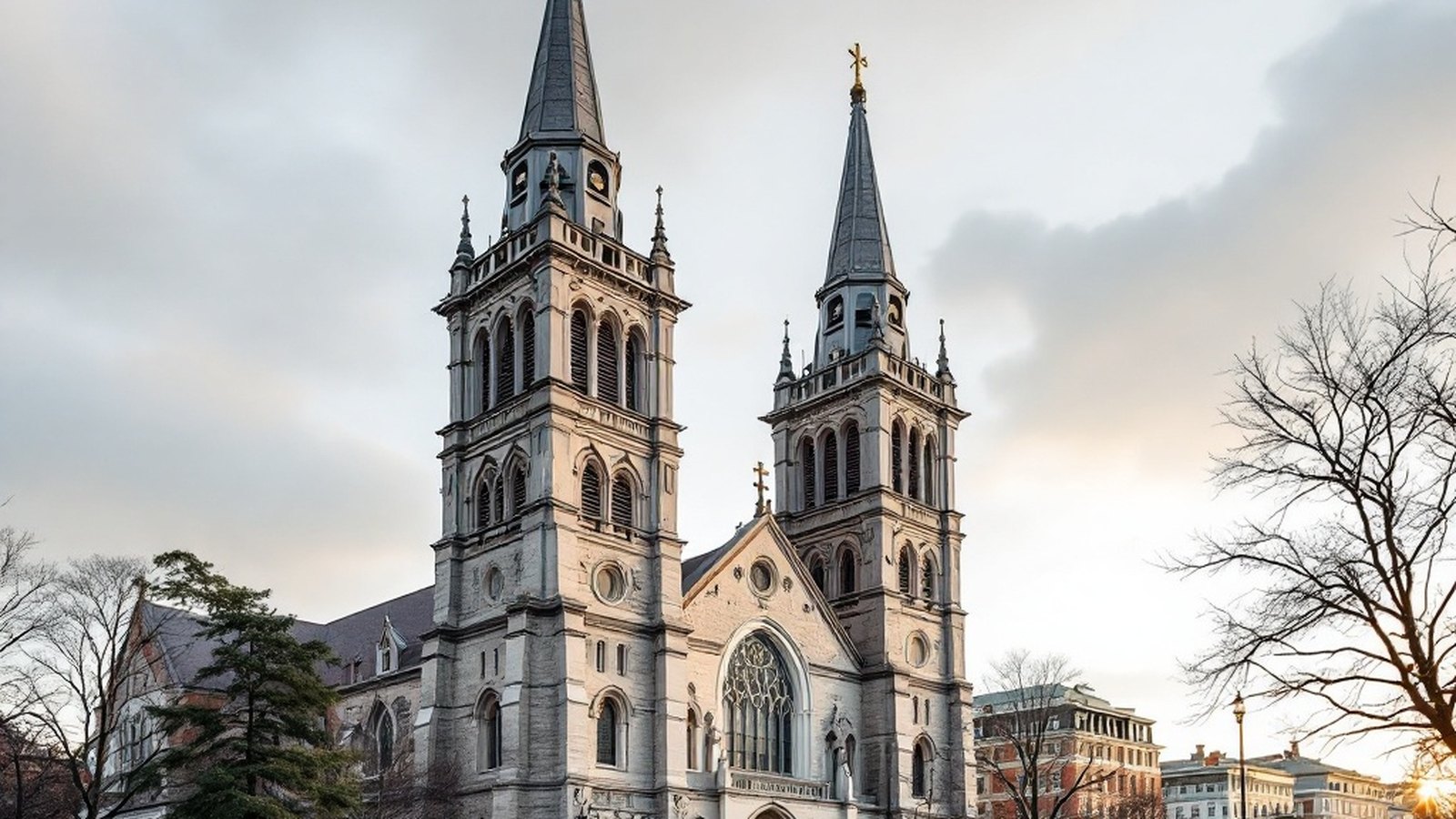
The first church on the site, a modest wooden structure, opened in the 1870s. The stone building that replaced and eventually enlarged it took decades to complete — a common story for nineteenth-century Catholic parishes working from the contributions of factory hands and domestic servants. The Romanesque Revival design embraces round arches throughout: over the doorways, in the arcaded nave, across the clerestory windows that pour light down into the main body of the church. The twin towers that anchor the facade became one of Boston's most recognizable silhouettes, their upper stages eventually completed in the early twentieth century with a grandeur that the original builders had imagined but could not immediately afford.
Those towers, rising to considerable height above the surrounding three-decker rooflines, are faced in puddingstone at their lower courses, with brownstone and brick taking over as the work ascended. Up close, the exterior is a lesson in geological texture: the conglomerate's embedded pebbles catch raking light differently at each hour, giving the stone a vitality that cut granite or dressed limestone never quite achieves. The building's massing — broad, earthbound, horizontally emphatic despite its towers — is distinctly American Romanesque in feeling, drawing on the tradition that H. H. Richardson ↗ was simultaneously defining across Copley Square at Trinity Church. Where Richardson's masterpiece is all about the manipulation of Dedham granite and brownstone into a single monumental composition, Mission Church is a more additive, less unified work, built in stages across decades. That shows, but it also gives the building an honest, biographical quality: you can read its history in its fabric.
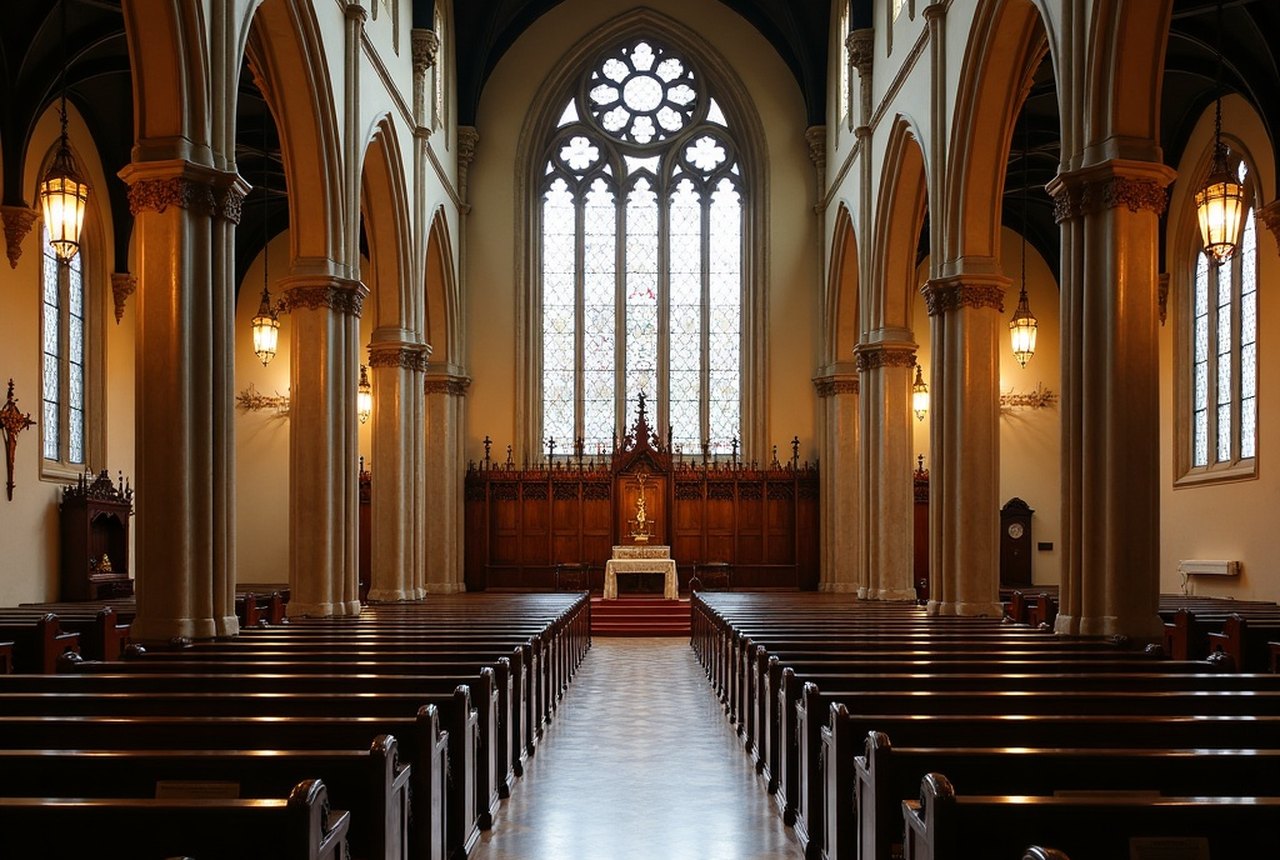
The Redemptorists worked with local architects and contractors across successive building campaigns, and the church was substantially complete in its current form by the early twentieth century. The interior footprint is cruciform — nave, transept, and apse — with clustered piers carrying the arcade and a coffered ceiling vault overhead. Scale is everything here. The nave is wide and high enough that the congregation assembles in something approaching the spatial grandeur of a European pilgrimage church, which is precisely what Mission Church eventually became.
The Shrine and Its Image
In 1871, the Redemptorists installed a copy of the venerated image of Our Lady of Perpetual Help — a fifteenth-century Byzantine icon held at the order's mother church in Rome, Sant'Alfonso all'Esquilino. The image had been entrusted to the Redemptorists by Pope Pius IX with an instruction to make it widely known, and the order took that mandate seriously across its global network of parishes and shrines. The Mission Hill copy attracted devotion from the start, and the church built a tradition of weekly novena services that, particularly in the mid-twentieth century, drew extraordinary crowds. At the novena's peak, multiple services were required each Tuesday to accommodate the thousands who came from across Greater Boston to pray before the icon — workers from the mills and shipyards, recent immigrants, the sick seeking healing, families in crisis. This was lived Catholic devotion at urban scale.
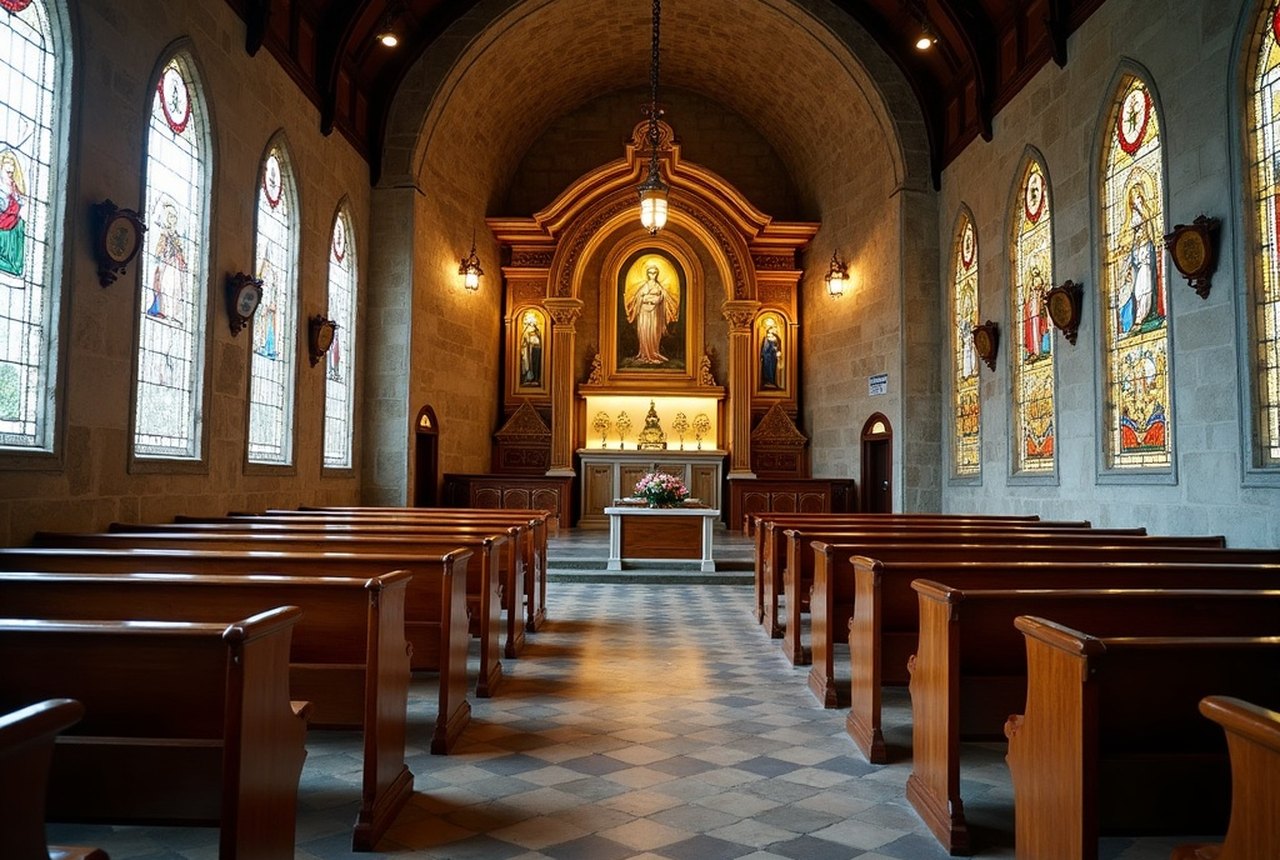
That tradition shapes the building's interior arrangement. The shrine chapel, located off the main nave, was elaborated over the decades with a richness appropriate to its function as the focal point of pilgrimage. The image itself sits above the altar in a setting of gilded decorative work, and the surrounding walls carry ex-votos — small plaques and tokens left by those who attributed recoveries and answered prayers to the intercession of Our Lady. It is an intensely human accumulation, the material residue of generations of hope, and it gives the shrine chapel a warmth that purely architectural analysis cannot quite capture.
The main church interior rewards sustained looking. The stained glass windows, installed across several campaigns in the late nineteenth and early twentieth centuries, mix narrative scenes with decorative medallion work in a range of hands and periods — not the unified artistic program of a single patron and a single atelier, but a more democratic layering of gifts and memorials. The German-American community's involvement in the early parish left traces in some of the windows and in the sculptural decorative work. Later Irish-American and then Hispanic parishioners added their own contributions to the evolving interior.
The Roxbury conglomerate is about 570 million years old — which gives Boston's "pudding" a geological biography longer than almost any other material in the city's built fabric
| Mission Church, Roxbury | Trinity Church, Copley Square | |
|---|---|---|
| Stone | Roxbury puddingstone, with brownstone and brick above | Dedham granite and brownstone |
| Composition | Additive — built in stages across decades; its history legible in its fabric | A single, unified monumental composition |
| Feeling | Broad, earthbound, honest, biographical | H. H. Richardson's defining American Romanesque statement |
Basilica Status and Civic Presence
In 1954, Pope Pius XII elevated Our Lady of Perpetual Help to the status of a minor basilica — a designation that acknowledges the church's historical, artistic, and devotional significance and grants it certain ceremonial privileges. Boston at the time had only a small number of such designations, and the title confirmed what Mission Hill's Catholic community had long understood: this was not simply a neighborhood parish church but a pilgrimage destination of regional and national standing.
The basilica designation also says something about architecture. The title is not handed out for size or impressiveness alone, but the building's scale, its quality of materials, and the sustained investment of its community over nearly a century of construction and embellishment clearly supported the case. Cardinal William O'Connell, who led the Archdiocese of Boston from 1907 to 1944 and oversaw much of Catholic Boston's maturation into institutional confidence, was attentive to the symbolic weight of architecture, and Mission Church's profile fit well within his vision of a Catholic presence in Boston that matched Protestant institutional power landmark for landmark.
The church sits on a modest hill — Mission Hill proper — that gives it visibility across considerable stretches of the surrounding neighborhoods. From certain angles, approaching on Tremont Street from the south, the twin towers read against the sky with genuine drama. The neighborhood around it is now diverse in ways the Redemptorists of 1876 could not have anticipated: Mission Hill is home to students, longtime residents of several different immigrant heritages, and medical workers from the cluster of hospitals nearby. The basilica holds all of this within its gravitational field; the Tuesday novena still draws, though in smaller numbers than the mid-century peak.
Pope Pius XII
Papacy · Rome
Granted Our Lady of Perpetual Help minor basilica status in 1954, confirming its standing as a pilgrimage destination of regional and national weight.
Cardinal William O'Connell
Archbishop of Boston · 1907–1944
Shaped Catholic Boston's maturation into institutional confidence, attentive to the symbolic weight of architecture landmark for landmark.
H. H. Richardson
Architect · American Romanesque
His Trinity Church across Copley Square defined the tradition Mission Church draws on — unified where the basilica is additive.

Visiting the Mission Church
The building is open to visitors, and the experience of arriving cold — without prior knowledge — is instructive. The scale surprise is real: from Tremont Street, the towers give warning, but the interior volume exceeds what the exterior promises. Move from the main nave into the shrine chapel, and the register shifts completely, from civic grandeur to intimate devotional density. The ex-votos, the gilded icon frame, the accumulated candle-smoke of generations: it is one of the most atmospheric interiors in Boston.
For the architecture-focused visitor, the exterior rewards a slow circuit. The puddingstone courses at the base of the towers are worth close inspection: hold a hand against them and the embedded stones are genuinely tactile, irregular, specific to this place. The Roxbury conglomerate is about 570 million years old — which gives Boston's "pudding" a geological biography longer than almost any other material in the city's built fabric. The church that chose it as its foundation material made, perhaps unknowingly, a statement about permanence. A century and a half on, Mission Church still stands on its hill, still drawing pilgrims, still wearing the rock of Roxbury on its face.
- 1850sRedemptorists establish presence in Boston
- 1871venerated icon of Our Lady of Perpetual Help installed
- 1876construction of the stone church begins
- Early 20th centurytwin towers completed to their full height
- 1954Pope Pius XII grants minor basilica status
- Mid-20th centuryTuesday novena draws thousands of worshippers weekly
It outcrops across the Roxbury neighborhood and provided the material for some of the city's most characteristic nineteenth-century buildings