The Pope's Grant and Its Physical Consequences
Basilica status is a papal designation, not an architectural style. When the Catholic Church confers the title — either major (reserved for four Roman churches) or minor (granted to significant churches worldwide) — it carries a specific set of ceremonial privileges that must, by tradition, be made visible inside the building itself.
The two most recognizable markers are the tintinnabulum and the umbraculum. The tintinnabulum is a processional bell mounted on a tall pole, rung when the bishop or a high dignitary enters. The umbraculum — sometimes called the conopaeum — is a fringed canopy or pavilion, historically striped in gold and red, which once sheltered the Pope during outdoor processions; in a minor basilica, it stands folded beside the sanctuary as a permanent symbol of papal connection. Visitors who notice what looks like an ornate, ceremonially useless umbrella near the altar have found their basilica marker.
Reading the Architecture Itself
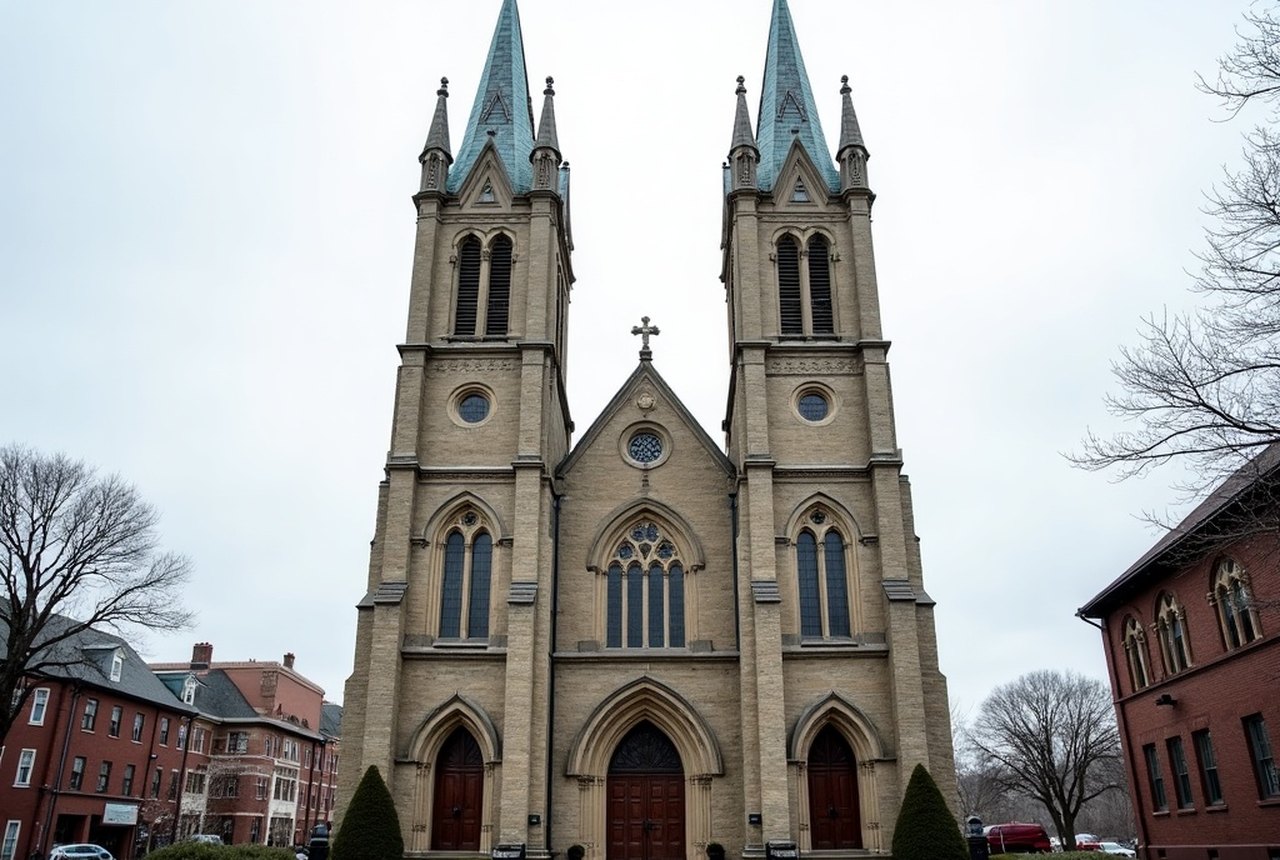
Beyond the portable regalia, the designation often coincides with — though does not require — architectural ambition. Massachusetts's most visited example, the Basilica and Shrine of Our Lady of Perpetual Help on Mission Hill in Boston, is a substantial Romanesque Revival structure built by the Redemptorists in the late nineteenth century. Its broad nave, twin towers, and commanding hilltop site signal the scale that typically accompanies a church prominent enough to attract the designation in the first place. Papal status tends to ratify grandeur already achieved, rather than create it.
What the designation does formally change is the church's liturgical rank. A basilica outranks an ordinary parish church in ceremony, may display a papal coat of arms alongside its own, and is entitled to grant certain indulgences on specified feast days. These privileges explain why communities have historically petitioned Rome for the title: it embeds a local church more deeply into the universal institutional fabric of Catholicism.
For the architecture and heritage visitor, the practical takeaway is simple. Spot the folded striped canopy, note the processional bell on its pole, look for the crossed keys of the papal arms somewhere on facade or interior wall — and you have read three layers of the building at once: the local craftsmen's ambition, the community's devotional life, and a formal link stretching back to Rome. In Massachusetts, as elsewhere, the basilica sign is hiding in plain sight.

Beyond the portable regalia, the designation often coincides with — though does not require — architectural ambition