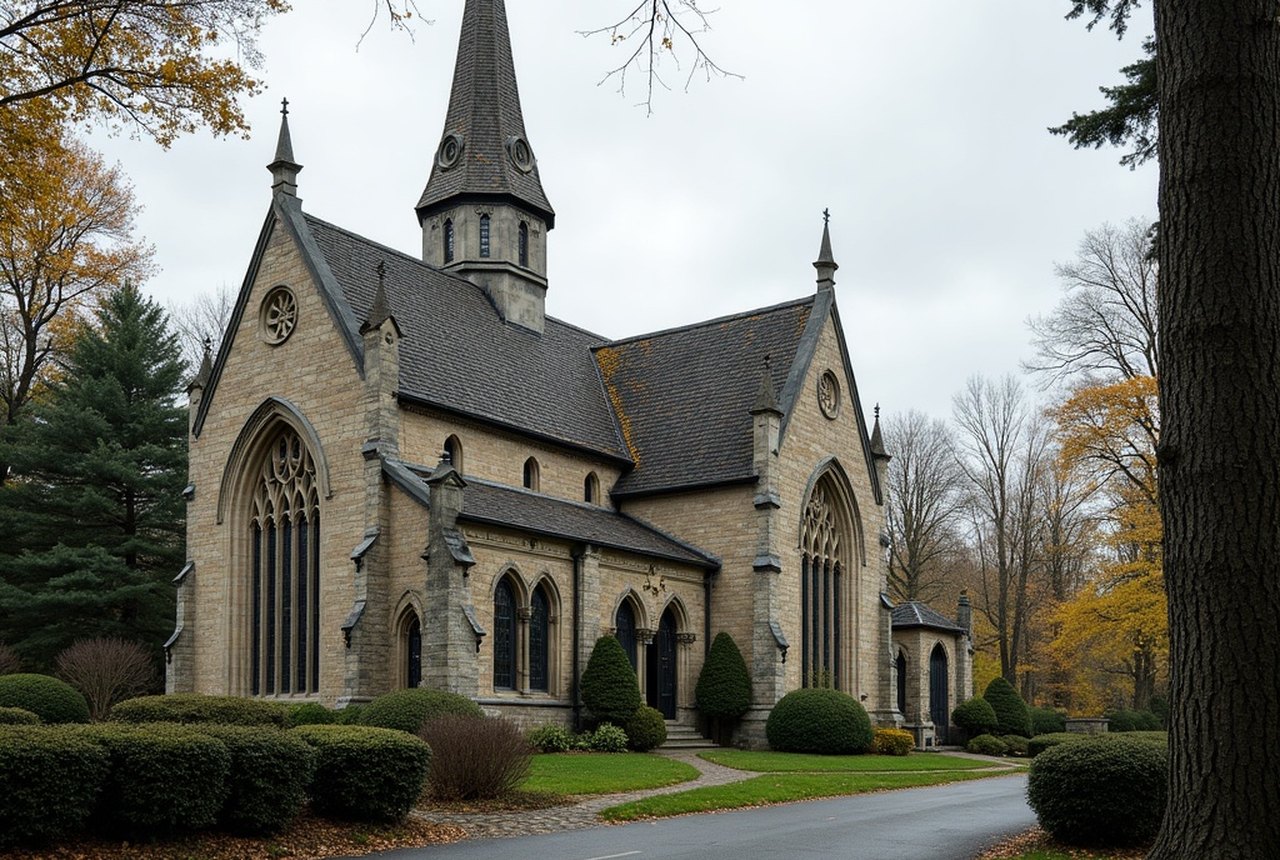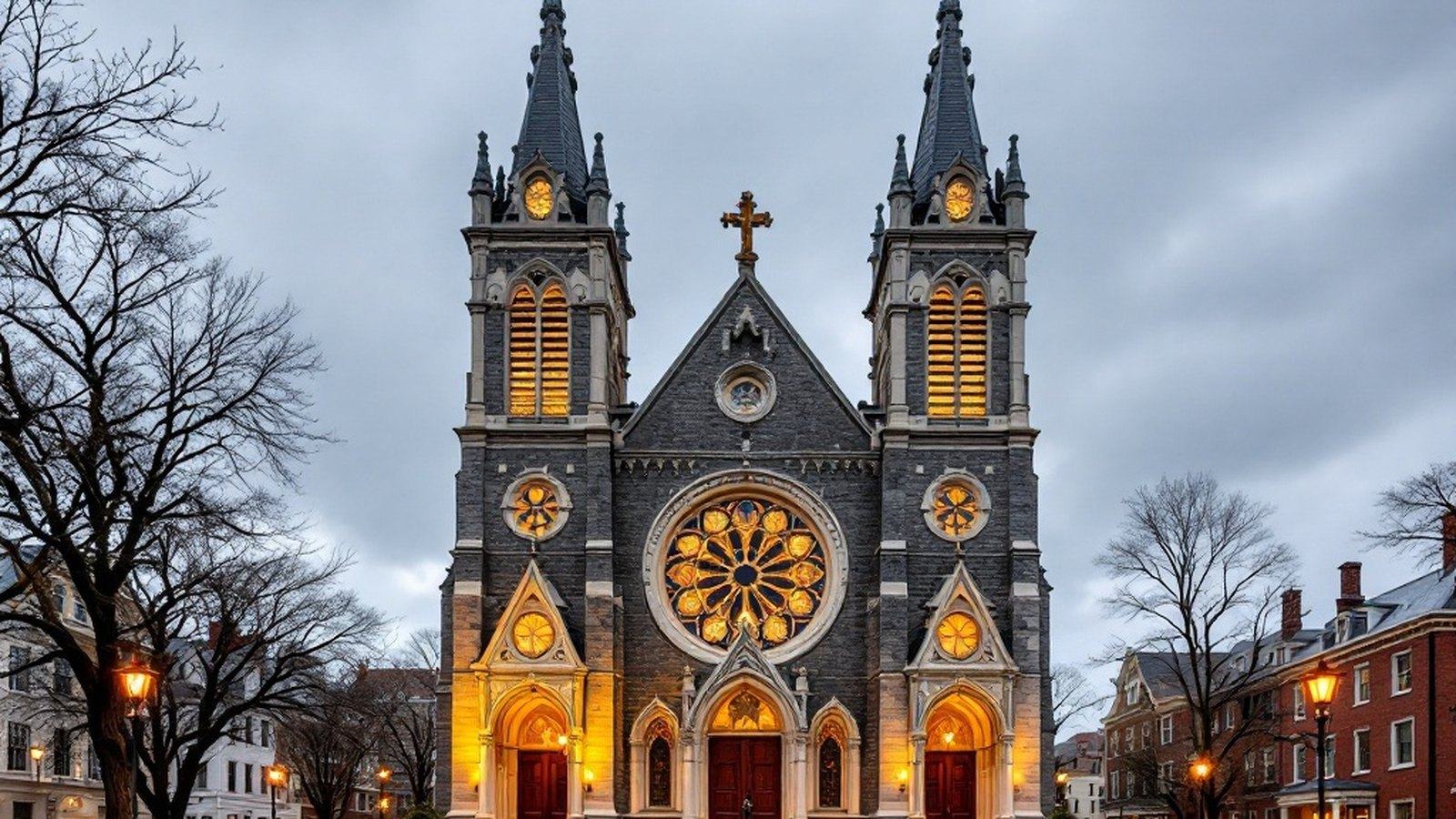
Springfield's French-Canadian cathedral in miniature, with an interior that more than compensates for its modest street presence.
A Parish Built on Franco-American Pride
Springfield's Our Lady of Hope Basilica stands as one of the most architecturally rewarding Catholic interiors in western Massachusetts, yet it remains surprisingly unknown outside the city's Franco-American community. The church on Sumner Avenue in the Forest Park neighborhood was founded to serve the wave of French-Canadian immigrants who arrived in Springfield during the late nineteenth and early twentieth centuries, drawn by the city's industrial economy. Like their counterparts in Chicopee, Holyoke, and across the Merrimack Valley, these parishioners carried with them a fierce attachment to language, devotional culture, and an expectation that their church would look the part.
The parish dates to the early twentieth century, and the present building reflects the ambitions of a congregation determined to plant something permanent and beautiful on Springfield soil. The Diocese of Springfield — carved from the Diocese of Boston in 1870 — oversaw its development, and the resulting church draws on the French Gothic and Baroque traditions that French-Canadian parishes up and down New England favored as markers of cultural identity. Pope Francis elevated Our Lady of Hope to the rank of minor basilica, a designation that recognizes both the church's architectural significance and its importance as a pilgrimage site for the region's Catholic faithful.

The Interior Programme
Step inside and the street's modest exterior becomes an afterthought. The nave opens into a program of decoration that is dense without being chaotic — gilded altars, painted vaults, and stained glass that shifts the light hour by hour. The high altar is the organizing centerpiece: a tiered, heavily carved composition in the French tradition, its canopy and statuary drawing the eye upward with the same vertical insistence as the lancet windows flanking the sanctuary. Devotion to Our Lady of Hope — Notre-Dame de l'Espérance — gives the iconographic program its emotional key. The Virgin appears not in sorrow but in active, intercessory confidence, a reading of Marian devotion that resonates across the ceiling medallions and side-altar carvings alike.
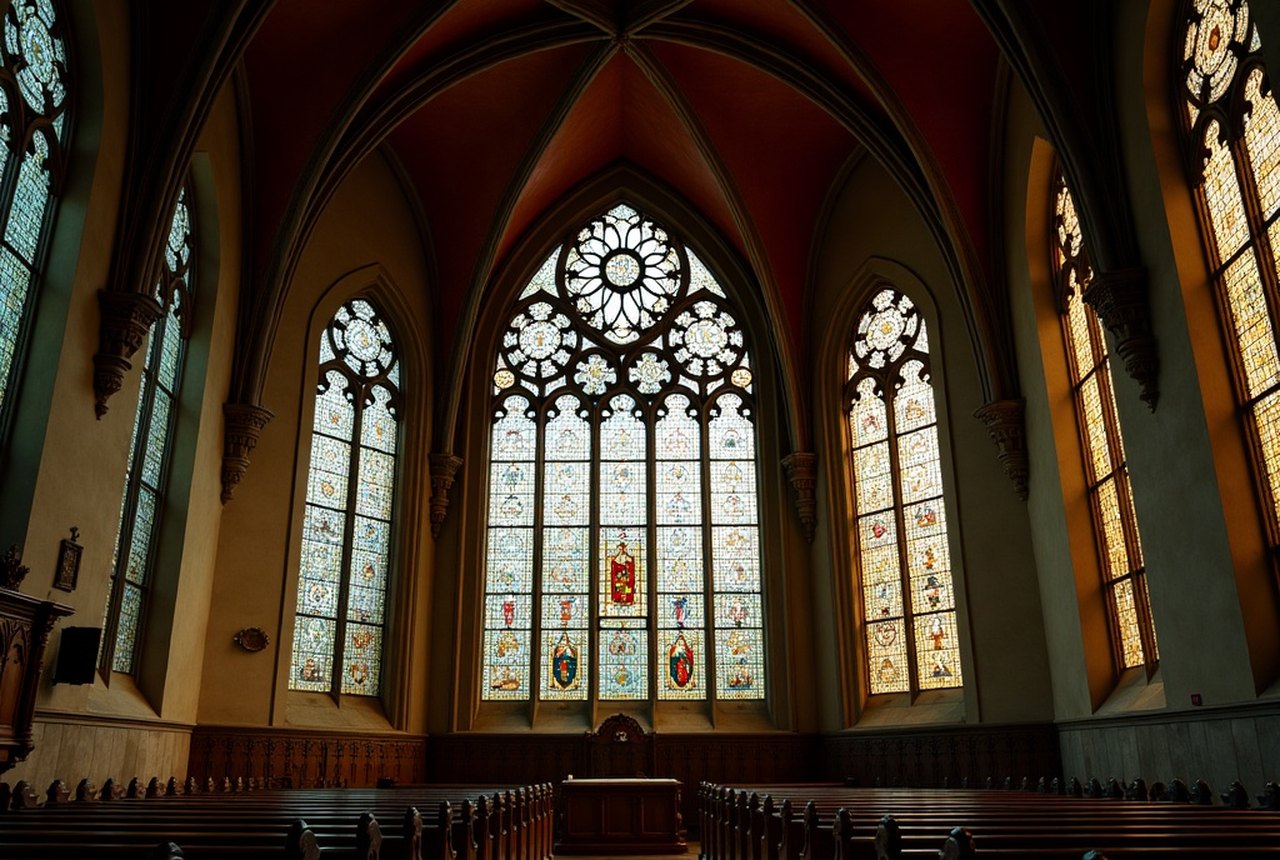
The stained glass deserves particular attention. The windows follow the narrative conventions of the French atelier tradition: rich jewel-toned grounds, figures rendered with clear outline and formal dignity, border work in interlocking geometric patterns. Light entering from the clerestory catches the glass at different angles through the day, warming a nave that might otherwise feel contained. The side altars — dedicated to saints prominent in French-Canadian piety — are intact and carefully maintained, a rarity in a region where many parish interiors have been simplified in the decades since the Second Vatican Council.
The woodwork throughout is of high quality: carved pews, a substantial communion rail, and confessionals with turned and paneled surrounds that speak to the craftsmanship the original parish could command. The floor's geometric tilework anchors all of this without competing with the walls above.
Devotion to Our Lady of Hope — Notre-Dame de l'Espérance — gives the iconographic program its emotional key
Visiting and Significance
Our Lady of Hope sits within a neighborhood of late-Victorian and early-twentieth-century housing stock that still reads as coherent, and the church functions as the district's architectural anchor. The basilica designation brings with it a pair of ceremonial features that attentive visitors will spot: the tintinnabulum — the processional bell standard — and the umbraculum, the folded canopied staff displayed near the sanctuary, both canonical marks of basilica rank.
For heritage travelers making the circuit of western Massachusetts Catholic architecture, Our Lady of Hope belongs on the same itinerary as the other historic Catholic churches of the Springfield area, such as St. Michael's Cathedral. It represents something the larger, better-documented churches of Boston sometimes obscure: the degree to which immigrant parishes outside the capital city built to exceptional standards, financing ornament through decades of small contributions from mill workers and tradespeople who understood a beautiful church as both a spiritual gift and a statement of belonging. The interior at Our Lady of Hope makes that argument without a word.
- Late 19th–early 20th centuryFrench-Canadian immigration to Springfield; parish founding
- 1870Diocese of Springfield established
- Early 20th centurypresent basilica building constructed
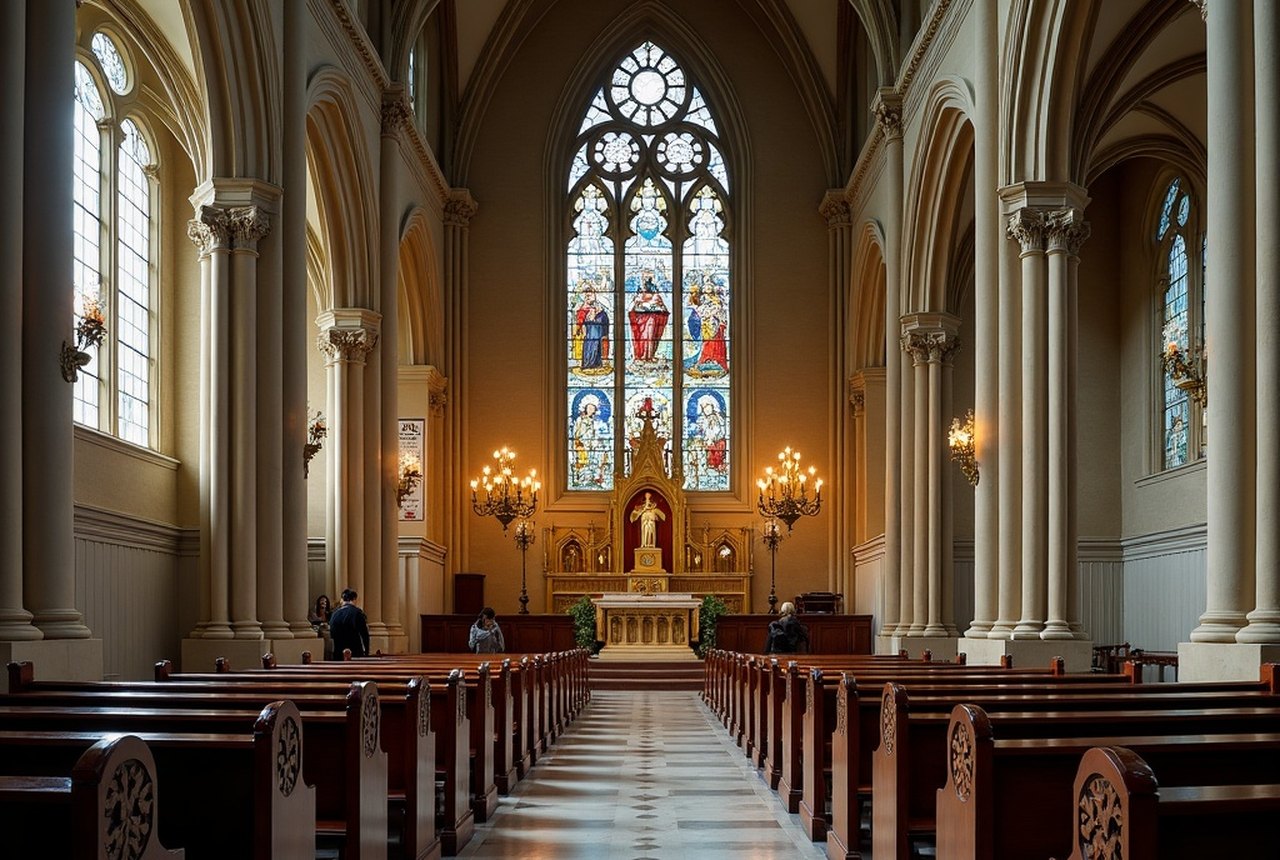
The interior at Our Lady of Hope makes that argument without a word