A Church Built by Whalers and Fishermen
New Bedford and Fall River owe their Catholic character as much to the North Atlantic as to Rome. From the mid-nineteenth century onward, Azorean whalers jumped ship in New Bedford harbor and stayed, planting parishes that still shape the city's skyline. Cape Verdean communities — whose islands had been a Portuguese colony and a staging post on the whaling routes — followed, building congregations that blended Lusophone Catholicism with distinctly African devotional rhythms. The result, across both cities, is a sacred landscape with no close parallel elsewhere in New England.
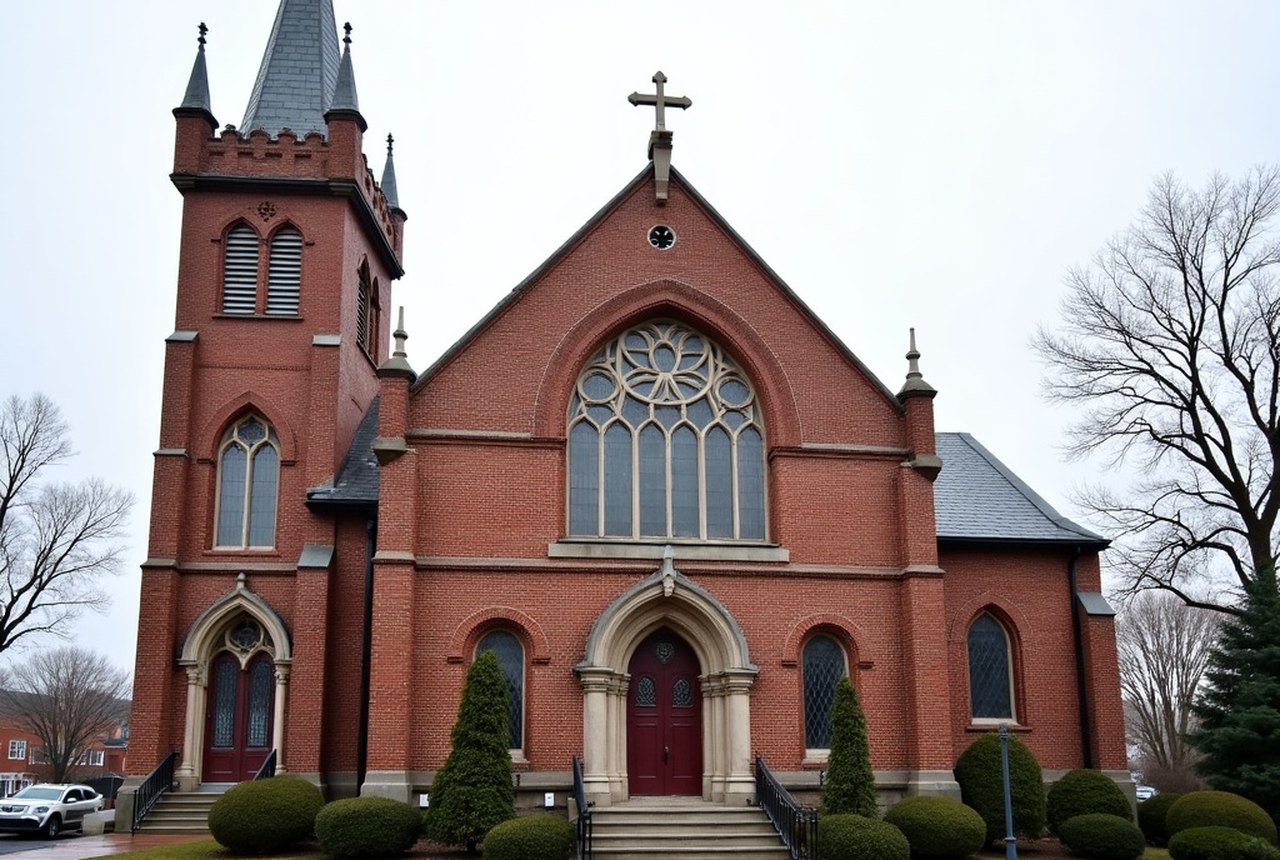
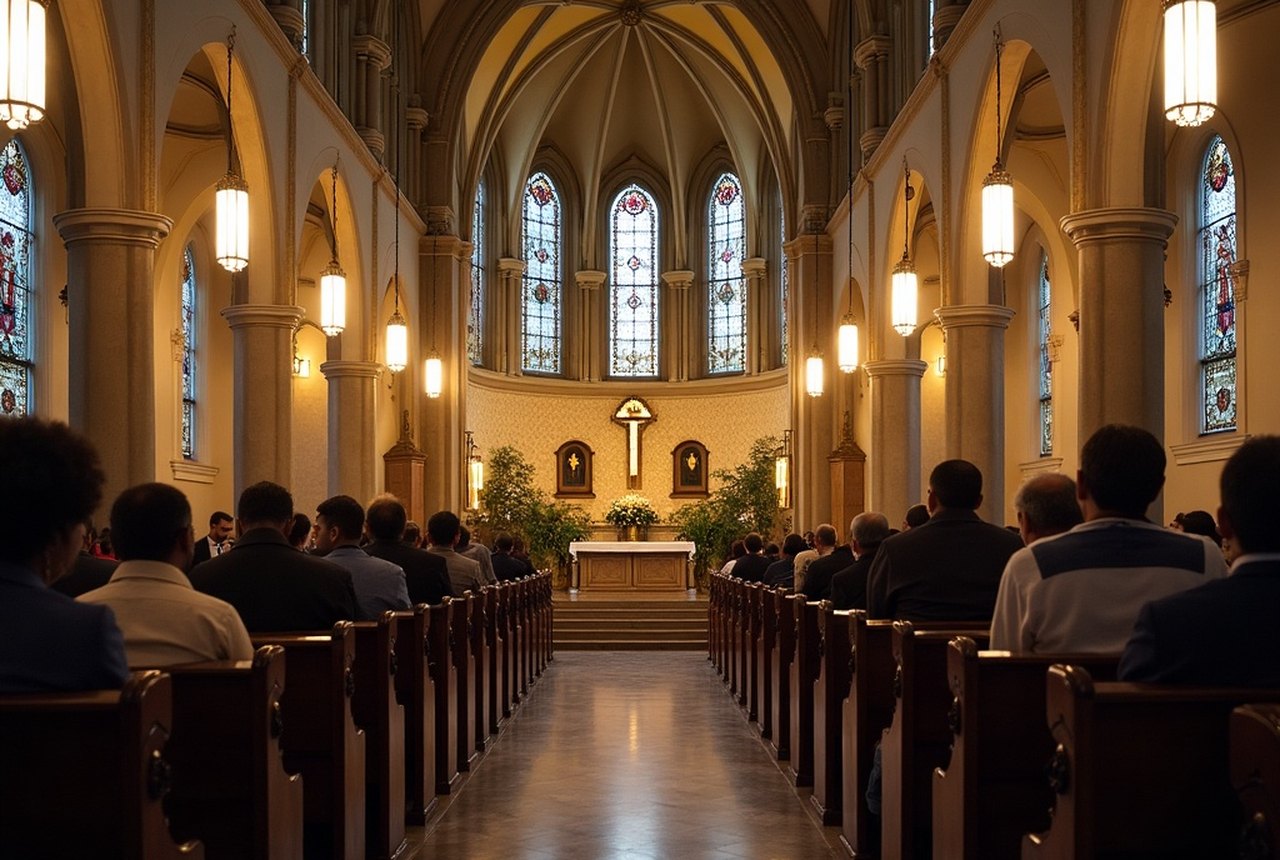
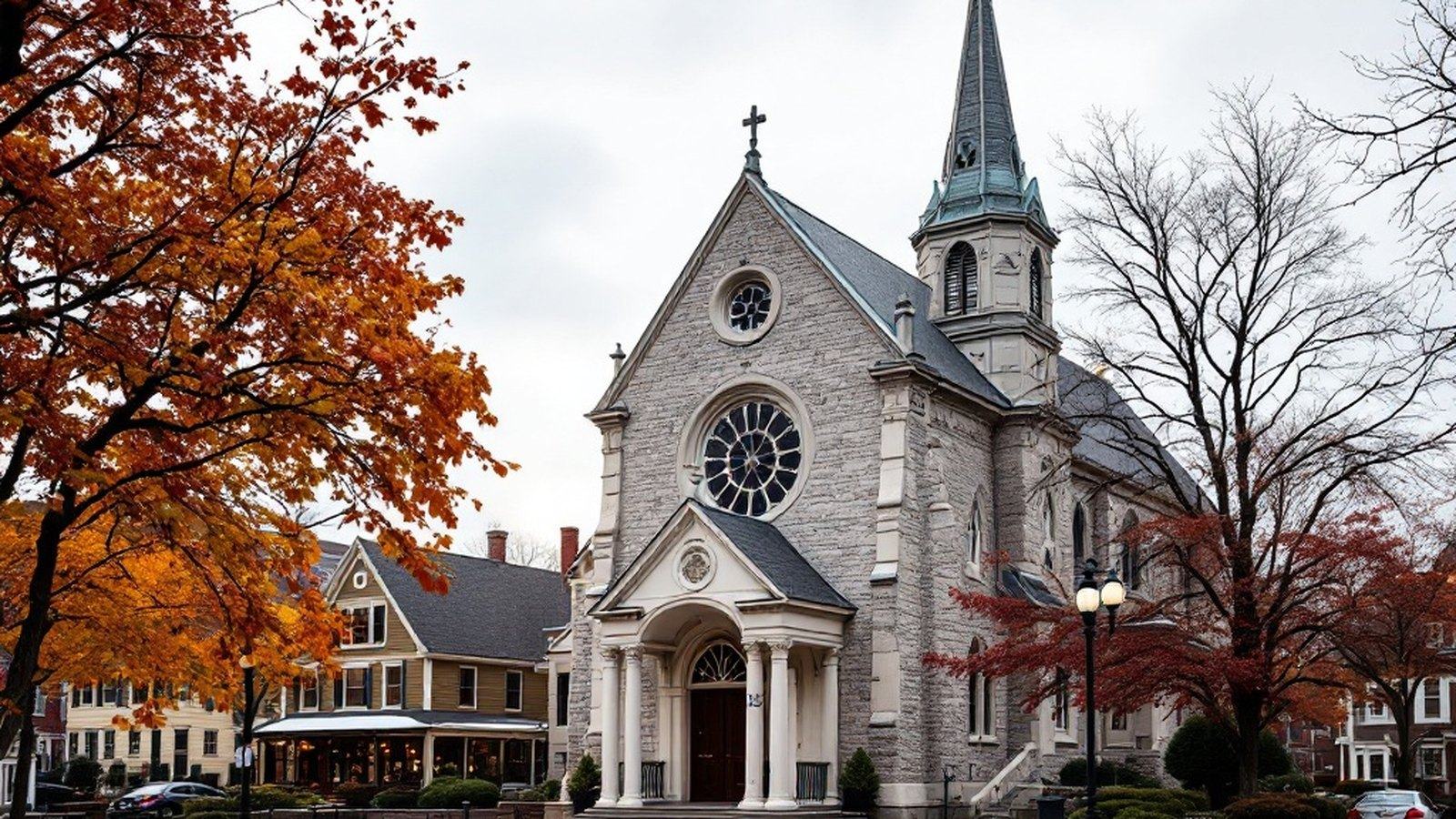
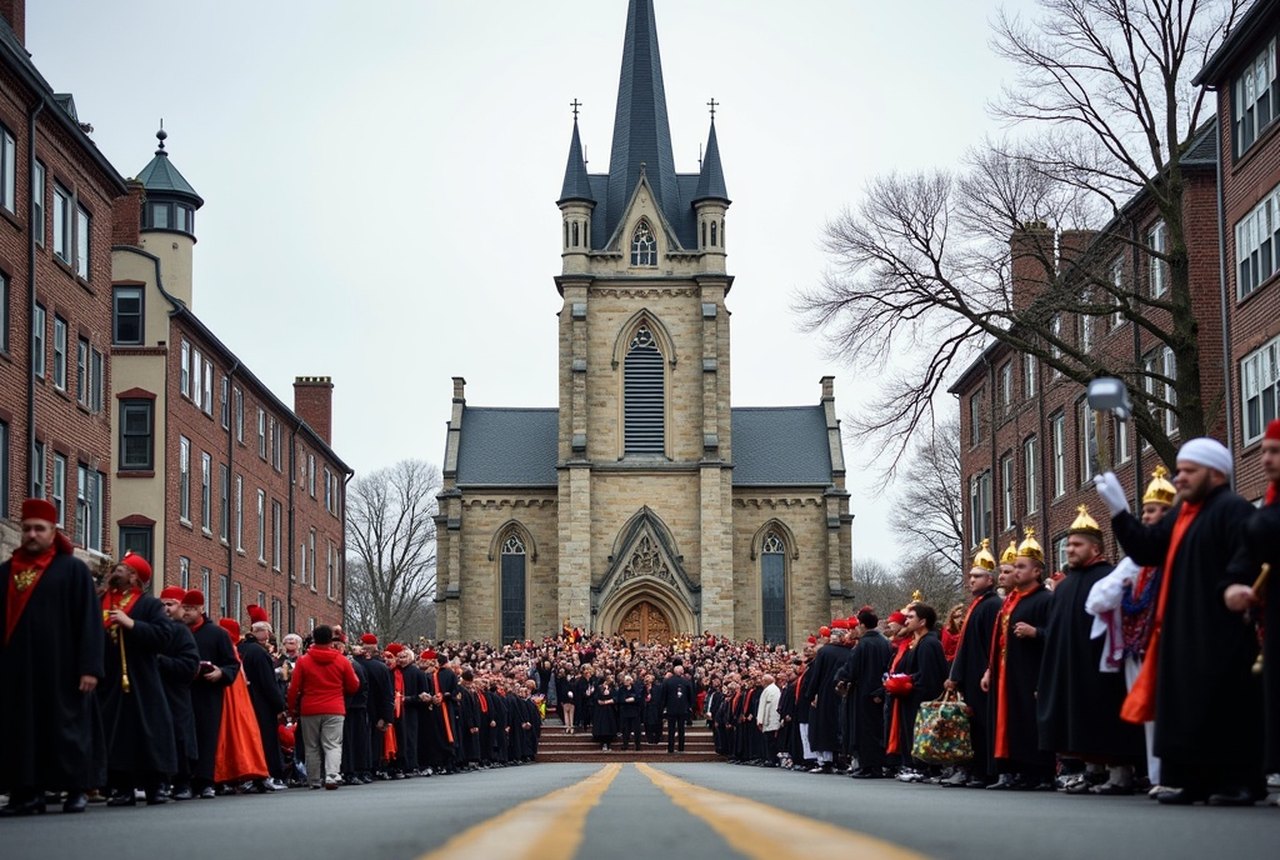
The architectural signature of Azorean parishes tends toward the robust and unadorned on the outside, saving drama for the interior. Facades of rough granite or brick give little away; step inside and the walls open into azulejo-influenced decoration, painted side altars crowded with ex-votos, and statues of Our Lady of Fátima — the apparition shrine in central Portugal — draped in embroidered mantles that change with the liturgical season. The devotion to Fátima runs especially deep: the annual festa processions through New Bedford's North End are among the most visually elaborate Catholic street rituals in Massachusetts, complete with flower-carpeted streets and candlelit images carried on litters.
Fall River's Portuguese parishes reflect the city's mill-town history. Immigrants who arrived to work the textile factories built churches in the Victorian Gothic mode that was standard for New England Catholic construction in the late nineteenth century — pointed arches, brick facades, modest spires — but furnished them with Portuguese-made statuary and named them for Azorean island saints barely known outside the archipelago. The interiors carry carved and gilded reredoses that feel distinctly Iberian even when the shell of the building is indistinguishable from an Irish parish two streets away.
Cape Verdean Catholics brought additional layers: devotion to Our Lady of the Nazaré, the kriolu-language hymns sung at wakes and feast days, and a tradition of mutual-aid societies that anchored parish life as surely as any clergy. Their presence in New Bedford concentrated in specific neighborhoods, and their churches functioned simultaneously as cultural embassies and houses of prayer.
Both cities retain substantial concentrations of this heritage, much of it underappreciated by visitors focused on New Bedford's celebrated whaling history. The churches are the other archive — of migration, of labor, of a faith carried across three thousand miles of ocean and planted, with remarkable tenacity, in the stony soil of Massachusetts.
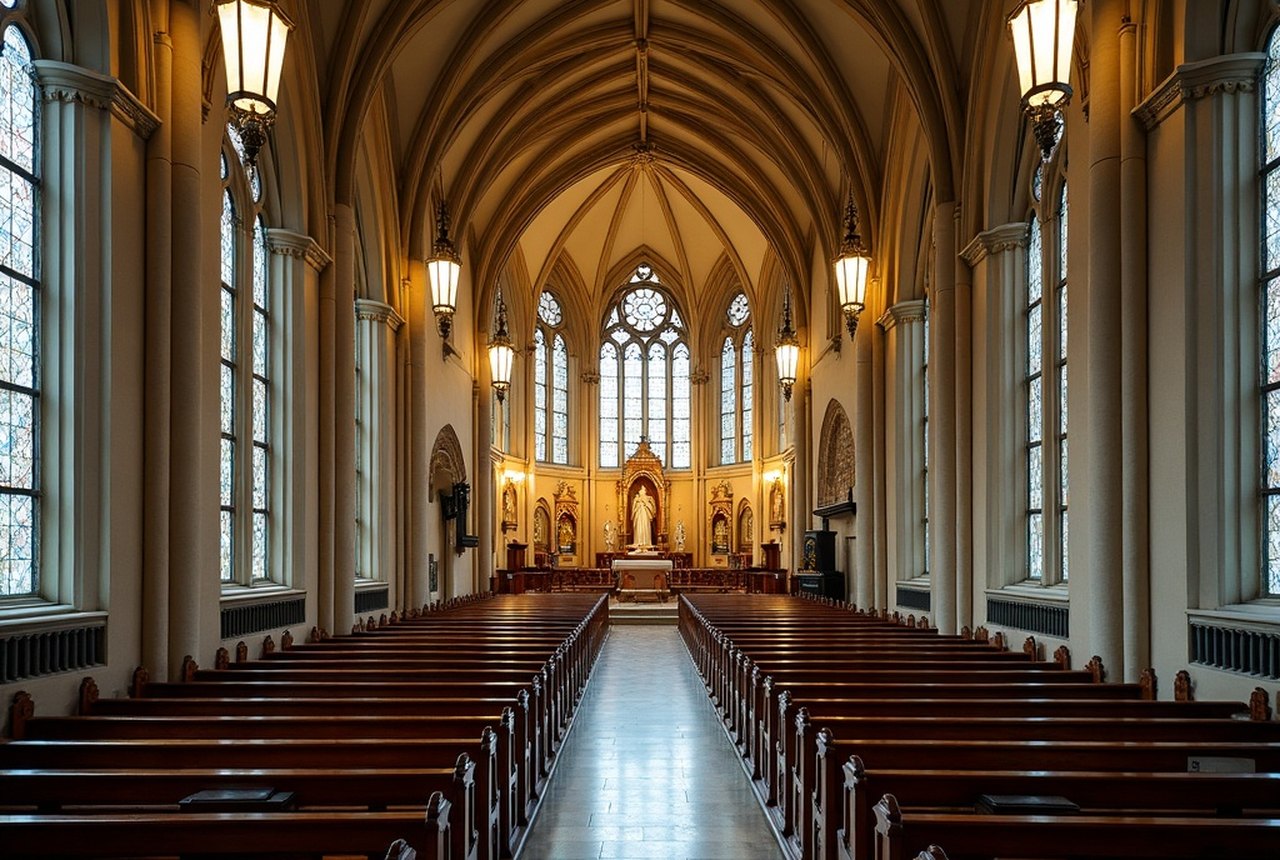
The architectural signature of Azorean parishes tends toward the robust and unadorned on the outside, saving drama for the interior
- mid-19th centuryAzorean whalers begin settling permanently in New Bedford
- late 19th centuryPortuguese mill workers build Fall River parishes in Victorian Gothic style
- ongoingannual Fátima festa processions continue in New Bedford's North End