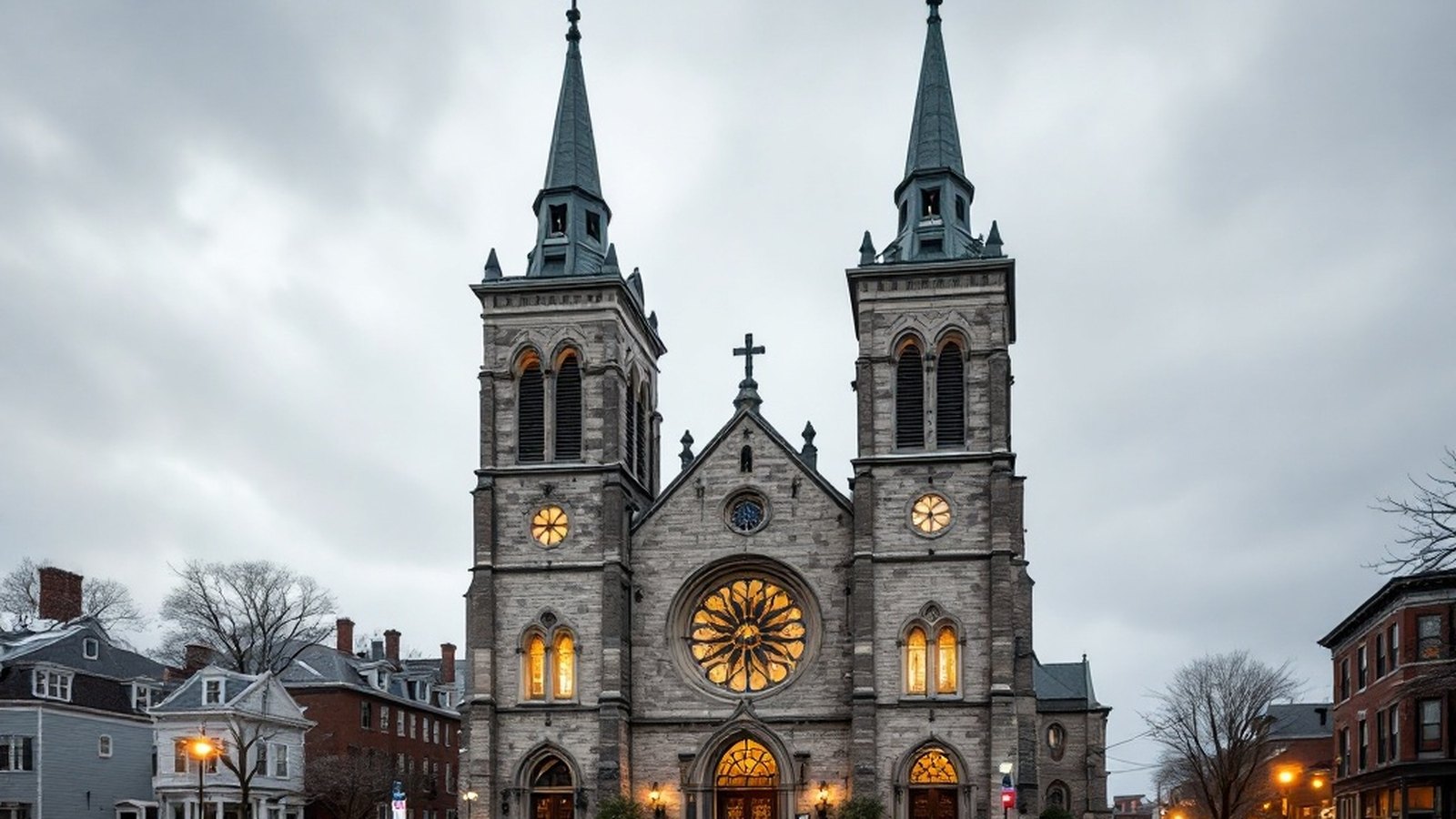
How Québécois migrants stamped their faith on Lowell, Holyoke, and Fall River — and left a skyline of spires to prove it.
A People Who Carried Their Church South
Between the 1840s and the early twentieth century, hundreds of thousands of French Canadians crossed the border from Québec into New England, drawn by the relentless demand for labor in the cotton and woolen mills of Massachusetts. They came from the St. Lawrence Valley and the Eastern Townships with their language, their rang traditions, their chapelets, and — crucially — their expectation that the parish would be the organizing center of life. Wherever they settled in sufficient numbers, a French-Canadian church followed, often within a decade of the community's first foothold.
The Irish-dominated Roman Catholic Archdiocese of Boston and its satellite dioceses were not always welcoming hosts. French Canadians insisted on what they called the paroisse nationale — a national parish serving a single ethnic group, celebrating Mass in French, staffing its school with Québécois religious orders, and publishing its bulletin in the language of Molière. That insistence produced some of the most ambitious ecclesiastical building projects in industrial Massachusetts, and the results still punctuate the skylines of Lowell, Holyoke, and Fall River.
Lowell, Holyoke, Fall River: Three Cities, One Pattern
In Lowell, where the canal system powered a textile empire, French Canadians began arriving in force after mid-century. St. Jean Baptiste Parish became the anchor of the Little Canada neighborhood along the Merrimack, its church a statement in stone that these workers were not passing through. The scale of such buildings always surprised outsiders: communities earning mill wages somehow raised funds for structures with proper stone facades, tall twin towers, and interiors fitted with carved wooden altarpieces that echoed the great parish churches of rural Québec. The money came in nickels and dimes collected by syndics — lay trustees who managed building funds with fierce communal pride.
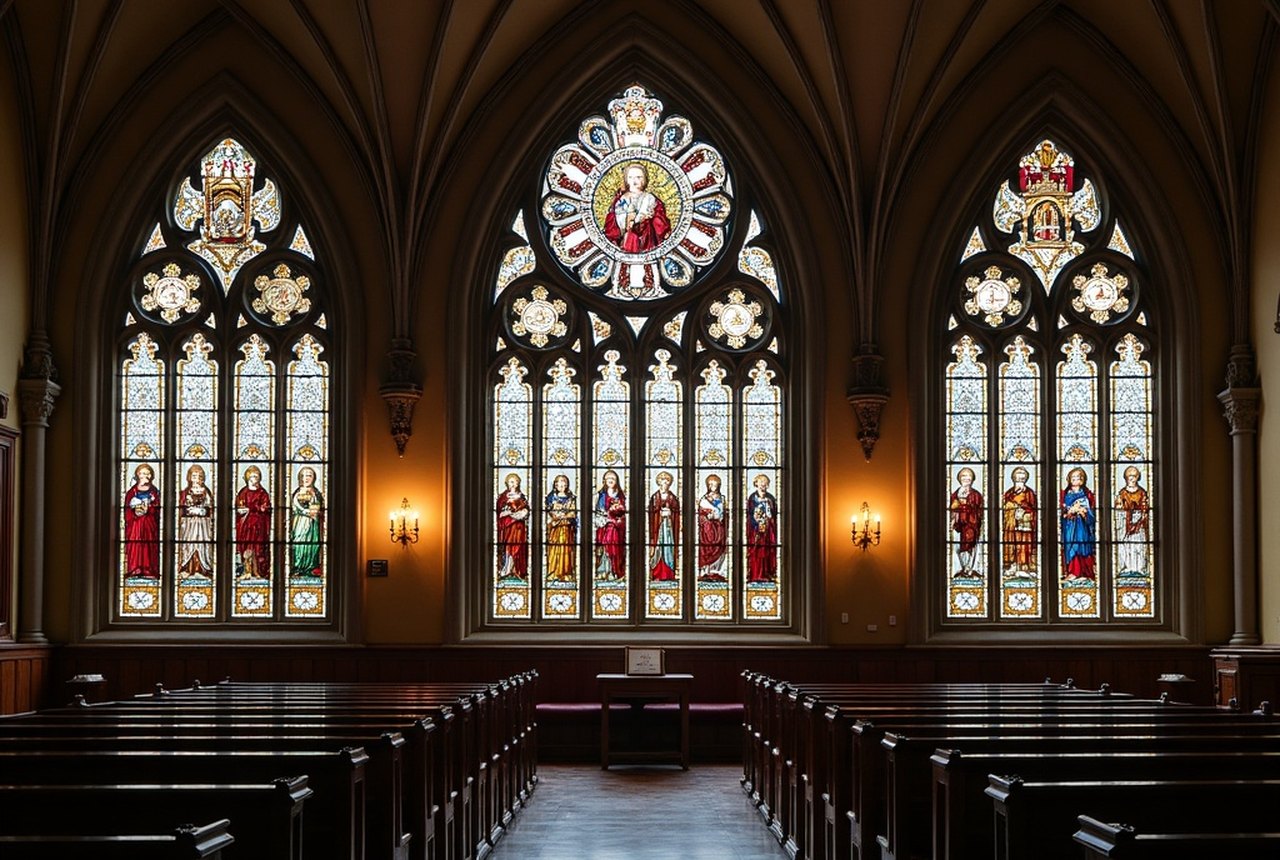
Holyoke, planned in the 1840s as a purpose-built industrial city on the Connecticut River, became one of the most thoroughly French-Canadian cities in New England by the late nineteenth century. The Precious Blood Parish, served by the Missionaries of Our Lady of La Salette among other orders, reflected an architectural ambition calibrated to permanence. Holyoke's French-Canadian churches favored the Gothic Revival vocabulary — pointed arches, lancet windows, steeply pitched roofs — rendered in local brick or granite, their interiors brightened by figurative stained glass imported from Montréal workshops or sourced from French and Belgian suppliers. The message encoded in every arch and window was continuity: la foi, la langue, les mœurs (faith, language, customs), the triple inheritance Québécois leaders believed must be preserved together or lost together.
Fall River, fed by the spindles of its granite-clad mills, drew one of the largest concentrations of French Canadians in the entire country. At its peak, the city supported multiple French-Canadian parishes, each with its own school, confraternity, and mutual-aid society. Notre Dame de Lourdes was among the most prominent, its presence a counterweight to the Irish parishes on the other side of town. Fall River's mill-church geography was almost denominational in its social precision: which parish you belonged to told a neighbor your ethnicity, your mill district, sometimes even your village of origin in Québec.
What Remains
Demographic shifts — the collapse of the textile industry after the First World War, assimilation across successive generations, parish consolidations by the Archdiocese — have closed or repurposed many of these buildings. Some have become condominiums or community centers; others stand empty behind chain-link fencing. Yet a significant number survive as active parishes or as structures listed on local historic registers, their stone facades and stained glass intact even when the French spoken in their schoolrooms is three generations gone.
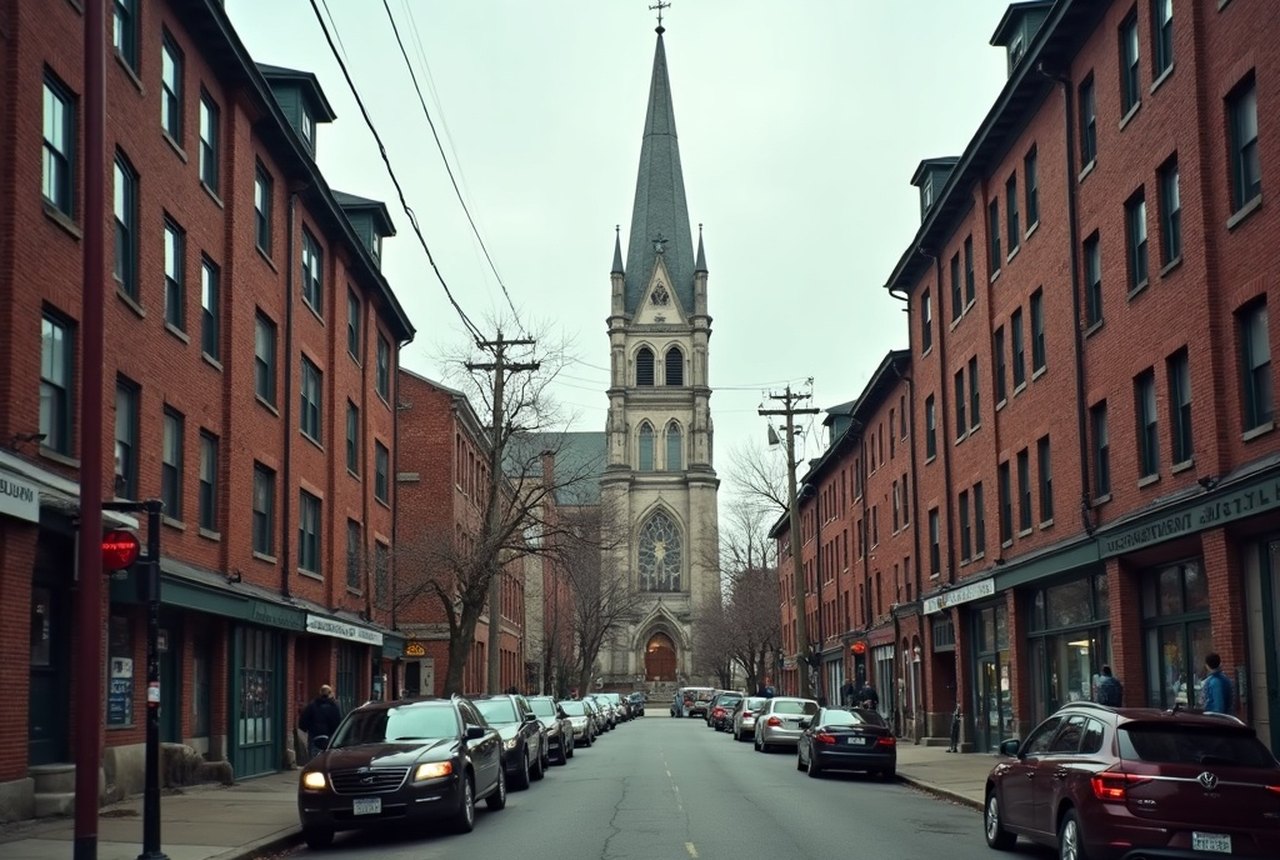
What they leave behind is more than nostalgia. The French-Canadian mill-town church represents a particular kind of sacred architecture — deliberate, communal, fiercely expressive of a minority identity — that shaped the built environment of industrial Massachusetts as decisively as any Brahmin civic project. Walk the older streets of Holyoke or Fall River today and the spires still tell you: here, a community bet everything on permanence.
The money came in nickels and dimes collected by syndics — lay trustees who managed building funds with fierce communal pride
- 1840sHolyoke laid out as purpose-built industrial city; French-Canadian influx begins
- mid-19th c.St. Jean Baptiste and similar national parishes established in Lowell
- post-WWItextile industry decline begins; French-Canadian community assimilation accelerates
- late 20th–21st c.archdiocesan consolidations close or merge many ethnic parishes
Walk the older streets of Holyoke or Fall River today and the spires still tell you: here, a community bet everything on permanence