The Ship and the Campanile
They arrived speaking Sicilian, Calabrian, Neapolitan — dialects more than languages, rooted in places where the local church had organized life for centuries. When southern and central Italian immigrants poured into Boston's North End from the 1880s onward, they did not simply join an existing parish. They reconstituted one. The neighborhood's street grid became a kind of transplanted mezzogiorno, dense with families from the same towns, the same valleys, and — crucially — the same patron saints.
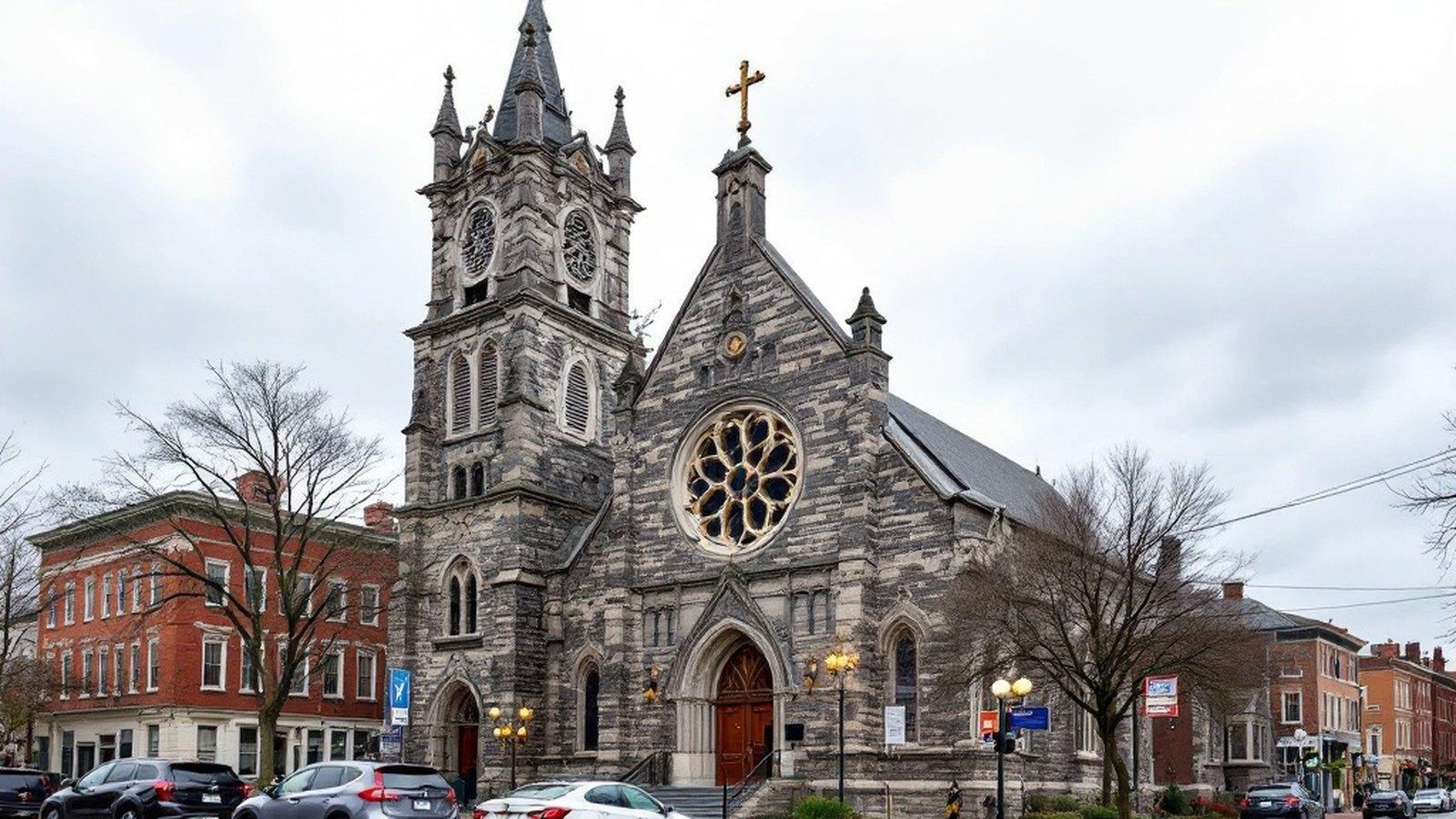
St. Leonard of Port Maurice Church on Hanover Street stands as the physical anchor of that story. Established in 1873 and served by the Franciscan Friars, it holds the distinction of being the first Italian Catholic church in New England. Its modest brick facade barely hints at the intensity of devotional life conducted inside and, on feast days, dramatically outside. The church did not merely accommodate Italian worship; it enabled Italian community to persist on foreign soil.
The Festa as Sacred Spectacle
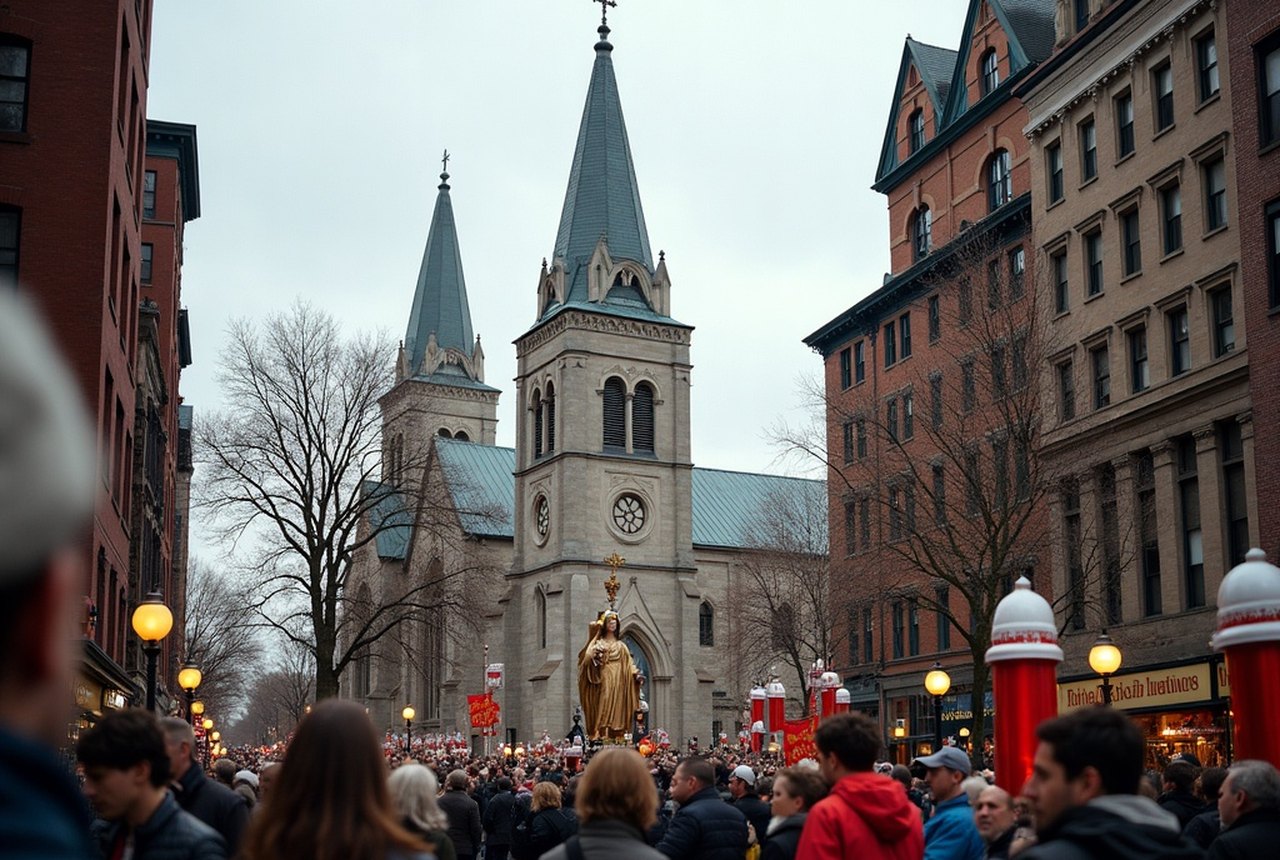
Nothing made the Italian parish more visibly itself than the festa — the feast day celebration of a patron saint that spills from church doors into the surrounding streets. In the North End, these celebrations survive to this day: Our Lady of the Assumption, Saint Agrippina, Saint Rosalia. The pattern is ancient and deliberate. A painted and gilded statue, often brought from Italy or crafted by Italian artisans, is carried in procession on a wooden platform borne on the shoulders of the faithful. Crowds press in. Money is pinned to ribbons trailing from the statue. Brass bands play. The boundary between sacred and civic dissolves entirely.
This was not mere folk sentiment untethered from the Church. The procession, the novena, the pinning of votive offerings — all connected to a sacramental logic in which the physical world carried spiritual meaning. The Italian immigrant brought that logic with him, and the parish church was the vessel that kept it alive when everything else — language, landscape, occupation — had been disrupted.
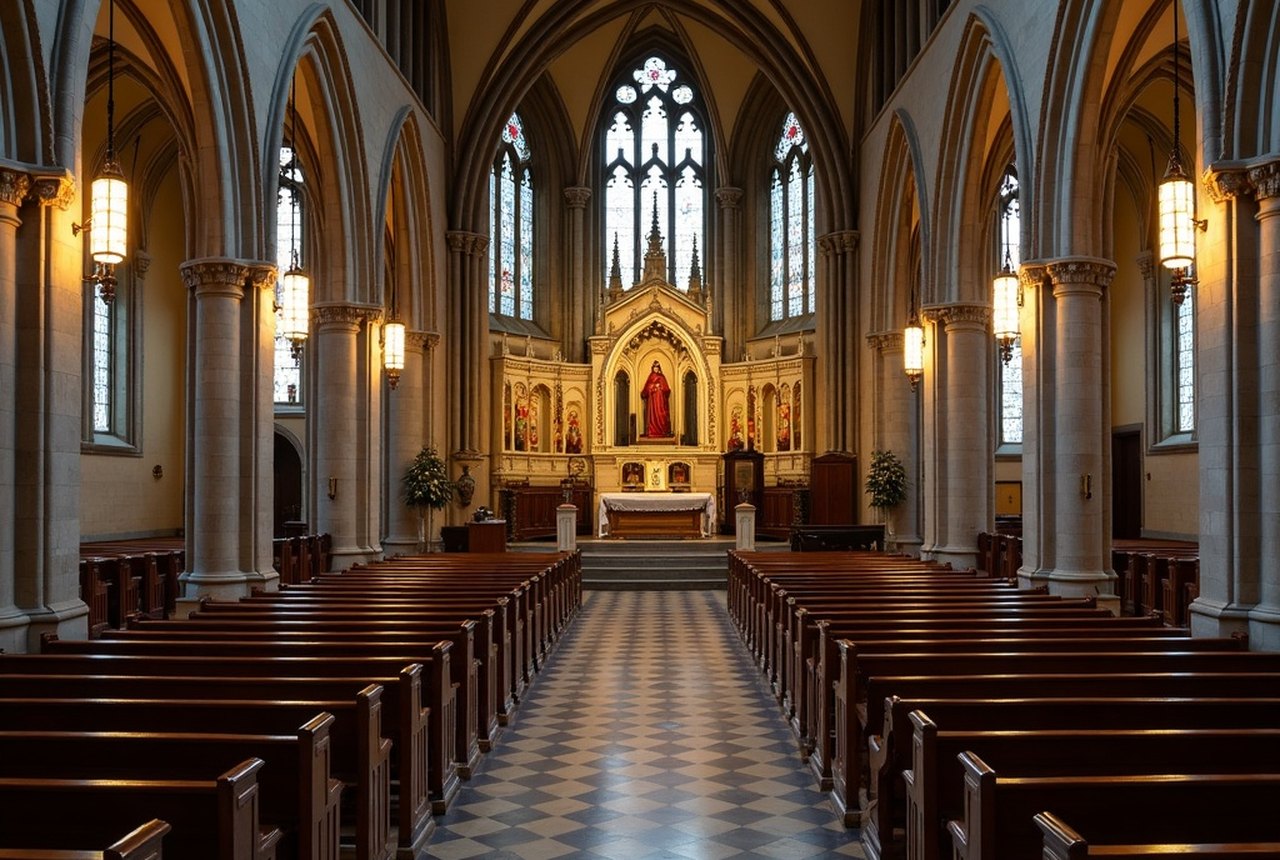
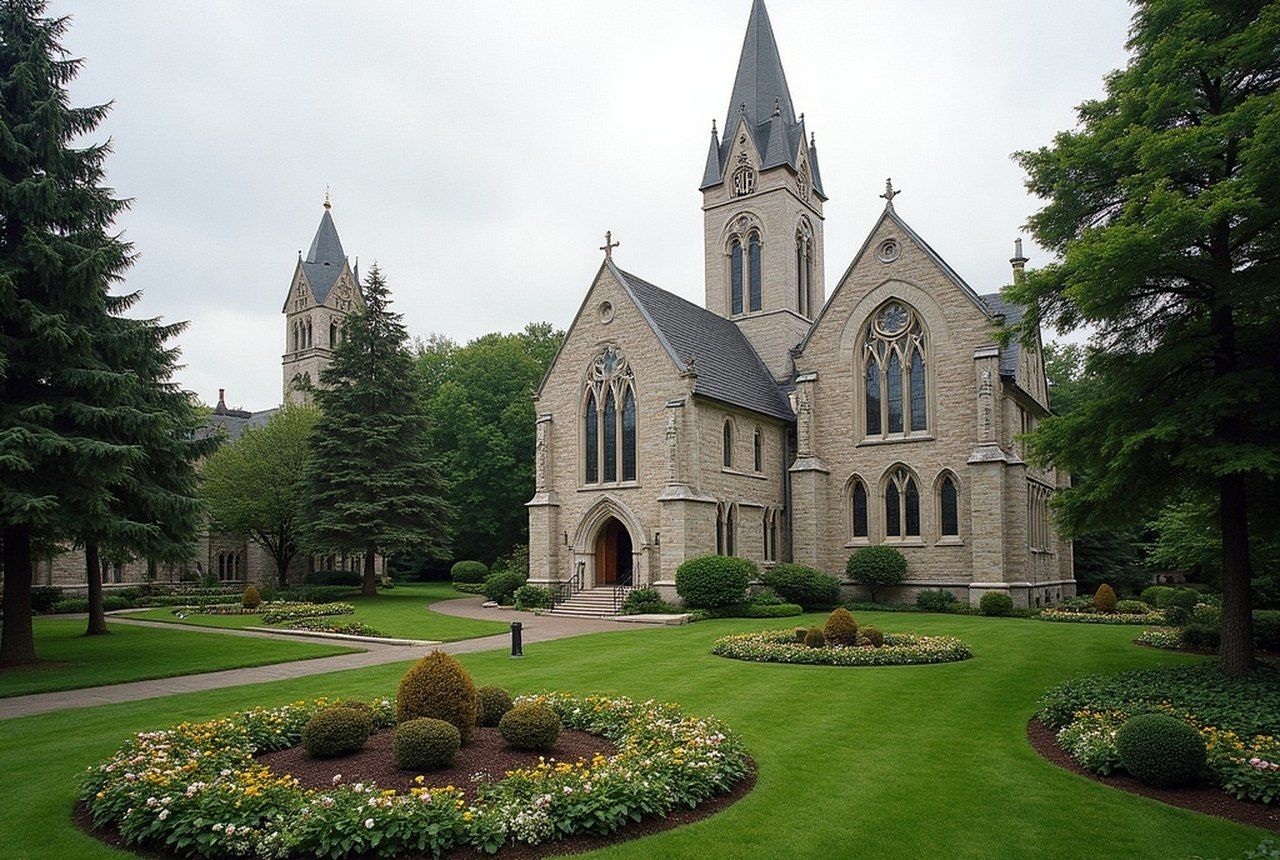
Devotional art inside these churches reflects the same intensity. Ornate side altars. Statues dressed in fabric robes and jeweled crowns. Ex-voto plaques — small painted or silver panels giving thanks for answered prayers — lining the walls near beloved images. At St. Leonard's, the Peace Garden on the adjacent lot added an outdoor devotional space that extended the church's gravitational pull beyond its walls, maintaining that Italian instinct for sacred space that refuses to stay indoors.
Beyond the North End
The Italian immigrant church was not only a Boston phenomenon. Across Massachusetts, comparable parishes were rising for Italians in cities like Lawrence, Brockton, and the East Boston neighborhood, where Sacred Heart Parish served a large Italian population and became a center of community life for arrivals navigating a new country.
The Sons of Divine Providence — the religious congregation founded by Don Luigi Orione — established a presence in Massachusetts that combined parish ministry with social works, reflecting the Italian Catholic understanding that the Church's role extended to the whole person: immigrant, worker, father, widow. The Italian Home for Children in Jamaica Plain grew from precisely that tradition, a practical extension of the parish's role as village square and safety net simultaneously.
What distinguished the Italian parish from its Irish or German counterparts was less theology than texture: the particular warmth of its devotional culture, the way an image of the Madonna could anchor neighborhood identity as surely as a street corner, the procession that stopped traffic and expected the city to wait. The church was not a building you visited on Sunday. It was the organizing principle of the week, the year, and — through the liturgical calendar's feasts — of time itself.
That inheritance has thinned in the decades since mid-century suburbanization scattered the old neighborhoods. But walk Hanover Street on an August feast night, and you will still feel it: the crowd, the candles, the statue swaying above the heads of the faithful. The village piazza, improbably, endures.
It was the organizing principle of the week, the year, and — through the liturgical calendar's feasts — of time itself
- 1873St. Leonard of Port Maurice established on Hanover Street, North End
- 1880s–1910speak of southern and central Italian immigration to Massachusetts
- Mid-20th centurysuburbanization begins dispersing North End Italian community
Nothing made the Italian parish more visibly itself than the festa — the feast day celebration of a patron saint that spills from church doors into the surrounding streets