The architect who shaped Catholic New England in stone
Patrick Charles Keely designed more than six hundred churches across the United States and Canada during the second half of the nineteenth century — a figure so extraordinary it strains credibility until you start counting the spires. Born in Thurles, County Tipperary, in 1816, Keely emigrated to Brooklyn in the 1840s and quickly found his calling in a country being remade by Catholic immigration. Diocese after diocese needed churches, and Keely needed commissions. The partnership endured for half a century.
Massachusetts alone received a remarkable share of his attention. As Irish, German, and French-Canadian communities pushed into Boston's neighborhoods and mill towns spread across the Connecticut River valley, congregations needed buildings that could anchor identity as much as house worship. Keely understood this instinctively. His Gothic Revival vocabulary — pointed arches, lancet windows, clustered piers, soaring nave proportions — gave immigrant parishes a visual language continuous with European Catholic tradition, translated into local granite and brick.
Boston and the Cathedral
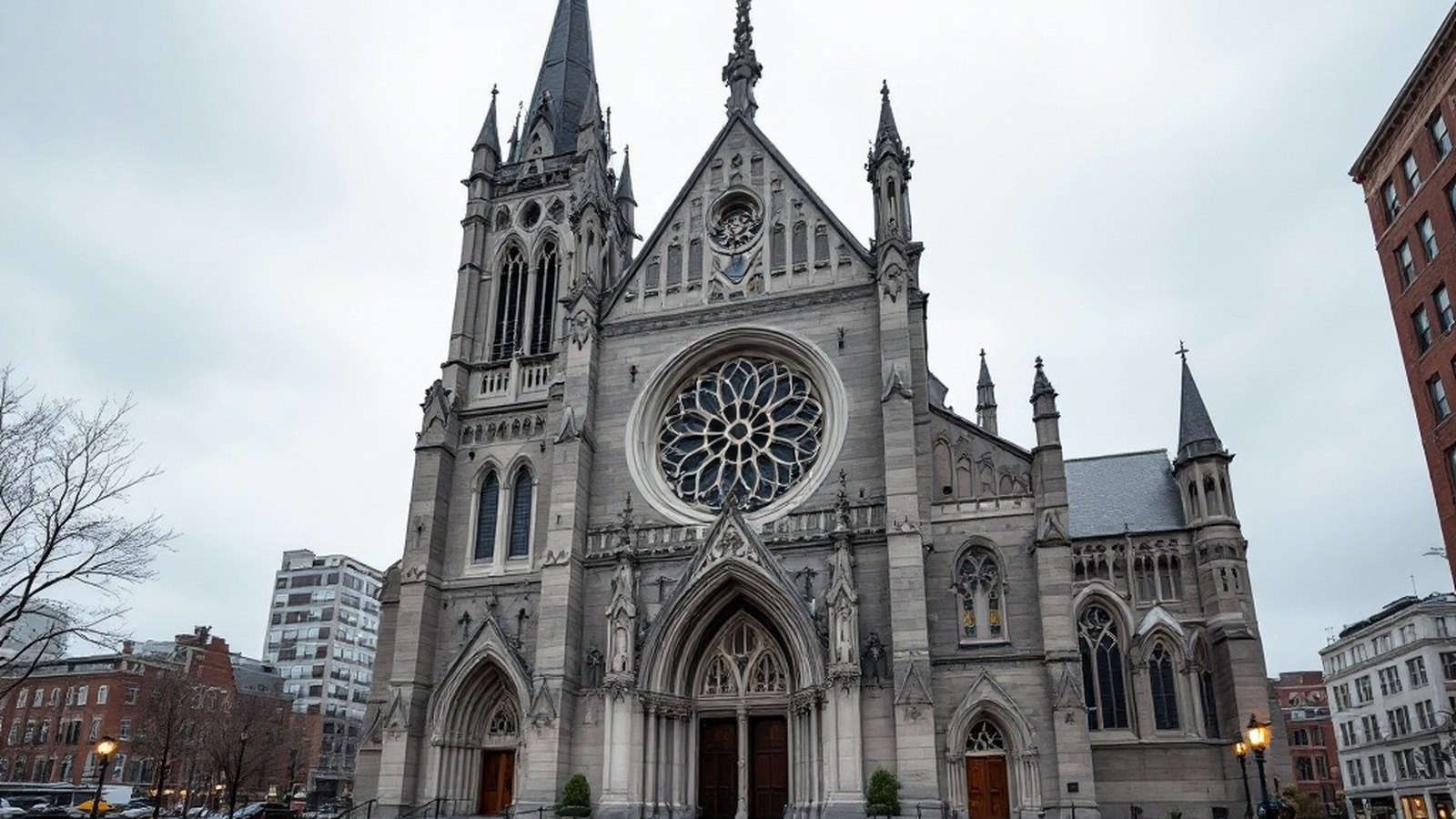
His single most consequential Massachusetts commission was the Cathedral of the Holy Cross in Boston's South End, begun in 1866 and consecrated in 1875. It remains the mother church of the Roman Catholic Archdiocese of Boston, and by floor area it ranks among the largest churches in the United States. Keely worked under Archbishop Williams and produced a design of deliberate grandeur: a cruciform plan in the English Gothic manner, faced in granite and Roxbury puddingstone, its nave stretching well over three hundred feet. The scale was unapologetic — a statement to Protestant Boston that the Catholic community had arrived to stay.
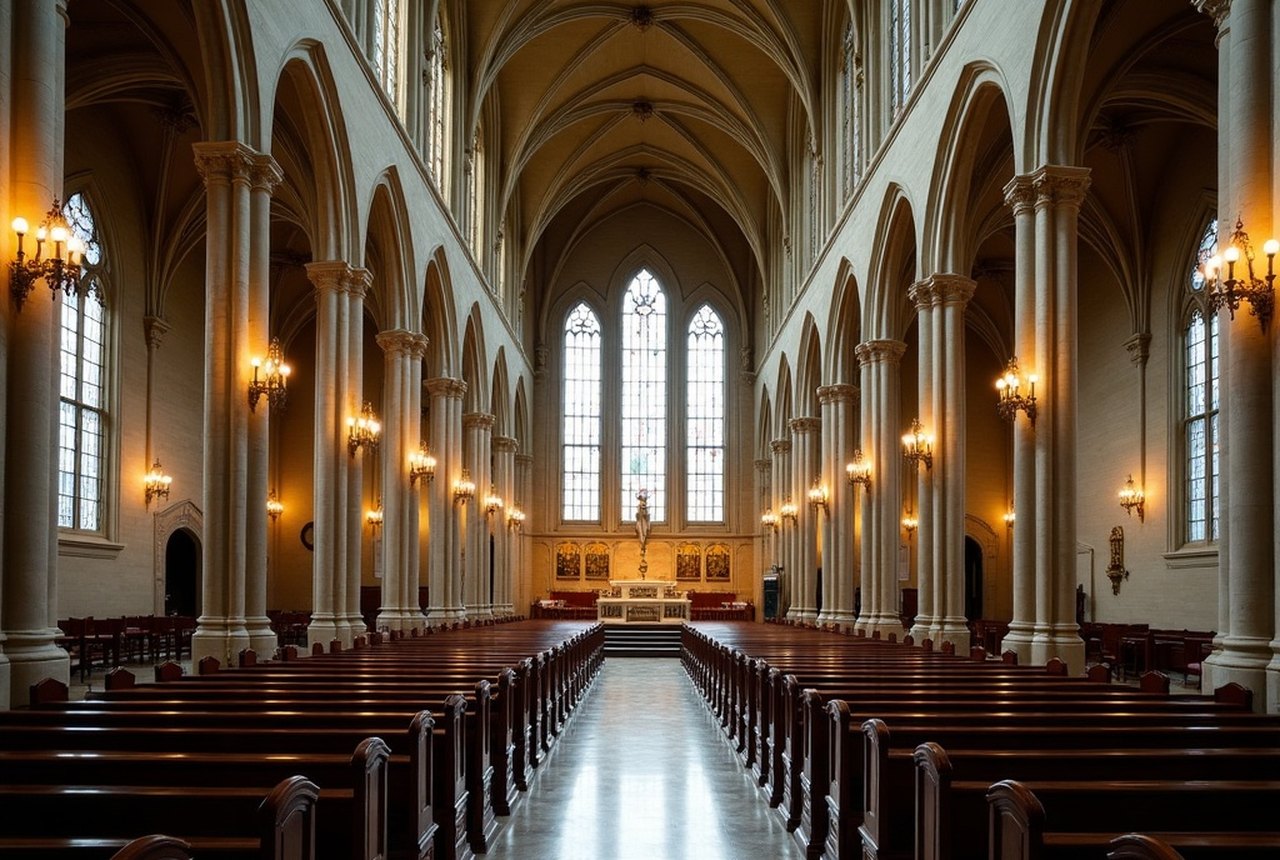
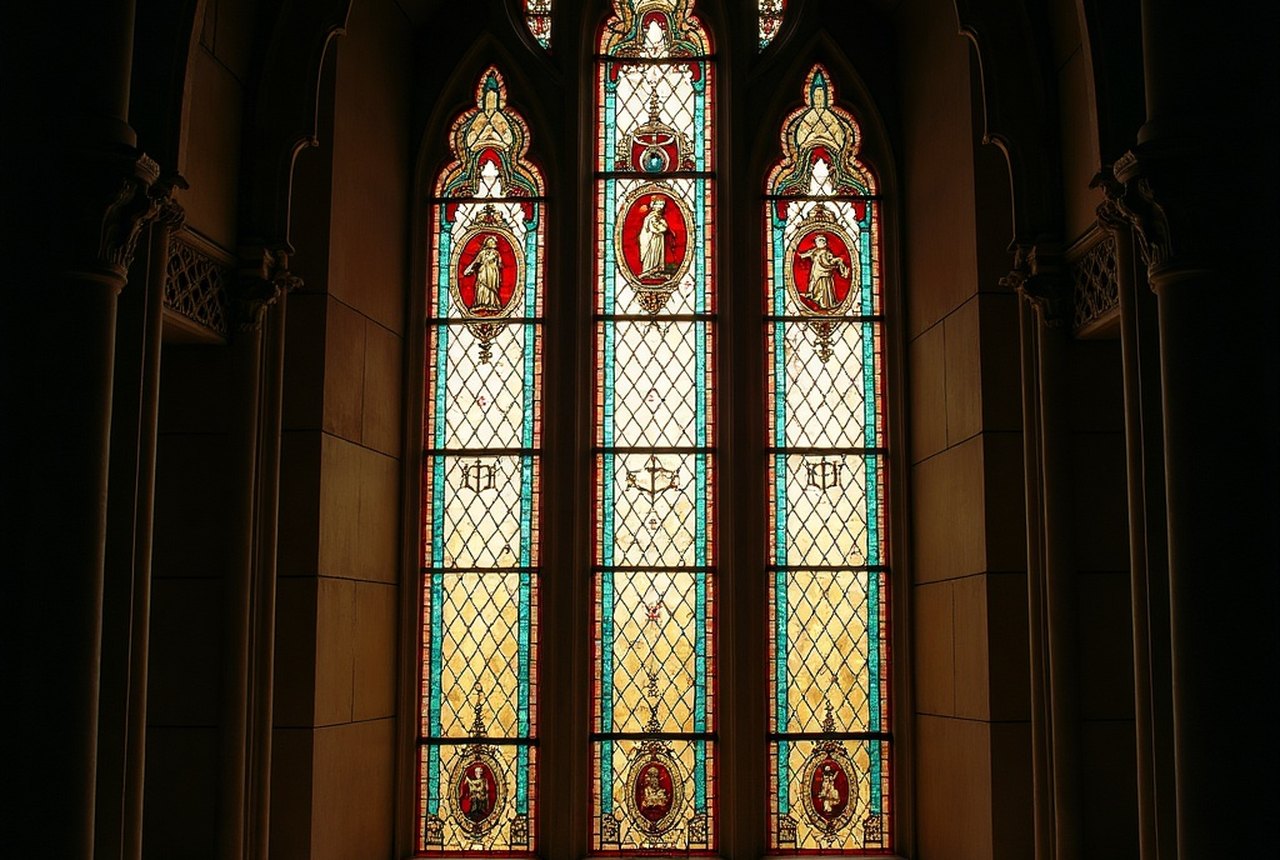
Inside, the proportions do the persuading quietly. Clustered piers draw the eye toward the sanctuary; the clerestory admits light in long bands that shift through the afternoon. The stained glass, installed in stages over decades, filled the lancet windows with narrative programs linking Old and New Testament scenes. The cathedral was designed, in other words, as a complete theological argument in stone, glass, and height.
Parish Churches Across the Commonwealth
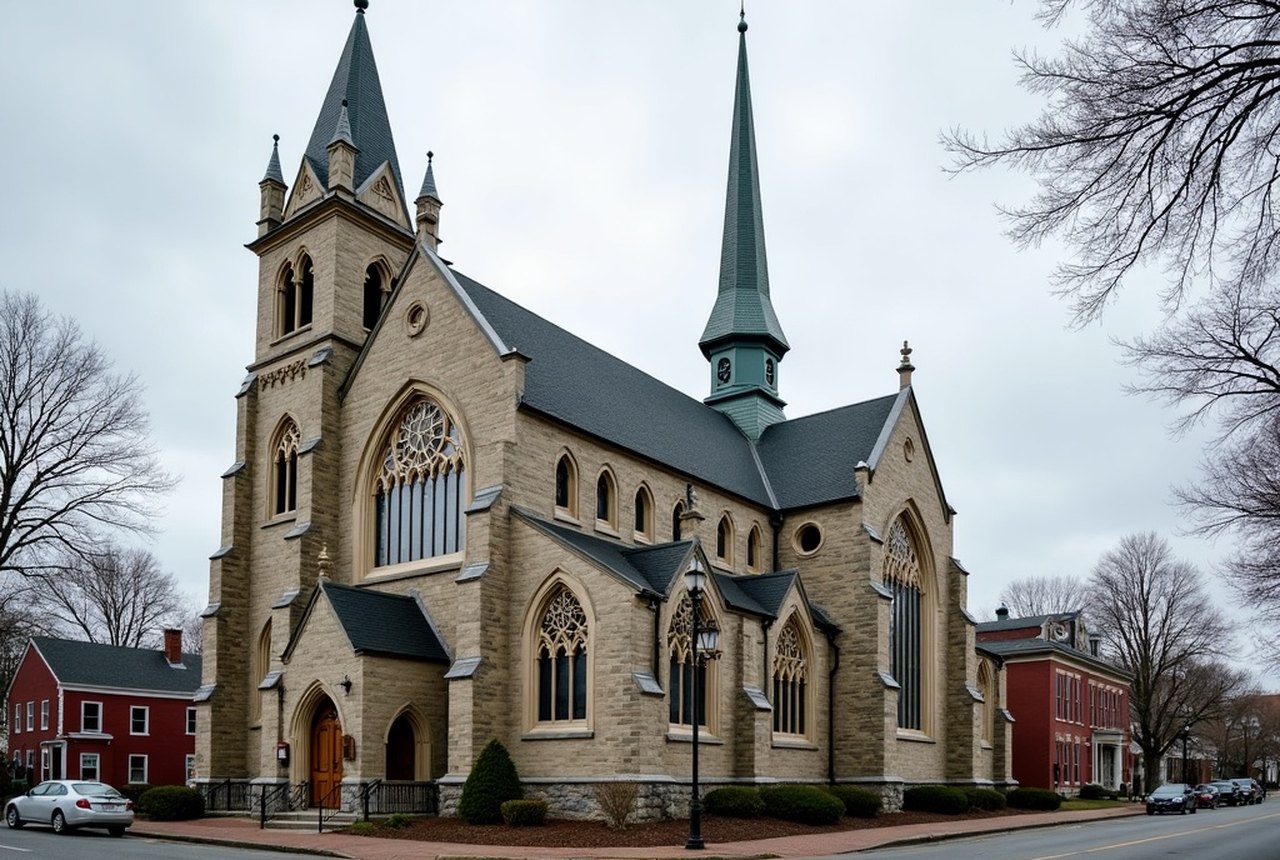
Beyond the cathedral, Keely's Massachusetts footprint extended to parish churches in communities from Lawrence to New Bedford. He was the architect of choice for the Archdiocese through the episcopates of several bishops, which meant that when a new parish formed — often within a decade of the first immigrants arriving — Keely's office was likely involved. The result was a loose family of buildings sharing proportional sensibility and Gothic detail even as local materials and budgets varied considerably.
His approach was disciplined rather than experimental. Where H. H. Richardson was breaking new ground at Trinity Church in Copley Square during exactly the same years — developing the muscular American Romanesque that would bear his name — Keely held to Gothic precedent with remarkable consistency. Critics have sometimes read this as conservatism; a more sympathetic reading sees it as fidelity to a community's expectations. His parishes were not patrons shopping for architectural novelty. They wanted permanence, recognizability, and a building that read unmistakably as Catholic from the street.
Keely died in Brooklyn in 1896. By then his office had produced a body of work distributed across virtually every diocese in the northeastern United States, Massachusetts included. He trained no famous successor and left no treatise. What he left was the buildings.
The scale was unapologetic — a statement to Protestant Boston that the Catholic community had arrived to stay
Legibility and Legacy
The enduring quality of Keely's Massachusetts churches is their legibility. A working-class immigrant congregation in the 1870s could walk into a Keely nave and understand immediately where they were — spatially, spiritually, and culturally. That clarity of purpose has not dated. Many of his buildings remain active parishes; others have been adapted or are at risk. Several have received recognition as architecturally significant structures within their local historical contexts.
For the heritage traveller moving through Boston's South End, or tracing the mill-town parishes of the Merrimack valley, Keely's work forms an unbroken thread — sometimes rough-edged, occasionally magnificent, always purposeful. He was not Massachusetts's most innovative architect. He was something the Commonwealth needed more urgently: a reliable, prolific shaper of sacred space, at precisely the moment when tens of thousands of Catholics needed a place to gather and call their own.
- 1816Patrick Charles Keely born in Thurles, County Tipperary, Ireland
- 1840semigrated to Brooklyn; established architectural practice
- 1866Cathedral of the Holy Cross, Boston, begun under Archbishop Williams
- 1875Cathedral of the Holy Cross consecrated
- 1896Keely died in Brooklyn
Massachusetts alone received a remarkable share of his attention