Light Made Doctrine: Tracing the Windows' Origins
The Munich Current
When Irish, Italian, and Polish immigrants built their parishes across Massachusetts in the nineteenth and early twentieth centuries, they were not simply erecting functional shelter. They were making declarations — in stone, in timber, and above all in glass. The stained-glass windows that survive in these churches are among the finest decorative arts in New England, and their origins trace a surprisingly international arc.
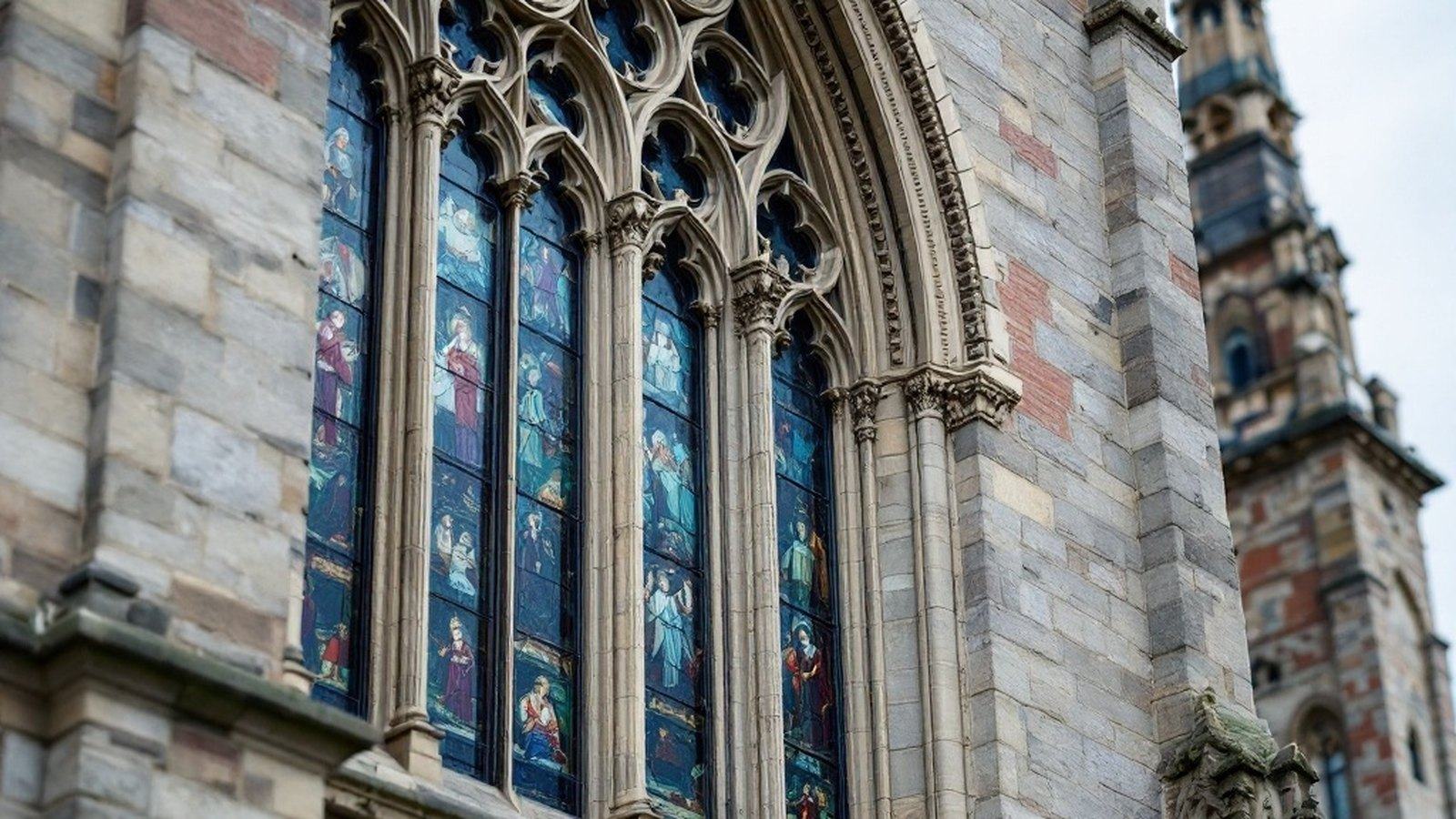
The dominant early influence was Munich. From roughly the 1850s onward, Bavarian workshops — most notably the Royal Bavarian Art Institute for Stained Glass, founded in 1827 — exported windows across the Atlantic by the thousands. American Catholic bishops, many trained in Rome and sympathetic to European ecclesiastical aesthetics, favored this idiom: rich jewel tones, meticulous figure painting on pot-metal glass, and compositional schemes drawn from Renaissance altarpieces. The results were technically accomplished and deliberately devotional. In parish after parish across Massachusetts, the Munich style gave working-class immigrant congregations windows that looked, unmistakably, like those of the Old World they had left behind.
Patrick Charles Keely, the prolific Irish-born architect who designed scores of New England Catholic churches — including the Cathedral of the Holy Cross in Boston's South End — typically worked with these European suppliers or their American agents. The Cathedral of the Holy Cross, the mother church of the Roman Catholic Archdiocese of Boston, is a case study in this transatlantic exchange: its vast Gothic Revival interior demanded windows on a monumental scale, and the glass installed there reflects the high-Victorian taste for warm, saturated color and narrative complexity.
The Chartres Shadow and the American Studio Response
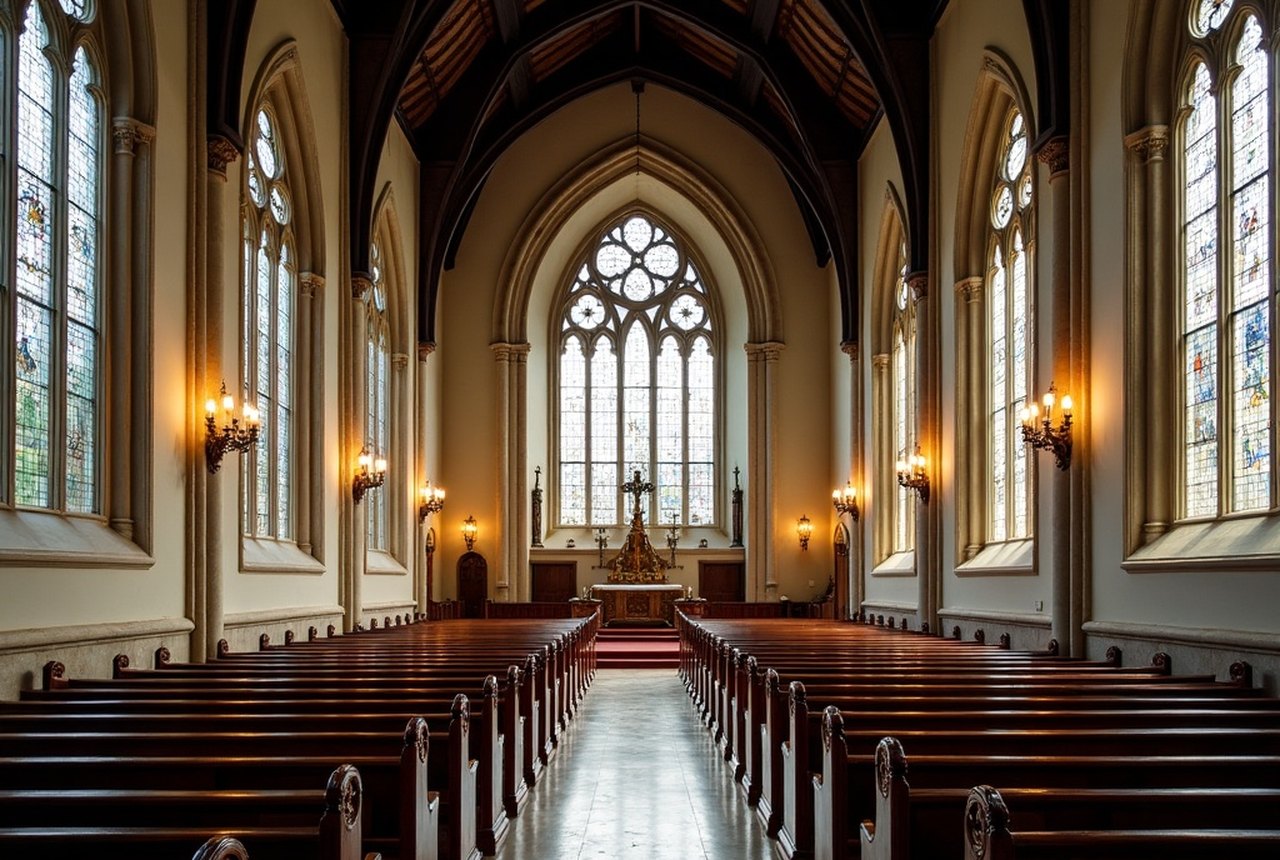
The Munich approach did not go unchallenged. As the nineteenth century drew to a close, a counter-current emerged, inspired by the medieval glass of France — Chartres above all — with its flatter, more stylized figures, its mosaic-like leading, and its preference for luminosity over painterly detail. American artists, increasingly restless with imported goods, began pressing for a homegrown aesthetic.
The most consequential figure in this shift was John La Farge, who in the 1870s and 1880s developed opalescent glass: a layered, multi-textured medium that exploited the play of transmitted and reflected light in entirely new ways. La Farge's collaborations with H. H. Richardson — most famously at Trinity Church in Copley Square, Boston, completed in 1877 — brought this American idiom to national attention. Trinity is not a Catholic church, but the ripple effect on Catholic patronage was immediate and lasting. The appetite for serious artistic glass, made in America, by American studios, had been decisively established.
By the early twentieth century, Massachusetts Catholic parishes were drawing on a widening field of suppliers. Some continued to import from Germany and France. Others commissioned from studios in Boston and New York. Studios often tailored iconography to the specific ethnic devotions of a congregation — a Polish parish's image of Our Lady of Częstochowa, an Italian community's San Gennaro.
Richardson — most famously at Trinity Church in Copley Square, Boston, completed in 1877 — brought this American idiom to national attention
Reading the Windows Today
For the heritage traveller, Massachusetts's Catholic stained glass rewards close attention. Notice the shift in style as you move through a church's history: an older nave window with its deep Munich blues and greens giving way to a lighter, more graphic clerestory installed a generation later; a lancet window whose brushwork betrays Continental training beside one whose opalescent shimmer is purely American. At the Basilica of Our Lady of Perpetual Help on Mission Hill, Boston — the Redemptorist landmark completed in the 1870s — the glass layers several campaigns of installation, an accidental but eloquent archive of changing taste.
The windows were never merely ornament. They were catechism in color, community in light — funded by parish donations, dedicated to the dead, and made to last. In many cases they have outlasted the communities that paid for them, surviving demographic shifts, urban renewal, and consolidation. What remains is still, often, extraordinary.
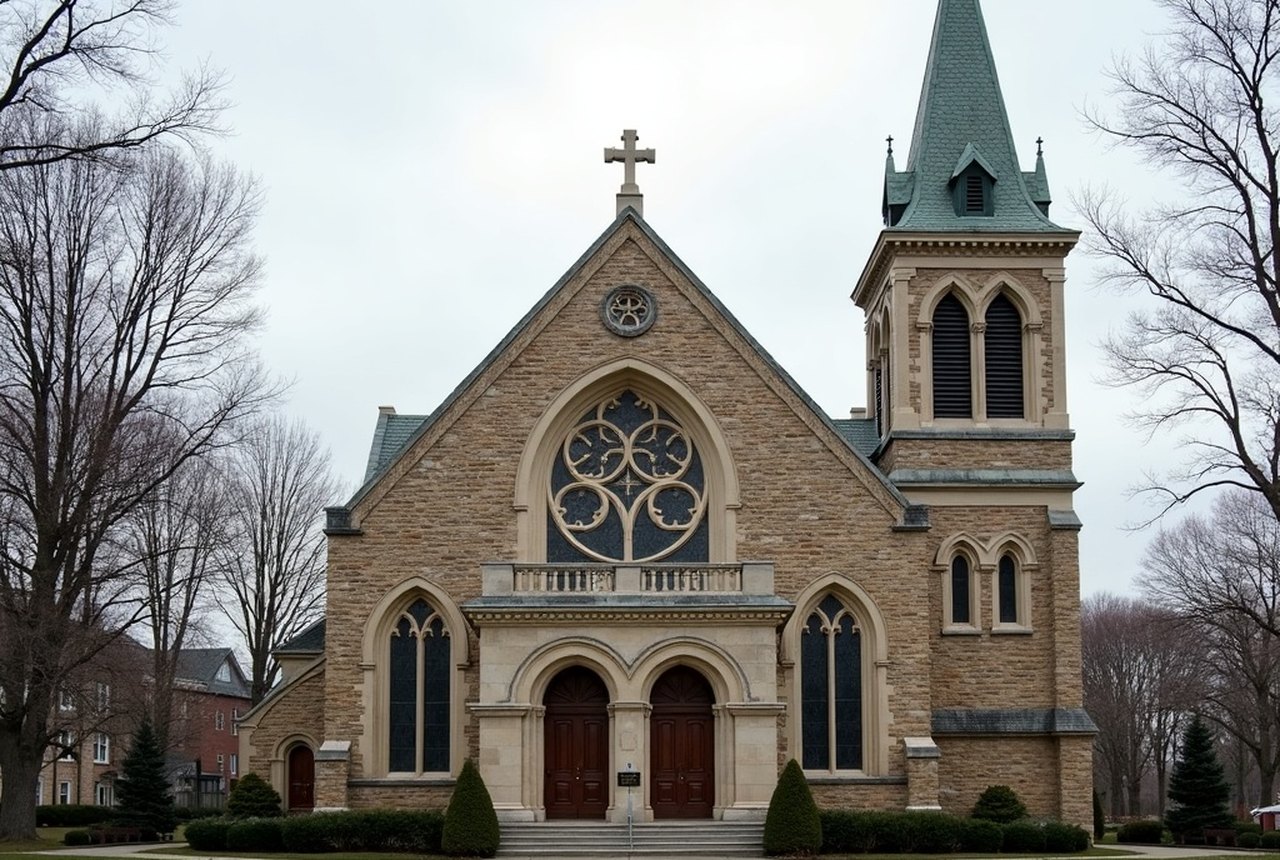
- 1827Royal Bavarian Art Institute for Stained Glass founded; Munich export trade begins
- 1850s onwardMunich-style windows imported widely into American Catholic churches
- 1870s–1880sJohn La Farge develops opalescent glass; Trinity Church, Boston completed 1877
- Early 20th centuryAmerican studios increasingly supplant European imports
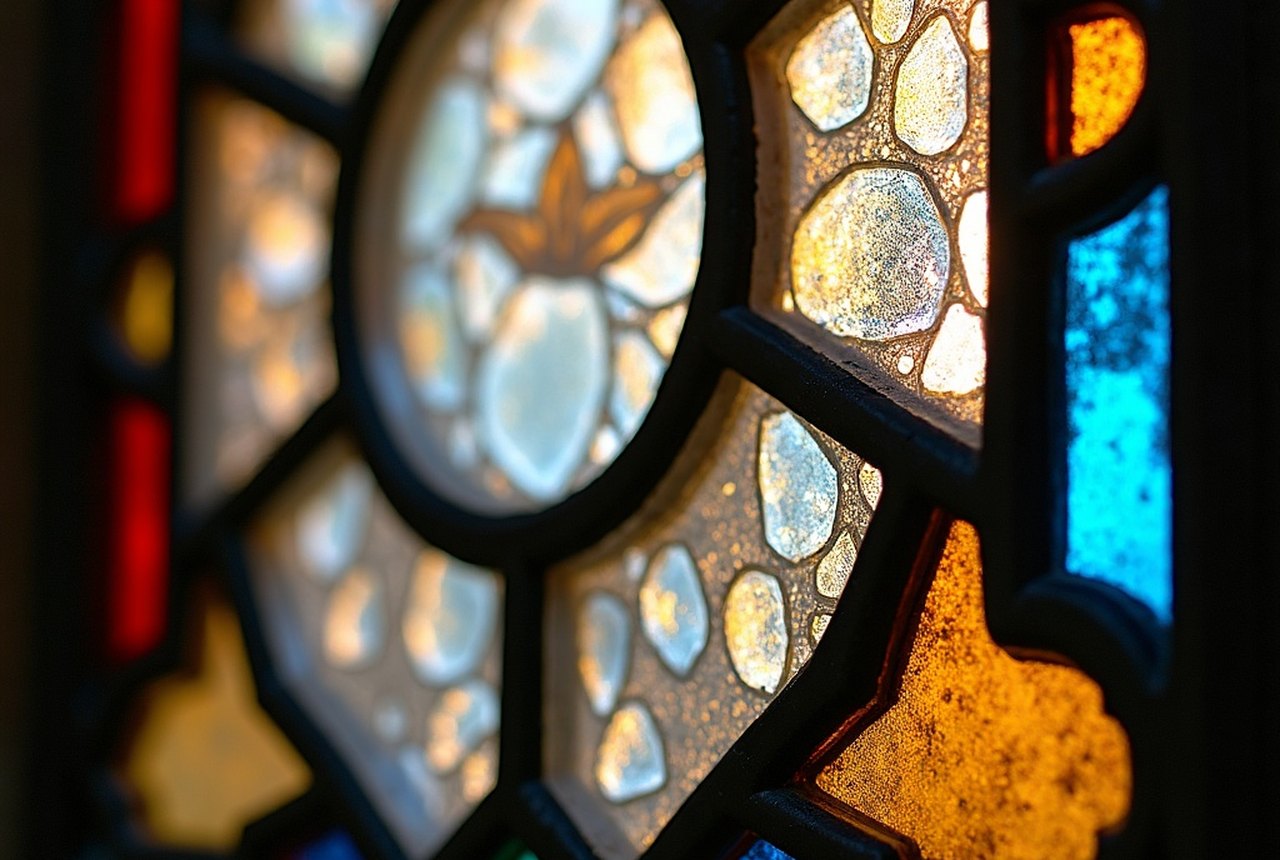
They were catechism in color, community in light — funded by parish donations, dedicated to the dead, and made to last