A Local Stone With an Unlikely Career
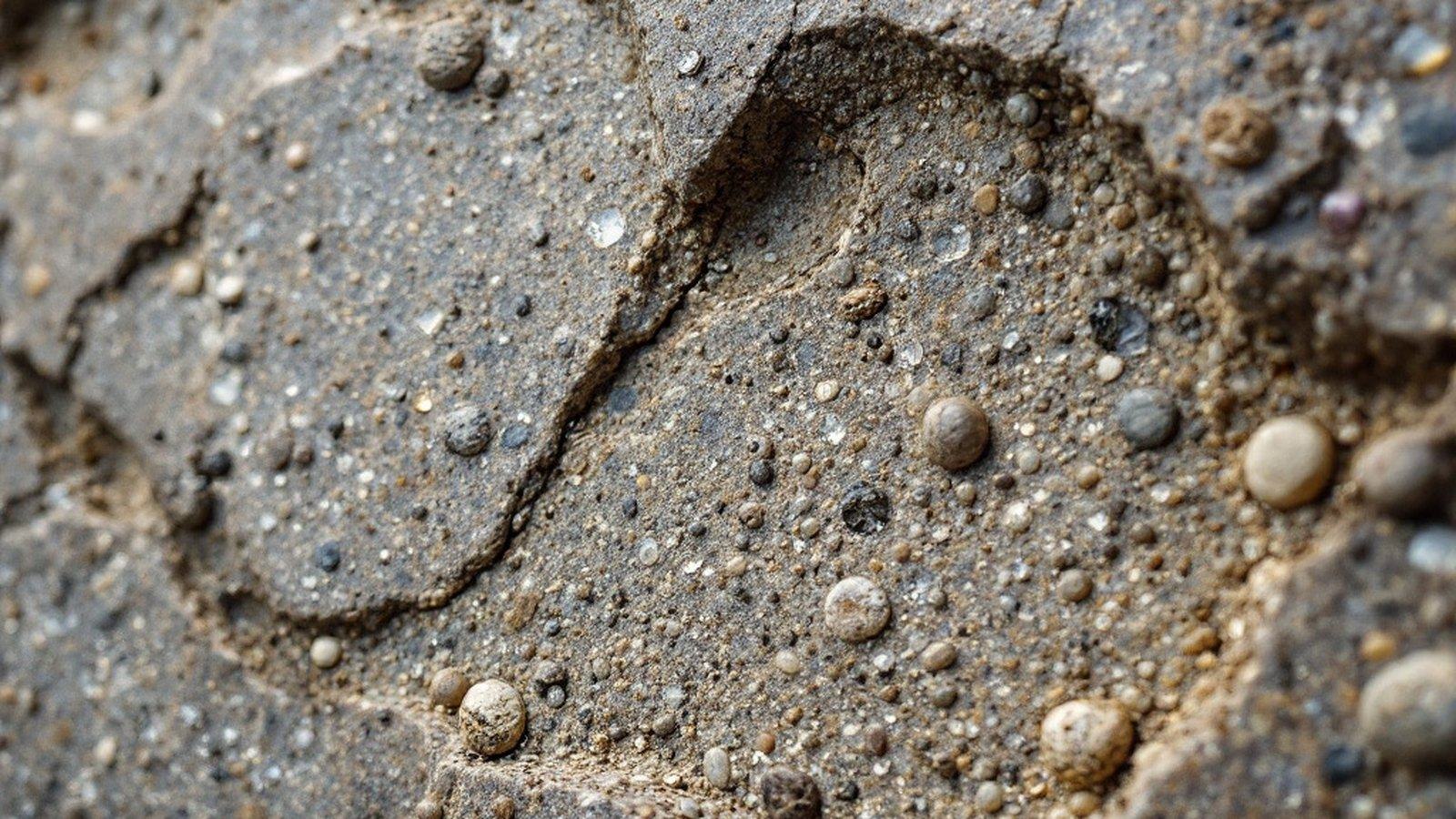
Roxbury puddingstone — formally, Roxbury conglomerate — is a sedimentary rock formed roughly 600 million years ago when pebbles of quartzite, feldspar, and volcanic debris were cemented by a fine-grained matrix into something that looks, unmistakably, like a steamed pudding. The analogy gave it a name that stuck. Geologically rare, the formation runs in a narrow band through what is now Roxbury, Jamaica Plain, and the South End, making it essentially a Boston-exclusive building material.
Quarrying peaked in the nineteenth century, when the city was expanding rapidly and architects needed a tough, locally abundant stone. Puddingstone proved nearly as hard as granite — resistant to frost and fire alike — and its mottled, polychrome surface gave buildings a texture that smooth-cut granite or brick simply couldn't match. It became the material of choice for churches whose congregations wanted permanence and presence on a modest budget.
The Stone in Sacred Service
The Cathedral of the Holy Cross in the South End — the mother church of the Roman Catholic Archdiocese of Boston, completed in 1875 — deploys puddingstone across its immense Gothic Revival exterior, its rough-hewn courses contrasting with the smoother limestone trim around its lancet windows and portals. The combination gives the façade a dramatic chiaroscuro that no single-stone building achieves.
A few miles away, H. H. Richardson's Trinity Church at Copley Square draws the eye with its famous Romanesque Revival massing, but look closely at the base courses and you'll spot puddingstone again, anchoring the composition in recognizable local geology even as Richardson brought in Dedham granite for the upper walls, trimmed with Longmeadow brownstone. The American Institute of Architects has repeatedly ranked Trinity Church among the finest buildings in the United States — and part of what grounds it, literally, is this local rock.
St. Stephen's Church in the North End, though best known for its Federal interior and its long association with Paul Revere's bell, also shows puddingstone in its surroundings, embedded in the streetscape that formed around it through centuries of building and rebuilding.
What these sacred landmarks share is a material identity rooted in the specific ground beneath Boston. Puddingstone weathers to warm amber and rust; it holds detail without fussiness; and it carries the unspoken message that this building belongs here, grew here, will not be moved. For the immigrant parishes that raised these walls with hard-earned money, that permanence was the whole point.
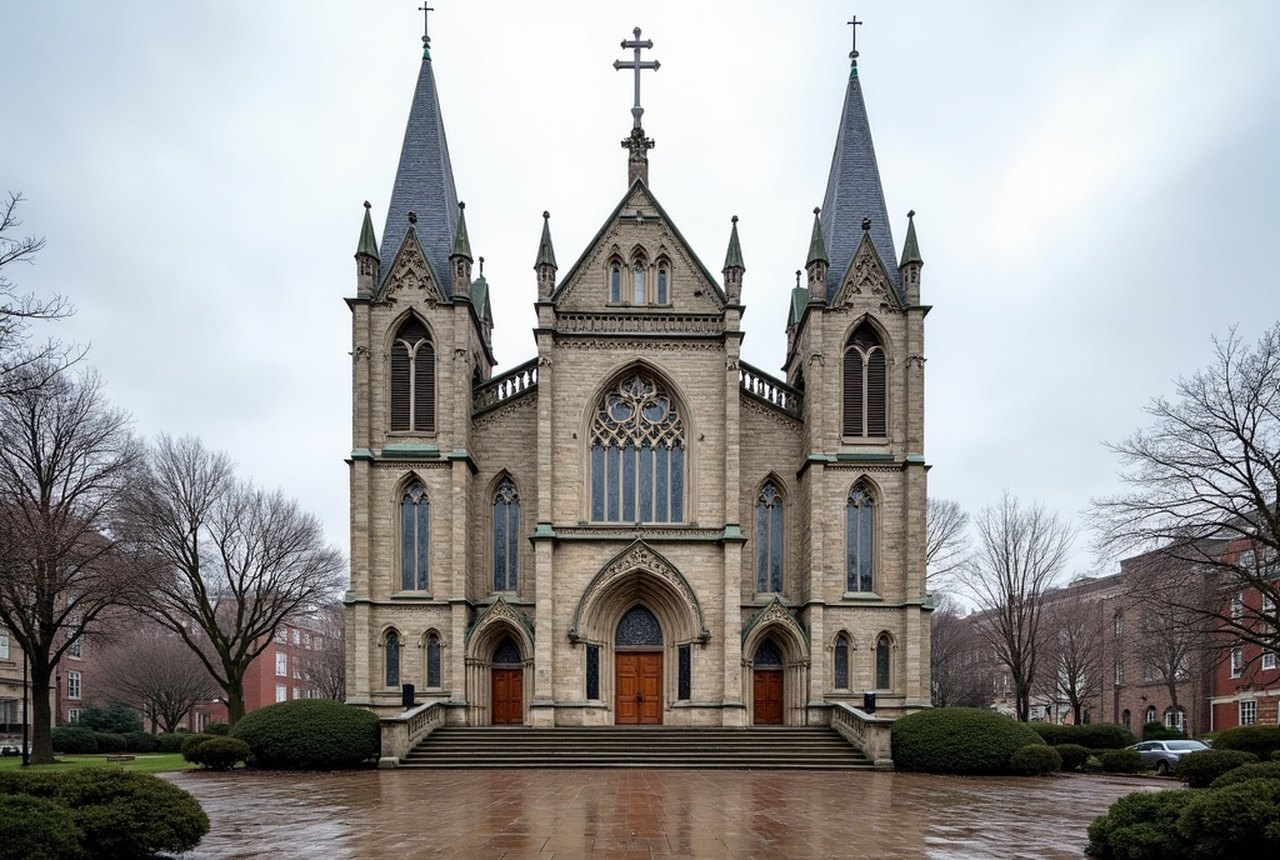
The combination gives the façade a dramatic chiaroscuro that no single-stone building achieves
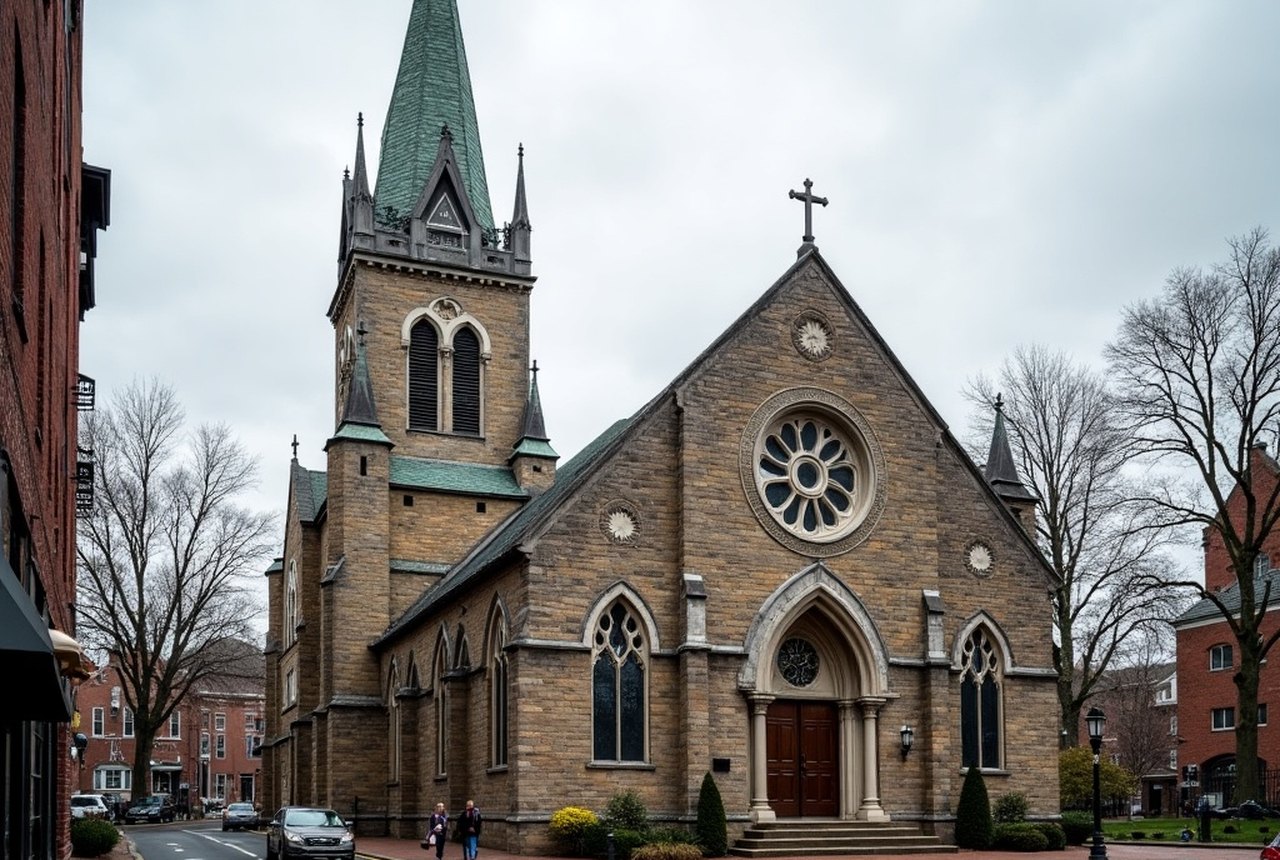
- ~600 million years agoRoxbury conglomerate formed from cemented pebbles
- 19th centurypeak quarrying era; puddingstone enters widespread use in Boston construction
- 1875Cathedral of the Holy Cross completed