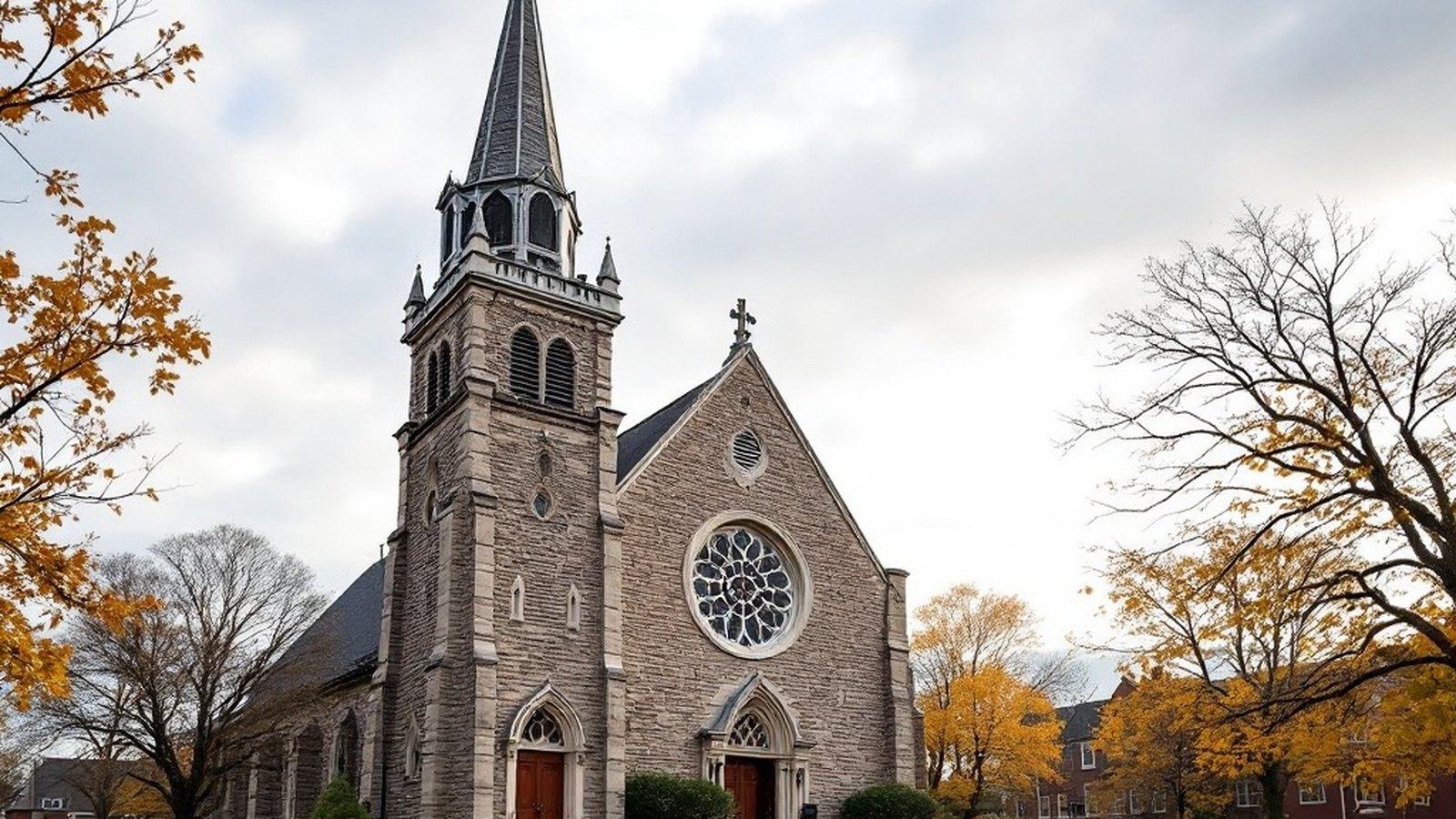
Stone and Steam
The Connecticut River valley's industrial boom is usually told in cotton and wool — in the brick mill complexes of Springfield, Chicopee, and Holyoke that once made western Massachusetts one of the most productive manufacturing corridors in the United States. Less often told is what that prosperity built on the hillsides above the mill yards: a Catholic skyline assembled piece by piece by Irish, French-Canadian, and Polish workers who arrived in successive waves from the 1840s onward and poured a portion of every paycheck into something that would outlast the looms.
The pattern repeated itself from town to town. A national parish formed around a language and an ethnic identity; a wooden chapel gave way to a brick building; the brick building was eventually demolished and replaced with stone. Each cycle tracked the economic trajectory of the community. When the mills were flush, the churches grew more ambitious — higher towers, better glass, carved stonework that would not have looked out of place in the industrial cities of northern France or the textile towns of County Cork.
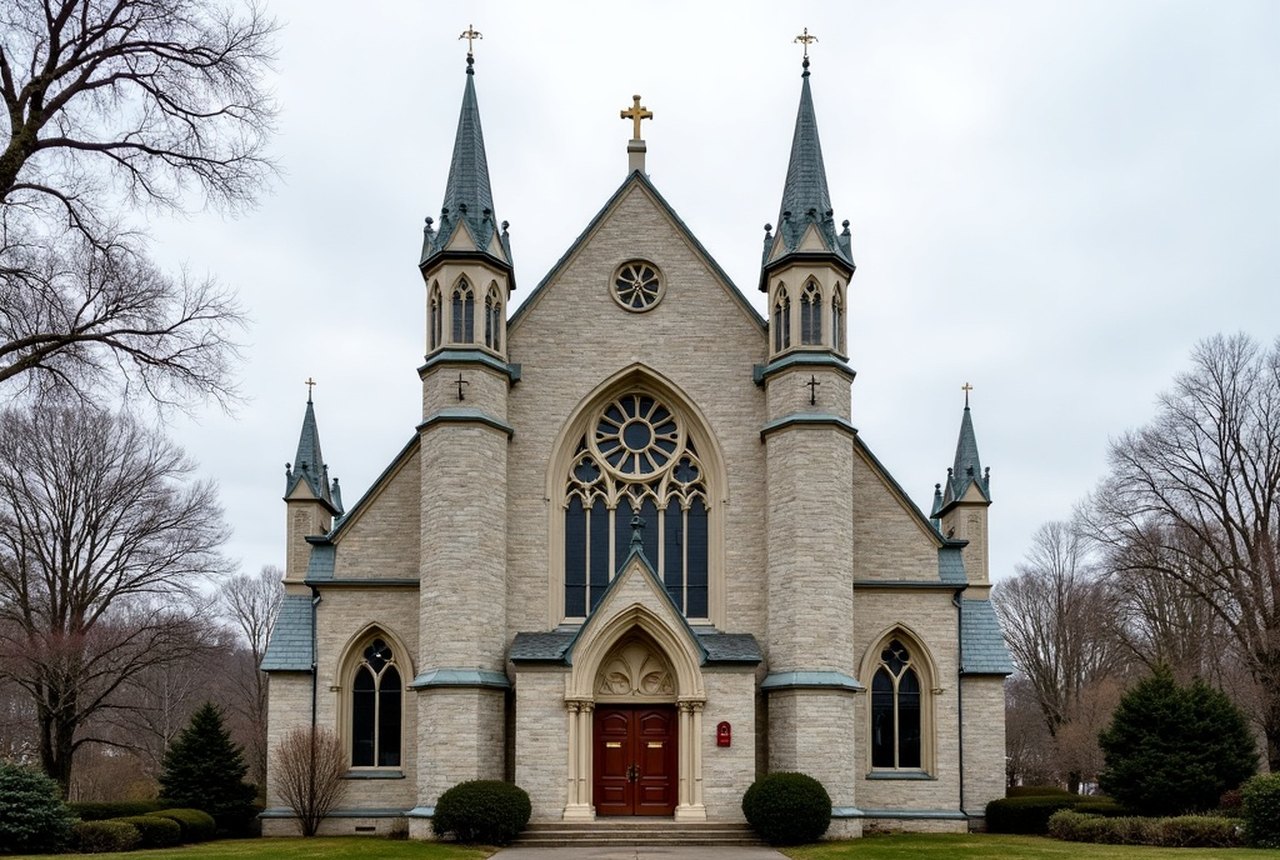
The Diocese of Springfield, established in 1870 to serve the valley and the Berkshires, inherited this momentum and presided over decades of construction that produced an extraordinary density of late-Victorian ecclesiastical architecture in a relatively compact geography. Patrick Charles Keely, the prolific Irish-American architect who shaped so much of Catholic New England, left his mark here as he did across Massachusetts — his Gothic Revival churches, with their steeply pitched roofs and pointed lancet windows, became almost a default template for parishes that wanted to signal permanence and respectability in equal measure.
The Workers' Cathedrals
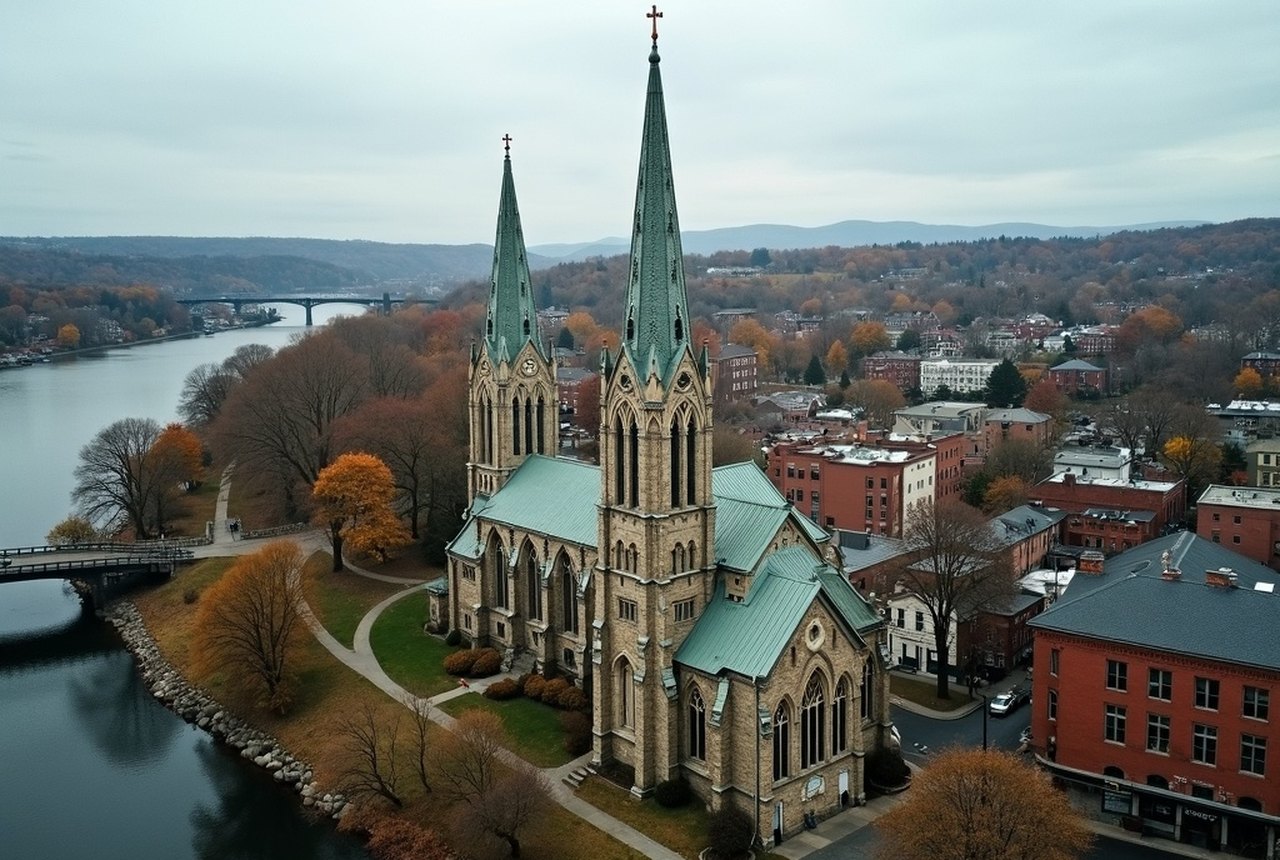
Holyoke, laid out as a planned industrial city in the 1840s, offers the most concentrated example of the valley's Catholic building tradition. French-Canadian mill workers drawn from Quebec by the paper and textile industries established parishes whose churches still anchor neighborhoods that have changed dramatically around them. The spires visible from the Connecticut River bridges are not decorative accidents; they were deliberately scaled to compete with the mill smokestacks on the opposite bank, a vertical argument made in Romanesque Revival stone for the dignity of the people who lived in their shadow.
In Adams, in the northern Berkshires, St. Stanislaus Kostka Church stands as evidence of a different immigrant chapter: the Polish workers who came to the area's textile operations brought with them a fierce attachment to parish life as a carrier of national as well as religious identity. The church's interior, richly ornamented and maintained with genuine community pride, reads as a kind of monument to survival — of a culture transplanted across an ocean and kept alive partly through architecture.
Springfield's Cathedral of St. Michael the Archangel, seat of the Diocese of Springfield, gathers these threads into a single building of real civic scale. Its Gothic stonework and commanding tower make it one of the more serious pieces of ecclesiastical architecture in western Massachusetts, a building that rewards patient looking — the kind of detailed craftsmanship in window tracery and carved capitals that only becomes legible when you stand still long enough to let the eye travel.
After the Mills
The industrial logic that funded these buildings has largely dissolved. The mills are condominiums now, or arts spaces, or empty. Some of the parishes that built these churches have merged, their congregations consolidating into buildings that were once their rivals'. What remains is a built landscape of unusual richness — one in which the ambitions of immigrant communities in the 1880s and 1890s are still physically present, still defining the skylines of cities that have otherwise been remade several times over.
For the heritage traveller willing to drive the valley rather than simply pass through it on the interstate, the reward is a series of encounters with buildings that were built to last, built to impress, and built to say something about the people who put them up — which is, when you set aside all the architectural terminology, exactly what the best sacred architecture has always done.
Holyoke, laid out as a planned industrial city in the 1840s, offers the most concentrated example of the valley's Catholic building tradition
- 1840sConnecticut River valley's planned industrial expansion begins; Irish workers arrive
- 1840s onwardFrench-Canadian, Polish, and other immigrant workers swell Catholic population
- 1870Diocese of Springfield established to serve the valley and Berkshires
- late 19th centurypeak period of Catholic church construction across the valley
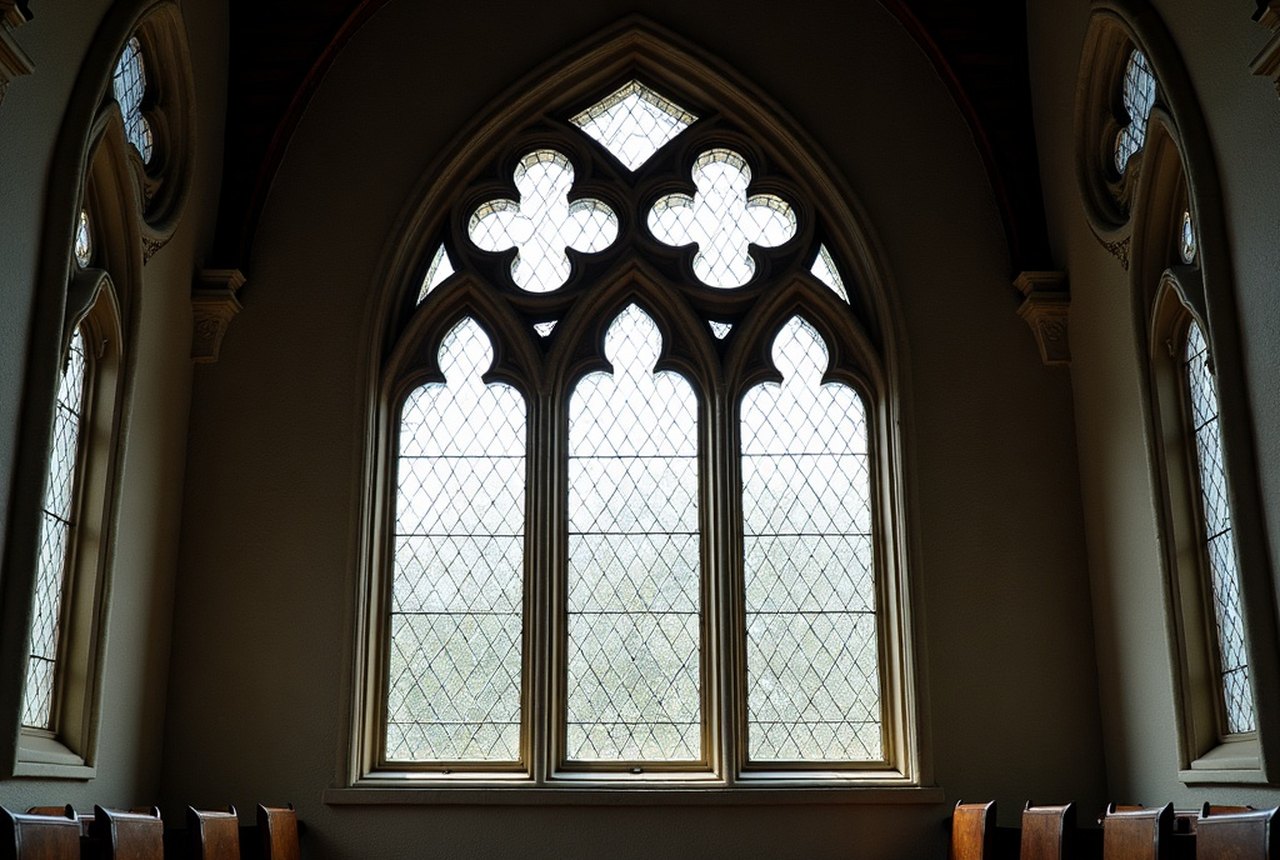
Some of the parishes that built these churches have merged, their congregations consolidating into buildings that were once their rivals'