Stone, Steeple, and Community in the Hills
The Berkshires are best known for Tanglewood, autumn foliage, and the contemporary art assembled at MASS MoCA in North Adams — but the region's church buildings tell a quieter, equally layered story. Scattered across hill towns and mill cities alike, they record the successive waves of immigration that transformed western Massachusetts from the mid-nineteenth century onward, and the surprising architectural ambitions those communities carried with them.
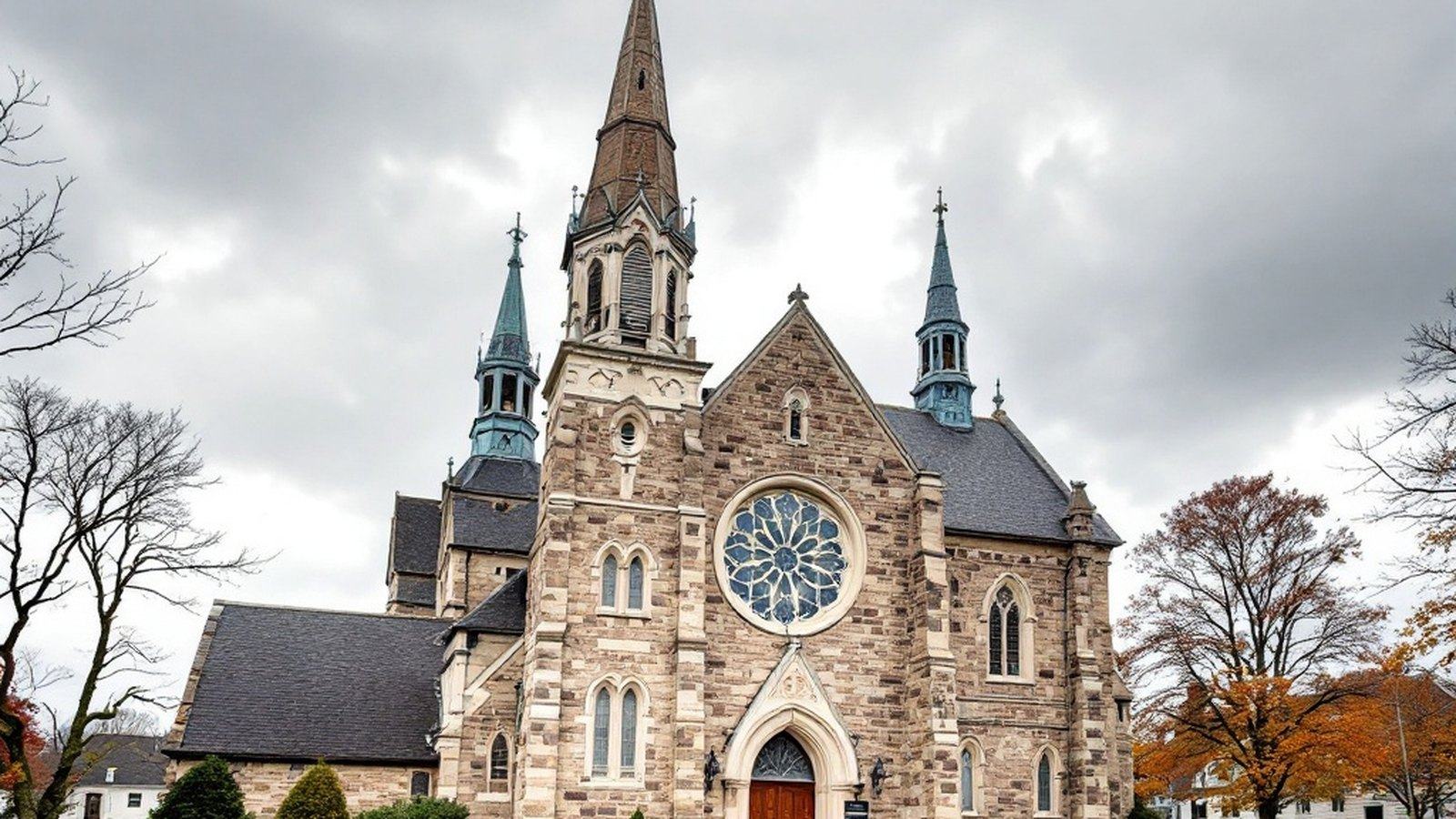
Adams, a small mill town tucked into the northern Berkshires, offers one of the clearest examples. St. Stanislaus Kostka Church, serving a Polish Catholic community, stands as a monument to working-class devotion: a congregation that pooled modest wages to raise a building far grander than its surroundings might suggest. The exterior stonework, the carefully maintained interior, and the dedication to a Polish patron saint all speak to a community insisting on permanence and dignity in a new country.
The broader pattern holds across the region. Irish, French-Canadian, Italian, and Polish immigrants each established parishes in the mill cities and towns of Pittsfield, North Adams, and Adams during the late nineteenth and early twentieth centuries, and each community left its architectural signature — a Gothic pointed arch here, a Romanesque campanile there — on the landscape. Many of these buildings drew on the polychrome stonework and heavy masonry traditions popularized in New England by architects working in the Romanesque Revival mode, adapted to local budgets and locally quarried materials.
The Diocese of Springfield, which administers Catholic parishes throughout western Massachusetts, has overseen both the preservation and the painful consolidation of these buildings as congregations have shifted and shrunk. Some churches have been repurposed; others remain active anchors of neighborhoods whose demographics have changed beyond recognition since their founding generations laid the cornerstones.
For visitors, the Berkshires' church buildings reward slow travel. The hills isolate these structures in ways that urban parishes rarely are — a stone nave glimpsed across a village green, a bell tower rising above second-growth forest — and that isolation clarifies the ambition they represent. These were not convenient or economical things to build in remote terrain. They were statements: that a community had arrived, intended to remain, and meant to mark its presence in lasting stone.

Adams, a small mill town tucked into the northern Berkshires, offers one of the clearest examples

- Mid-19th centuryIrish and French-Canadian immigrants begin establishing Berkshire parishes
- Late 19th–early 20th centuryItalian and Polish communities build signature churches in mill towns
- 20th–21st centuryDiocese of Springfield manages consolidation of shrinking congregations