
Shrines and Basilicas
Two destinations anchor any serious exploration of Boston's Catholic built heritage, and they could hardly be more different in atmosphere.
The Mary, Queen of the Universe National Shrine sits close to Logan Airport in East Boston, conceived and developed by the Sons of Divine Providence — the order founded by Don Luigi Orione — as a place of welcome for arriving travellers and the surrounding immigrant community alike. Its focal point is an arresting thirty-five-foot Madonna carved in marble by Arrigo Minerbi, an Italian-Jewish sculptor of considerable renown. That pairing — a Catholic devotional commission executed by a Jewish artist — gives the shrine a quietly remarkable backstory that most visitors walk past without knowing. The scale of the figure dominates the exterior precinct; seen against the low Boston harbor light, it registers with genuine force.
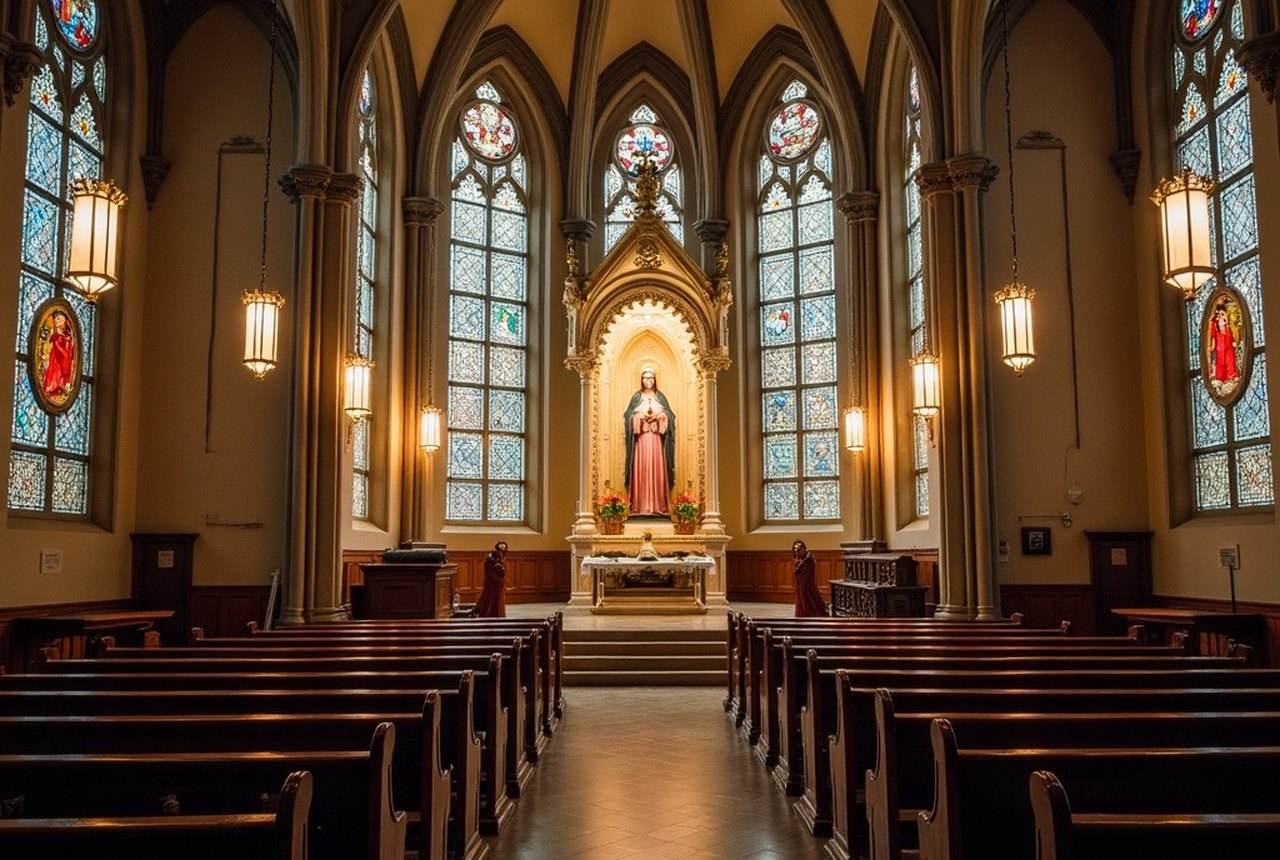
The Basilica of Our Lady of Perpetual Help, anchoring the Mission Hill neighborhood since the nineteenth century, has a longer and more layered history. Archbishop Williams invited the Redemptorists to Boston in 1869 specifically to conduct parish missions — the intensive preaching retreats at which the order excelled. A permanent church followed within two years, and a larger, more ambitious structure rose in 1878, the year the venerated image of Our Lady of Perpetual Help was formally installed. Pope Pius XII elevated the church to basilica rank on December 8, 1954 — a designation that recognizes both ceremonial dignity and historical significance within the Catholic Church. The Redemptorists remain in residence, and the basilica still draws pilgrims in numbers that would have satisfied Archbishop Williams's original intentions. The interior rewards careful attention: the proportions are generous, the devotional atmosphere genuine rather than performed, and the image itself — a Byzantine icon type, gold-ground, formalized — sits in a position of architectural honor above the main altar.
Parishes, Monasteries, and Centers
Sacred Heart Parish in East Boston was founded in 1873 to serve a neighborhood already shaped by successive waves of immigration. What distinguishes it today is the unbroken continuity of that mission: Mass is celebrated in English, Spanish, and Vietnamese, a linguistic register that maps the community's changing composition across a century and a half. The building itself reflects the parish's history of practical adaptation — less architecturally spectacular than Mission Hill, more honest about the daily work of an urban parish.
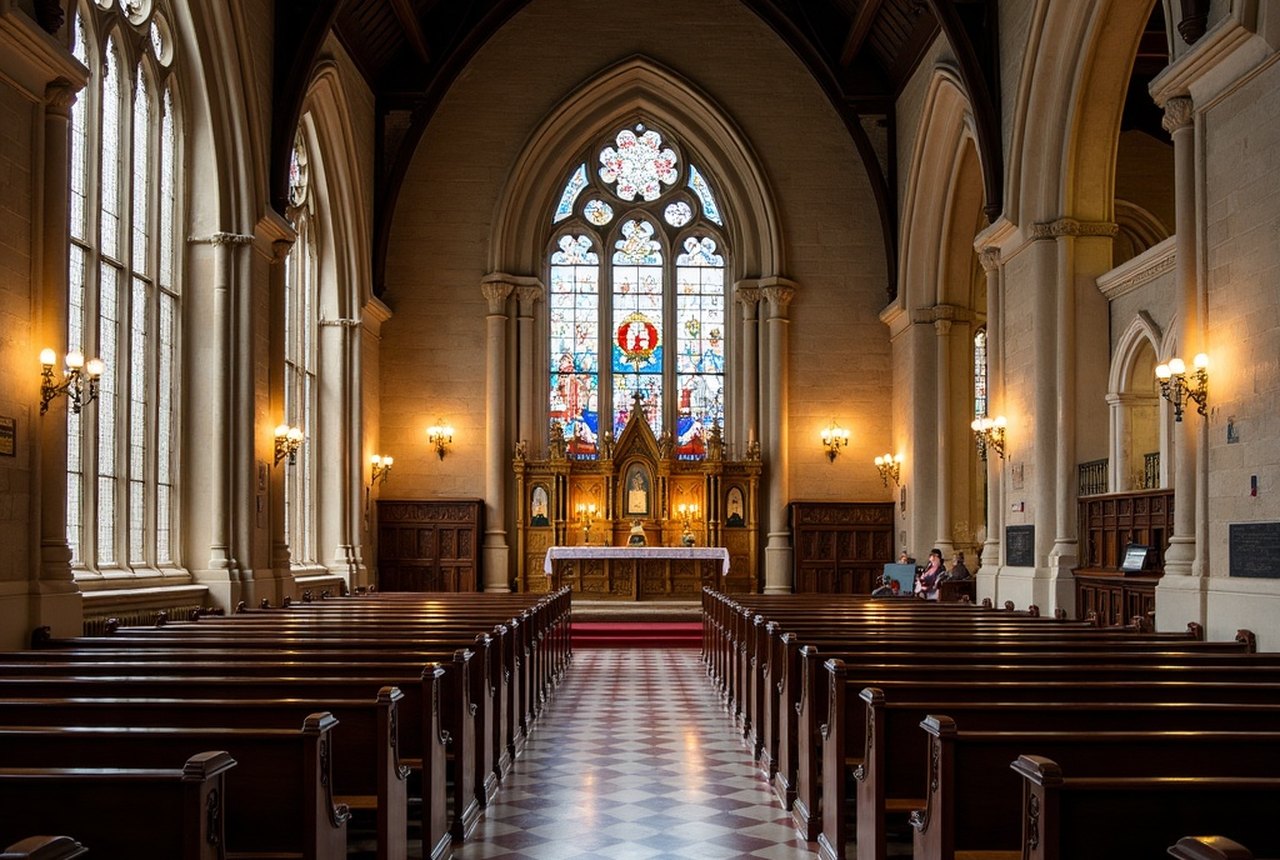
Across the Charles River in Cambridge, the Society of St. John the Evangelist occupies a monastery that offers something genuinely rare in a dense New England city: considered silence, choral prayer at regular hours, and a candlelit interior that encourages the kind of unhurried looking that good architecture deserves. The Society is Anglican in foundation, not Roman Catholic, but it belongs to any serious account of Boston's sacred architecture — and its chapel draws visitors of every background, or none, who simply want to sit quietly inside a building that takes worship seriously.
The Paulist Center, rooted in the vision of Fr. Isaac Hecker — the nineteenth-century founder who believed Catholicism and American democratic culture were natural allies rather than adversaries — operates seven days a week in downtown Boston. Programming runs from social justice work to liturgical celebration; the music leans contemporary without abandoning the weight of traditional hymnody. It remains one of the more intellectually restless corners of Boston Catholicism, faithful to Hecker's original instinct that the faith should engage its culture rather than retreat from it.
Planning a Visit
These five sites span the city geographically, from East Boston's waterfront edge to Cambridge's residential streets to Mission Hill's slope, and chronologically from the 1869 Redemptorist foundation to the mid-twentieth-century basilica designation and beyond. None requires advance booking; all are in active use. The basilica and the Paulist Center both post schedules online. The Society of St. John the Evangelist welcomes visitors to its daily offices — times are listed on its website, and arriving a few minutes early is advisable. Taken together, they chart Boston's Catholic story from the first immigrant parishes to a nationally designated shrine, and every one of them remains, in the most straightforward sense, open.
That pairing — a Catholic devotional commission executed by a Jewish artist — gives the shrine a quietly remarkable backstory that most visitors walk past without knowing
- 1869Archbishop Williams invites Redemptorists; permanent church begun
- 1878grander church completed; venerated image installed
- 1873Sacred Heart Parish, East Boston, founded
- 1954basilica status granted by Pope Pius XII
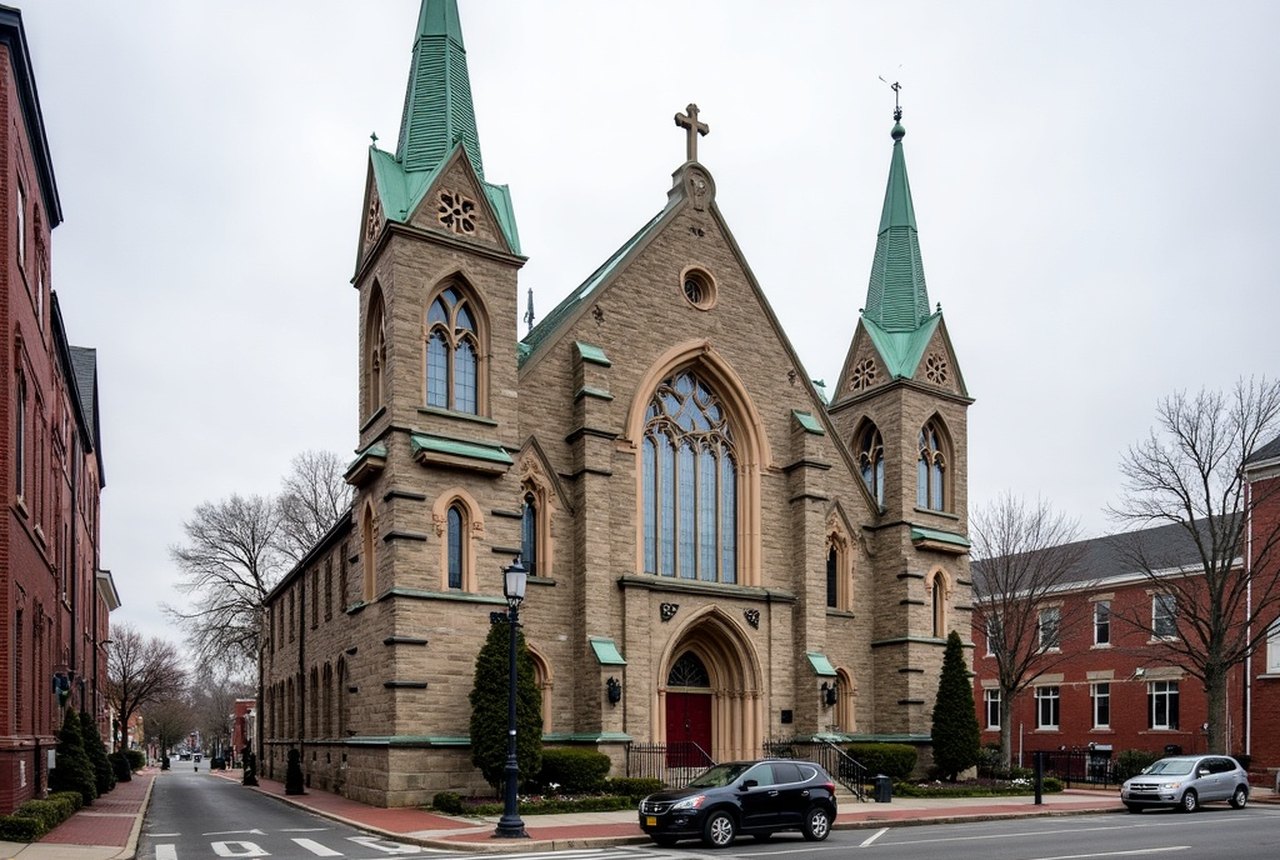
The building itself reflects the parish's history of practical adaptation — less architecturally spectacular than Mission Hill, more honest about the daily work of an urban parish