Boston and Its Neighborhoods
The city that shaped American Catholicism is the natural starting point. Boston's oldest neighborhoods hold churches that range from a Federal-era meetinghouse to monumental Gothic Revival piles, and almost every one carries the fingerprints of the communities — Irish, Italian, Polish — that built them.
Basilica and Shrine of Our Lady of Perpetual Help, Mission Hill. Founded in 1870 by the Redemptorists and elevated to basilica status in 1954, this Mission Hill landmark is celebrated for its richly painted interior and the venerated icon of Our Lady of Perpetual Help that has drawn pilgrims for over a century.
St. Stephen's Church, North End. Designed by Charles Bulfinch and completed in 1804 as a Congregational meeting house, this Federal-style church became a Catholic parish in 1862 as Irish Catholic families filled the North End. It was Rose Kennedy's home church and remains a fine example of Bulfinch's work.
St. Leonard of Port Maurice Church, North End. Established in 1873, St. Leonard's holds the distinction of being the first Italian-founded parish in New England. Its interior decoration — warm, figurative, unmistakably southern European — reflects the artistic tradition the parish's founders carried across the Atlantic from Italy.
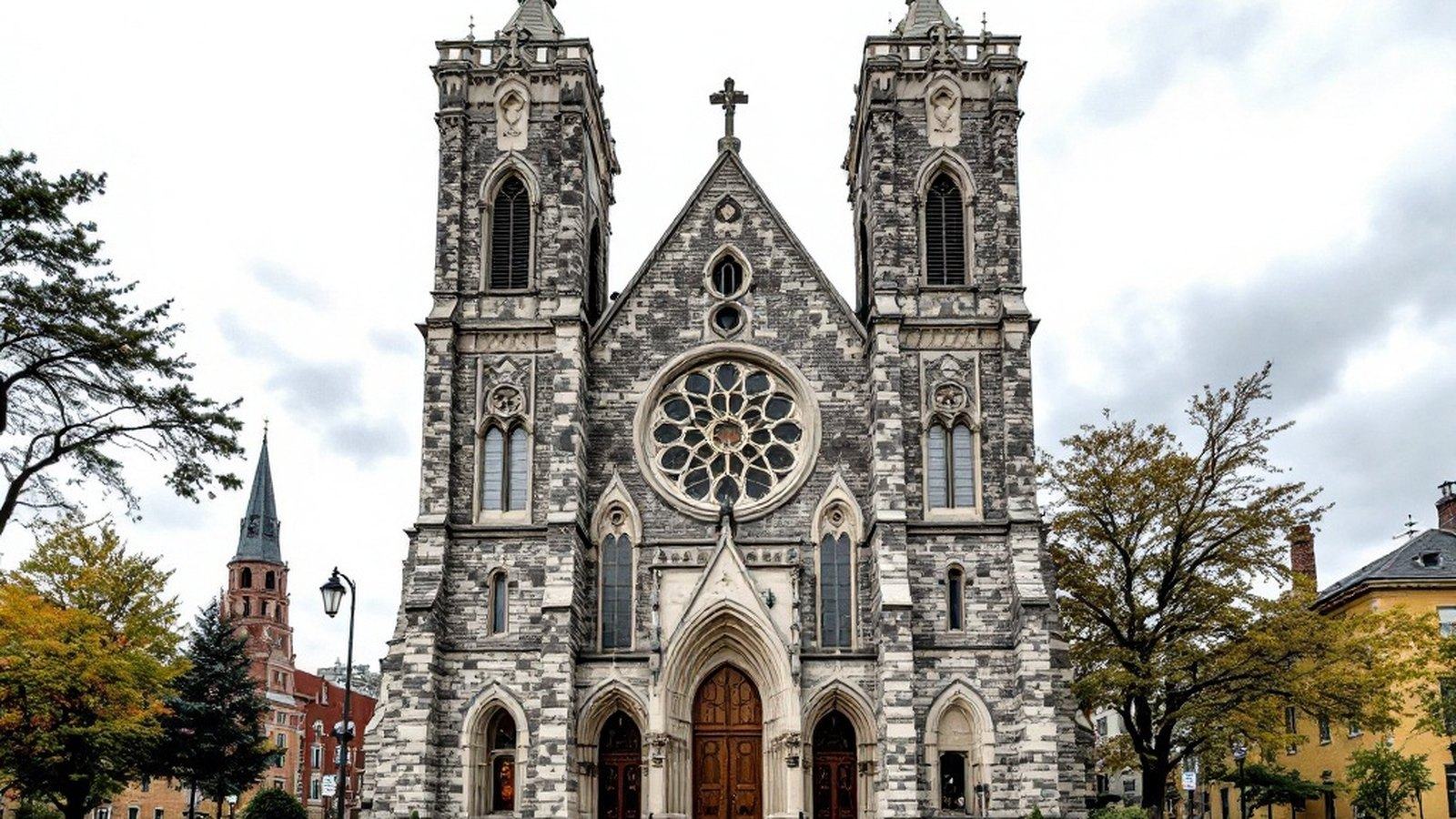
Cathedral of the Holy Cross, South End. New England's largest Catholic church, completed in 1875, is a commanding exercise in Gothic Revival stonework. Patrick Charles Keely, the prolific Irish-American church architect, designed the building, and its sheer scale — nave, soaring clerestory, clustered piers — still commands attention on Washington Street.
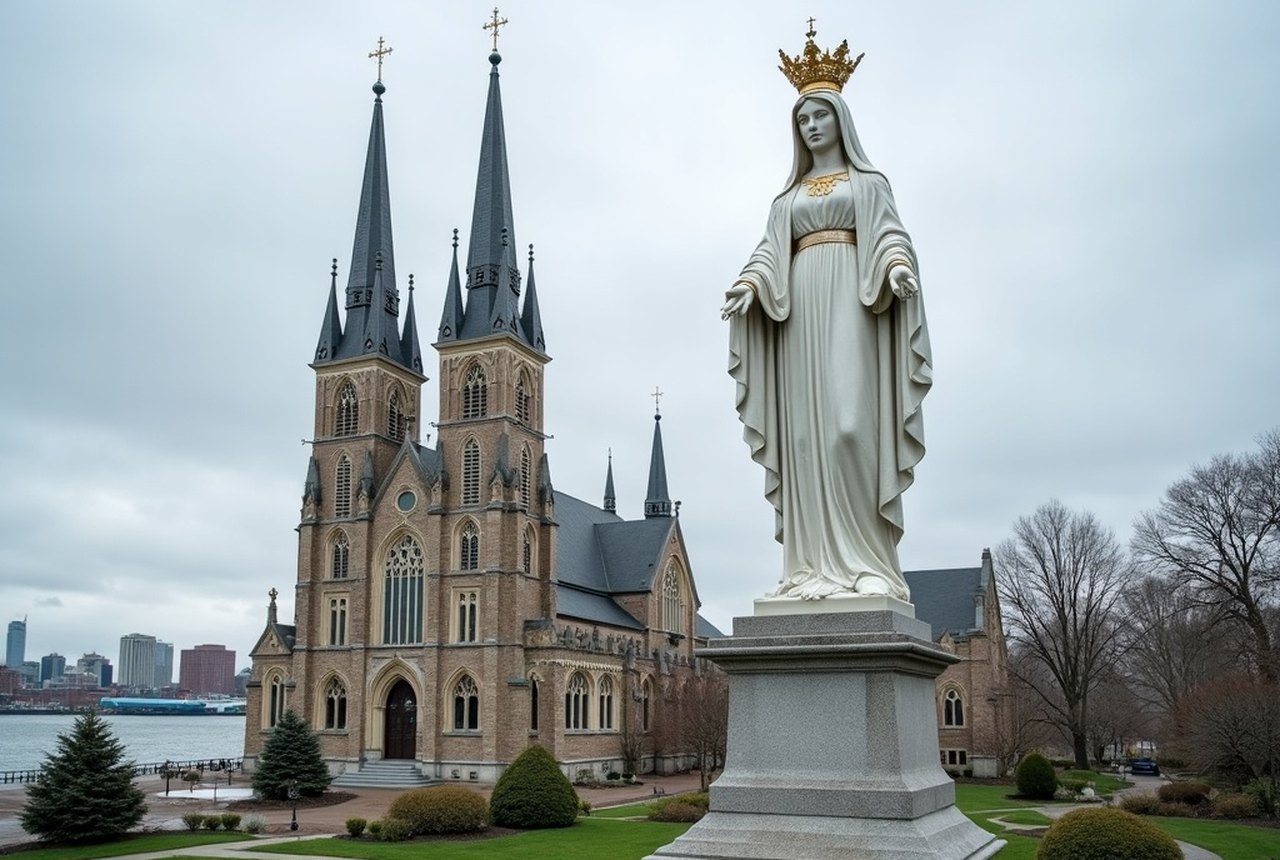
Madonna Queen Shrine, East Boston. Visible from the approach to Logan International Airport, this 35-foot statue of the Virgin Mary was erected in 1954 at Sacred Heart Parish in honor of Don Luigi Orione, founder of the Sons of Divine Providence. Its scale and harbor-facing position make it one of the most recognizable pieces of religious public art in the Boston area.
St. Anthony Shrine, Downtown Boston. Run by Franciscan friars on Arch Street, this busy downtown shrine is a centre of Catholic ministry, offering daily Mass in a convenient and prayerful setting in the heart of the city.
Shrines Across the Commonwealth
Beyond the city, Massachusetts holds a remarkable string of shrines, most established in the mid-twentieth century by religious orders responding to surging post-war Catholic devotion.
Our Lady of Fatima Shrine, Holliston. Founded in 1950 by the Xaverian Missionaries, the shrine centers on devotional imagery evoking the 1917 apparitions at Fatima, Portugal. Among its singular features is one of the world's largest rosaries — a physical installation that gives pilgrims a visceral sense of the prayer's scale.
La Salette Shrine, Attleboro. Established in 1953 on 240 acres, La Salette honors the 1846 apparition in the French Alps in which Mary reportedly appeared to two shepherd children on the mountain of La Salette. The shrine's Stations of the Cross, Holy Stairs, and well-maintained gardens draw pilgrims year-round and reward unhurried exploration.
National Shrine of the Divine Mercy, Stockbridge. Construction was completed in 1960; the site was formally declared a National Shrine in 1996. Set in the Berkshire hills, it features a white Carrara marble statue of Mary and offers daily Mass and the Sacrament of Reconciliation — a full pilgrimage experience anchored in one of the state's most scenic landscapes.
Our Lady of Loreto Shrine, Worcester. Modeled on the Holy House in Loreto, Italy — the structure traditionally associated with Mary's home in Nazareth — this shrine offers a quietly contemplative setting that combines Marian devotion with peaceful natural surroundings, a marked contrast to the larger, more visited sites.
Taken together, these ten sites trace well over a century of Catholic life in Massachusetts — from a Bulfinch-designed North End meetinghouse that became a Catholic parish in 1862 to a nationally recognized Berkshire shrine consecrated at mid-century. Whether you come for the architecture, the history, or the landscape, each repays a visit entirely on its own terms.
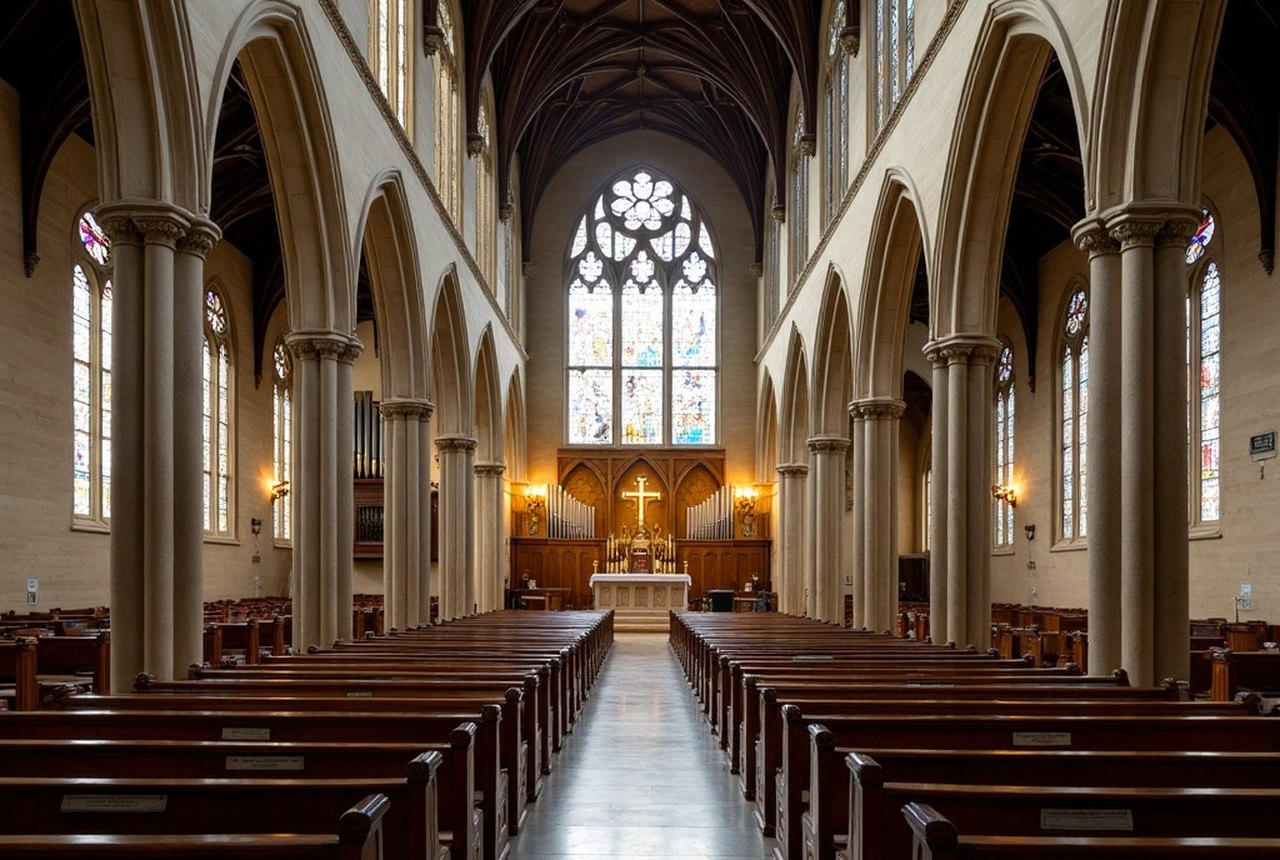
Whatever its political legend, the building itself is a fine early-American interior worth visiting on purely architectural grounds
- 1804St. Stephen's Church completed to Charles Bulfinch's design
- 1862St. Stephen's Church becomes a Catholic parish
- 1870Basilica of Our Lady of Perpetual Help founded
- 1873St. Leonard's (first Italian parish in New England) established
- 1875Cathedral of the Holy Cross completed
- 1950Our Lady of Fatima Shrine founded, Holliston
- 1953La Salette Shrine established, Attleboro
- 1954Madonna Queen Shrine statue erected; OLPH elevated to basilica
- 1960National Shrine of the Divine Mercy construction completed
- 1996National Shrine of the Divine Mercy formally declared a National Shrine
Beyond the city, Massachusetts holds a remarkable string of shrines, most established in the mid-twentieth century by religious orders responding to surging post-war Catholic devotion