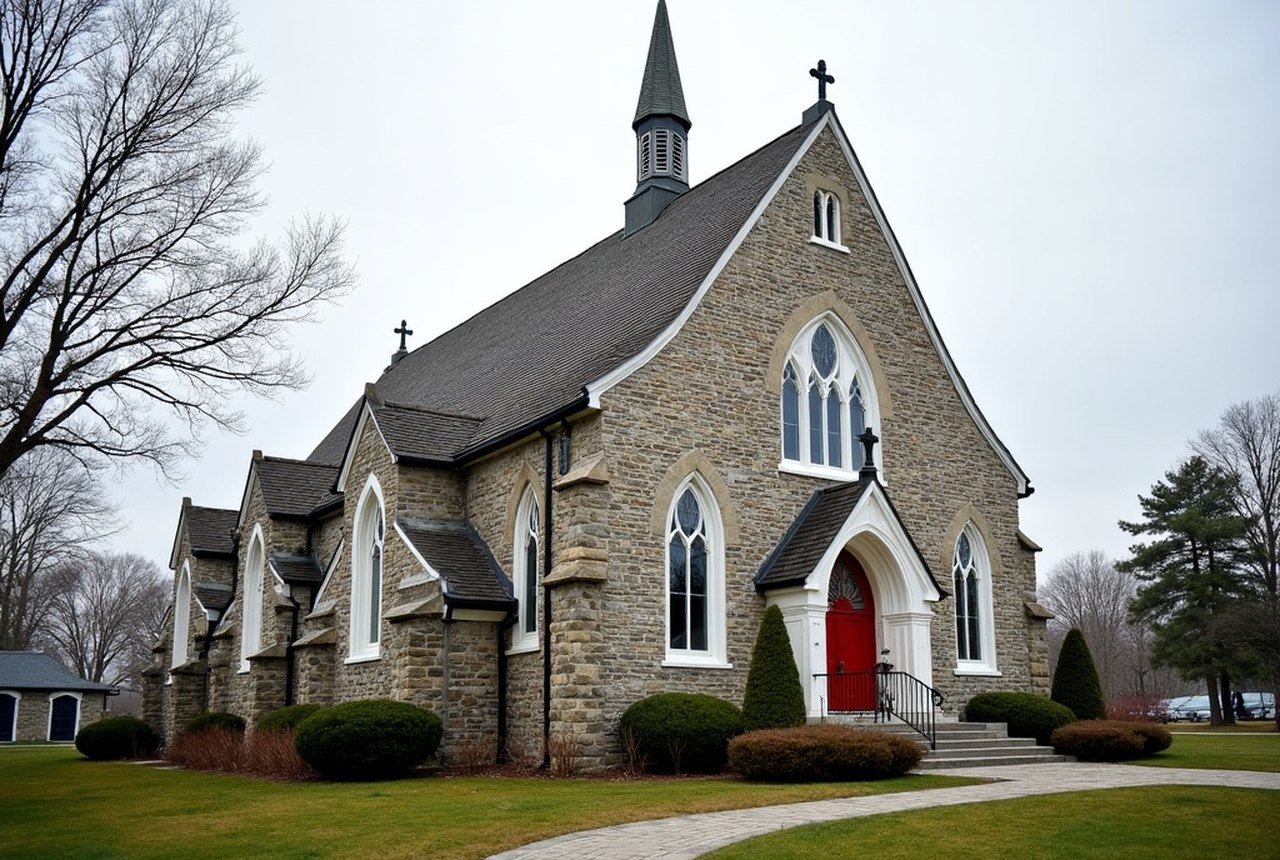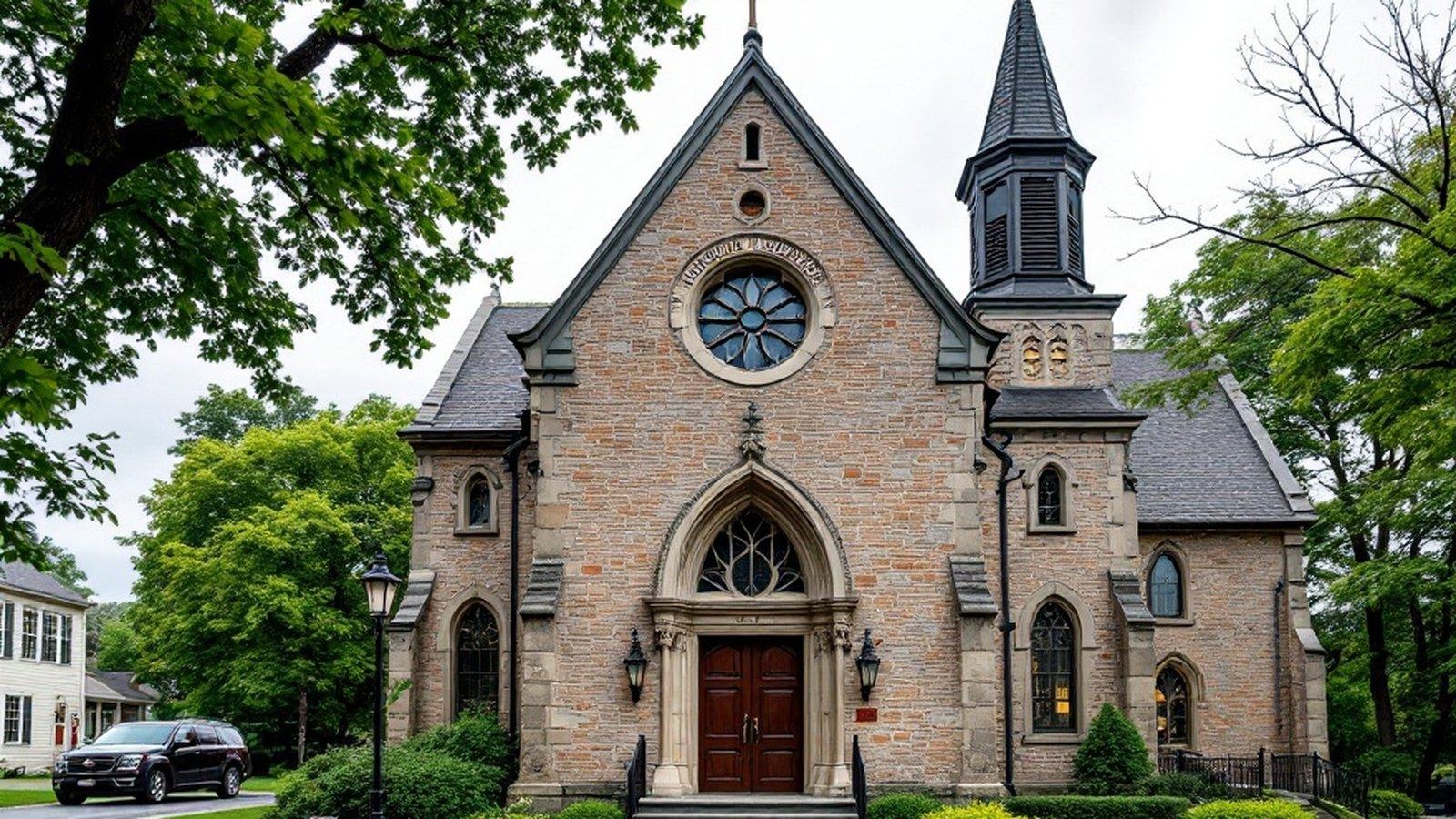
Modest and maritime: Catholic architecture at Massachusetts's coastal edge.
Where Faith Meets the Waterline
The South Coast and Cape Cod never produced the grand civic Catholicism of Boston's South End or the immigrant-quarter ambition of Lawrence's mill district. What they offer instead is something quieter and, in its own way, more revealing: a string of working parish churches shaped by fishing economies, Portuguese and Cape Verdean communities, and the particular humility of towns that looked outward to the sea rather than upward to a bishop's palace.
New Bedford is the indispensable stop. The city's Catholic patrimony grew directly out of the whaling industry, and the churches that survive here bear witness to one of the most distinctive immigrant Catholic populations in New England. Portuguese families — many from the Azores and Madeira — built parishes that combined Roman Catholic devotional practice with a warmth of ornament unusual in this corner of New England. Plaster saints in vivid polychrome, devotional candles in banks of red glass, tiled images of Our Lady of Fátima: the interiors feel more Iberian than Irish, and deliberately so. That cultural specificity is precisely what gives them their architectural and historical character.
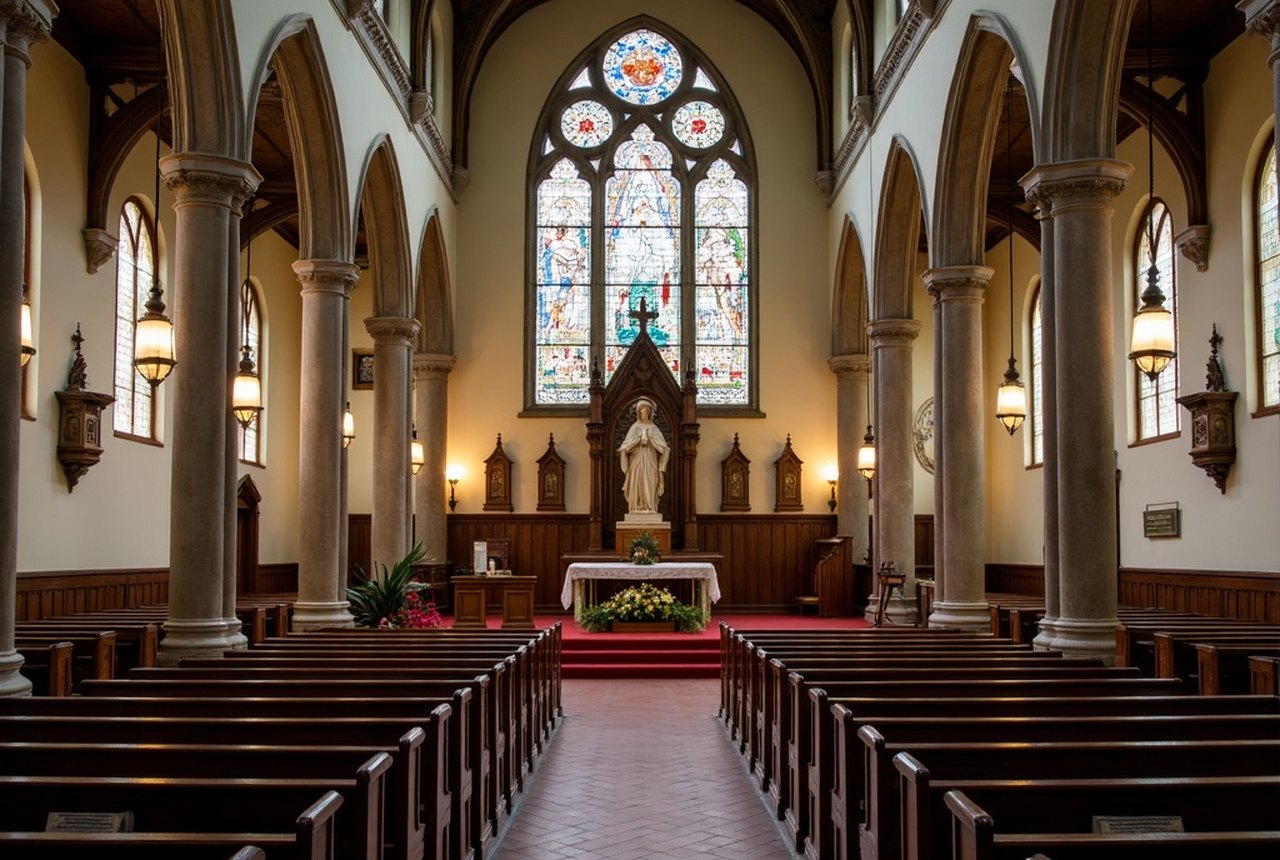
Cape Cod's parish churches follow a different logic. Here the pressures were seasonal congregations, modest budgets, and the visual competition of the Cape's famous Congregationalist meetinghouses. Catholic builders often responded with restrained Gothic Revival forms — lancet windows, simple fieldstone or clapboard exteriors — that sit comfortably in the vernacular landscape without dominating it. The result is a collection of churches that rewards the heritage traveller willing to slow down and look: proportions carefully considered, local materials honestly used, interiors where good stained glass sometimes arrives as a genuine surprise.
The Cape Verdean parishes of the South Coast deserve special attention. These communities — often overlooked in conventional surveys of Massachusetts Catholic architecture — produced churches where African Catholic devotional traditions blended with the forms inherited from Portuguese missionaries. The visual culture inside these buildings is unlike anything elsewhere in the state.
None of this is monumental architecture. There is no Richardson here, no Keely nave soaring sixty feet above marble floors. But the South Coast and Cape Cod reward exactly the attention that the famous set pieces do not require: a willingness to read a modest building carefully, to understand that a small lancet window chosen by a fishing family in 1890 is its own kind of document, worth the detour.
The South Coast and Cape Cod never produced the grand civic Catholicism of Boston's South End or the immigrant-quarter ambition of Lawrence's mill district