The Lord's Prayer as a Domestic Manual
At a general audience devoted to family life, Pope Francis grounded his teaching in one of the most familiar lines in Christian prayer: "Forgive us our trespasses, as we forgive those who trespass against us." From that single clause he drew a quietly radical argument — that the rhythms of ordinary household life are not a prelude to moral formation but the thing itself. The family, he contended, is not a backdrop to faith. It is its first school.
The argument is deceptively simple. Living it is not.
Five Principles for the Household
Three words carry the weight of daily life together. Please, sorry, and thank you — request, repair, and gratitude — do more structural work in a household than most people acknowledge. Francis returned to these three terms as the foundation of honest communication: tools that keep small grievances from hardening, over months and years, into resentments that no longer have a traceable origin. The discipline of using them consistently, particularly sorry, is more demanding than it sounds.
Play is serious business. Children need undivided presence, not mere proximity. Francis made a pointed distinction between being physically available and being genuinely attentive — and argued that setting aside work to play alongside a child costs relatively little while returning something that is genuinely difficult to put a name to. The quality of attention matters as much as the quantity of time.
Shared prayer builds shared identity. Praying together, Francis suggested, gradually shifts a family's center of gravity. Private wants and individual anxieties do not disappear, but regular shared prayer tends to widen a household's sense of what it actually needs — moving attention, however incrementally, from inward preoccupation toward something more generous and outward-facing. The practice does not require eloquence; it requires consistency.
Imperfection is the baseline, not the exception. This principle has a quietly liberating logic. Accepting one's own flaws honestly — without minimizing them — makes it correspondingly easier to extend that same acceptance to the people sharing the same roof. A household in which no one pretends to be further along than they are is one in which genuine forgiveness becomes possible, because forgiveness is not being asked to do the work of denial.
Elders carry irreplaceable memory. Grandparents transmit something that cannot be filed, scanned, or retrieved from any record: a lived sense of proportion — what endures, what passes, what turned out to matter and what did not. Francis argued for keeping elders close not merely as a matter of filial duty but as a form of inheritance. The stories they carry, and the patience with which they tend to carry them, offer younger generations a longer view of time than they can generate on their own.
The Unglamorous Work
Taken together, the five principles amount to one sustained argument. The daily, unglamorous labor of family life — apologizing before pride has fully settled in, listening when attention is elsewhere, showing up for bedtime or the difficult conversation even when tired — is itself a form of moral formation. It is available to any household willing to practice it, regardless of size or shape or particular history.
Francis was not describing an idealized family exempt from friction. He was describing exactly the kind of family that actually exists: imperfect, recurring in its failures, capable nonetheless of repair. The Lord's Prayer line he began with makes the same assumption — it presupposes trespass. What it offers in return is the possibility, and the obligation, of forgiveness.
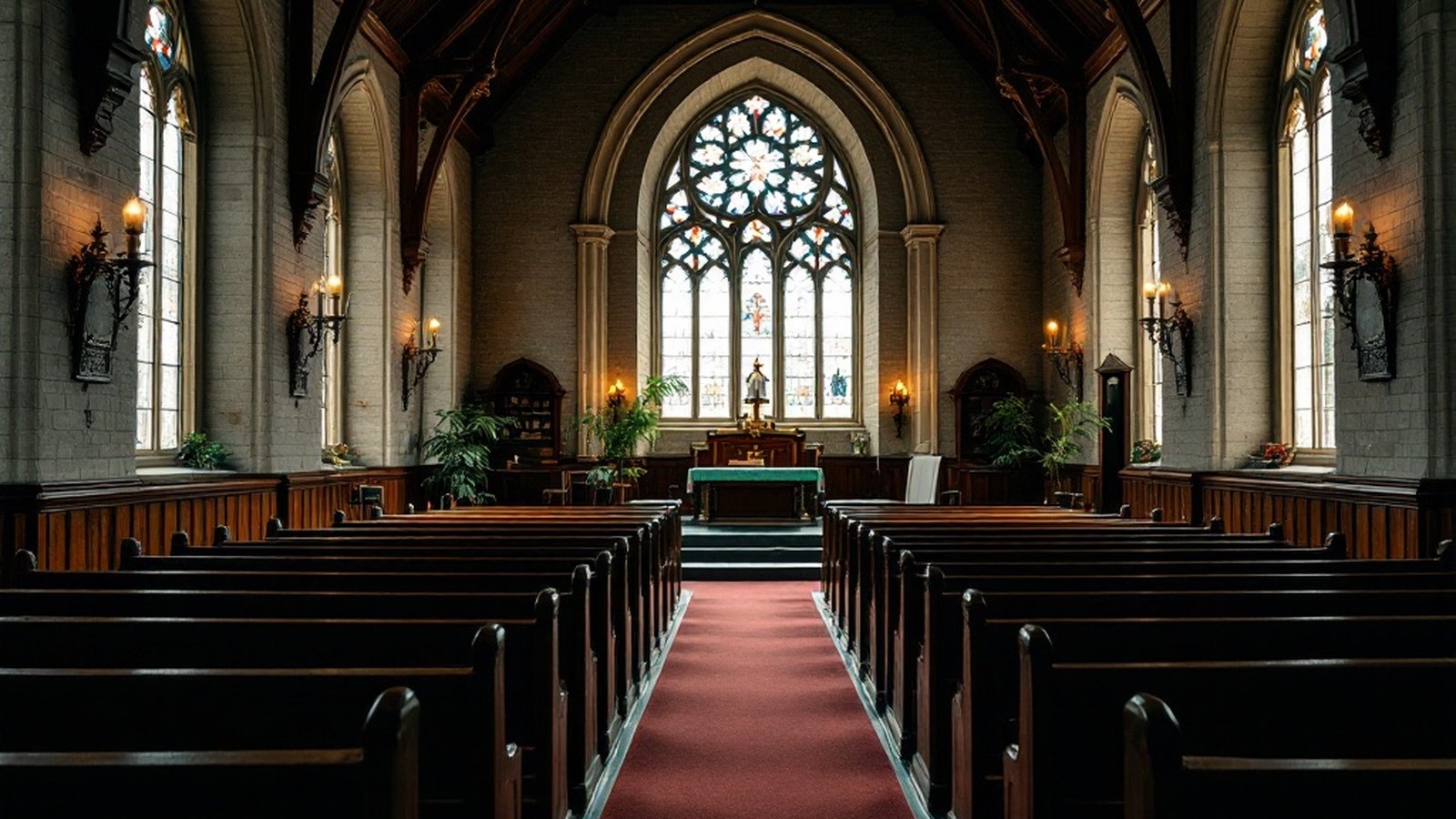
For readers of this guide who visit Massachusetts parishes steeped in immigrant histories — communities that built their churches precisely because they understood the family to be the first unit of faith — the resonance is not abstract. The chapels and parish halls that anchor those neighborhoods were, generation after generation, extensions of the same domestic logic: small communities learning, imperfectly, to forgive and to stay.
Please, sorry, and thank you — request, repair, and gratitude — do more structural work in a household than most people acknowledge
The Lord's Prayer line he began with makes the same assumption — it presupposes trespass