Three Buildings Worth a Detour
Massachusetts rewards the architecture hunter at every scale — soaring downtown landmarks and quiet neighborhood parishes alike. Three buildings stand out for their craftsmanship, historical weight, and sheer visual ambition.
Trinity Church, Boston
Trinity Church anchors Copley Square and is as close to an American architectural consensus as the nineteenth century produced. H. H. Richardson's design, consecrated in 1877, established the American Romanesque as a serious idiom: massive walls of Dedham granite and Longmeadow brownstone, broad round arches, and a crossing tower that anchors the Boston skyline even now, when it competes with glass towers reflected in the Hancock building beside it. The American Institute of Architects has ranked it first on its list of the ten most significant buildings in the United States — a distinction that has endured through multiple surveys.
Inside, the sense of scale shifts unexpectedly to something almost intimate. Colossal figural murals cover the walls, wood carving of the highest order runs through the woodwork, and John La Farge's luminous stained glass rewards close, unhurried attention. La Farge developed new techniques in opalescent glass specifically for this commission, and the results — particularly in the west window — still read as genuinely experimental rather than merely decorative. Richardson conceived the interior as a unified work of art, and La Farge, along with a team of collaborators, delivered on that ambition.
Trinity is an Episcopal church rather than a Catholic one, but no serious survey of Massachusetts sacred architecture can omit it. Its influence on every substantial church building that followed in the state — Catholic, Protestant, and otherwise — is simply too large.
Cathedral of the Holy Cross, Boston
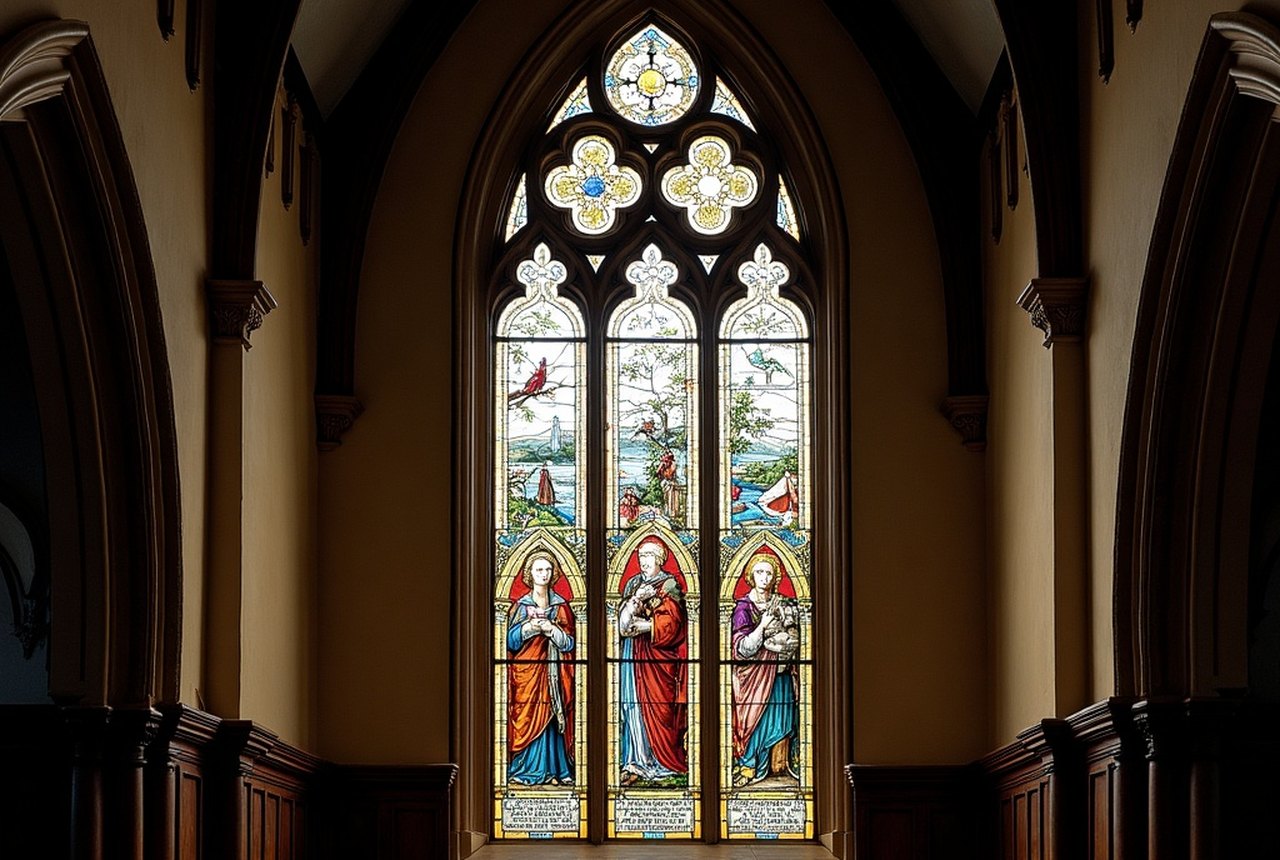
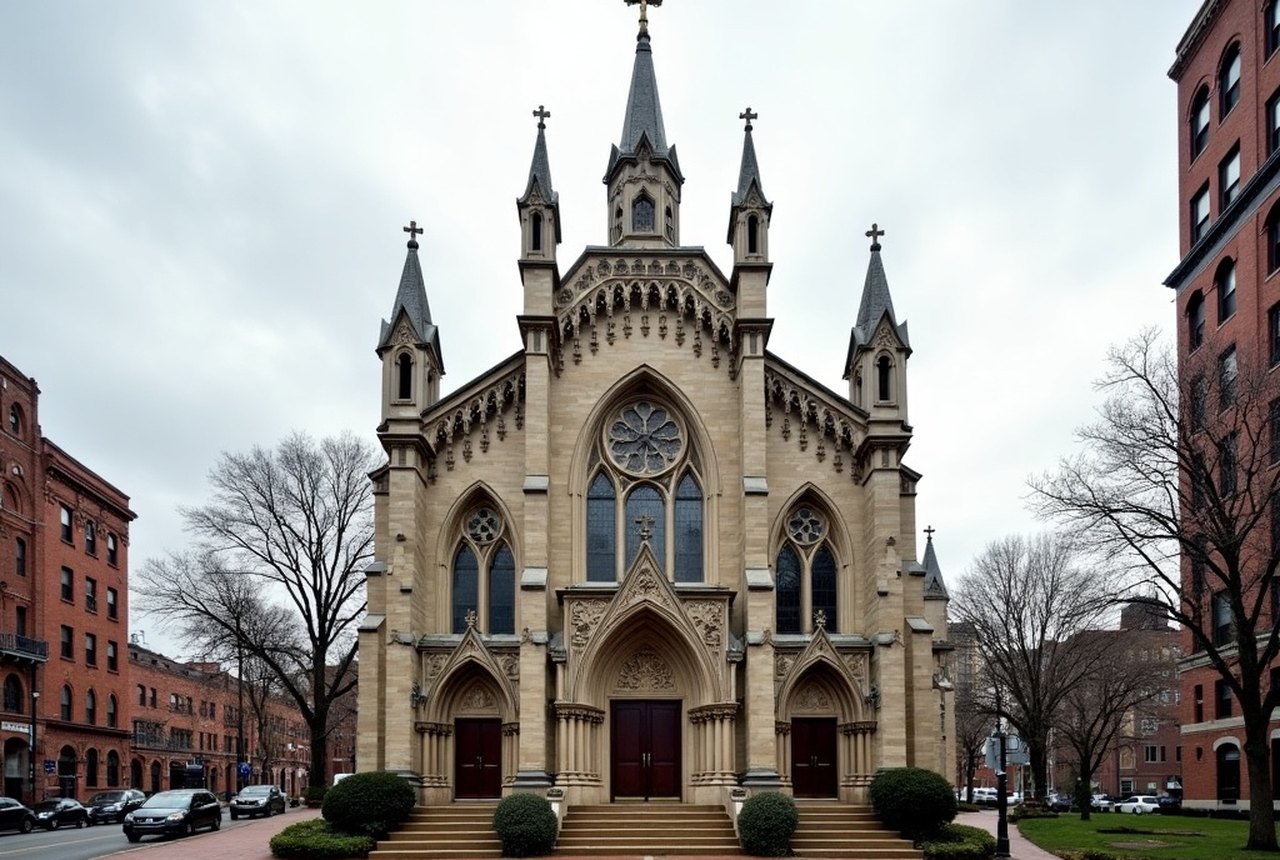
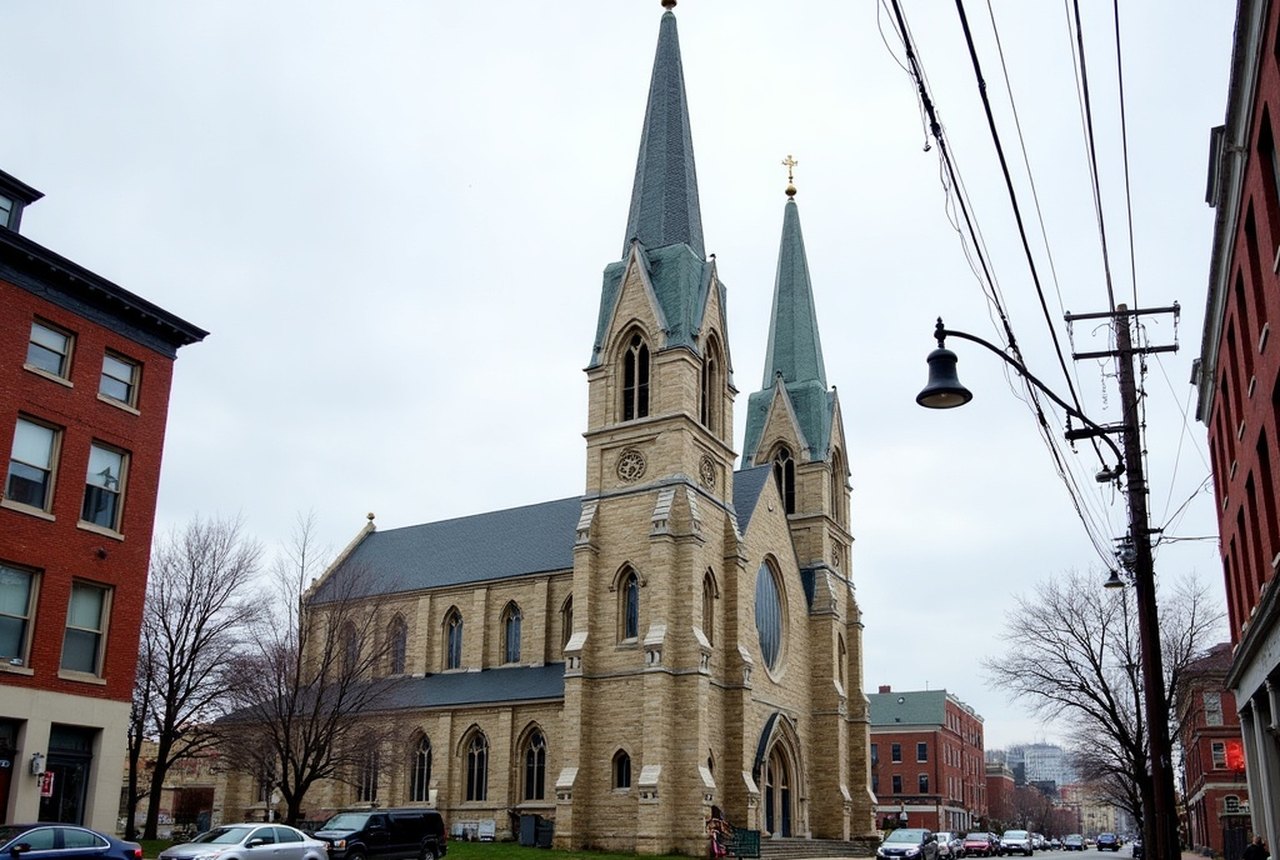
In the South End, the Cathedral of the Holy Cross is the largest Catholic church in New England, and its proportions stop you at the threshold. Completed in 1875 to a design by Patrick Charles Keely — the most prolific Catholic church architect in nineteenth-century America — its Gothic Revival silhouette rises from Washington Street with pointed arches, clustered piers, and tall lancet windows filled with richly colored glass drawn directly from the great French cathedral tradition.
Keely designed hundreds of Catholic churches across the country, but Holy Cross was among his most ambitious commissions. The interior sustains its atmosphere on an ordinary weekday: antique pews, cool stone, and the particular quality of light that only deep-set lancet windows produce. As the mother church of the Roman Catholic Archdiocese of Boston, it carries institutional weight as well as architectural distinction. The two are rarely separated here.
St. Anthony of Padua Church, New Bedford
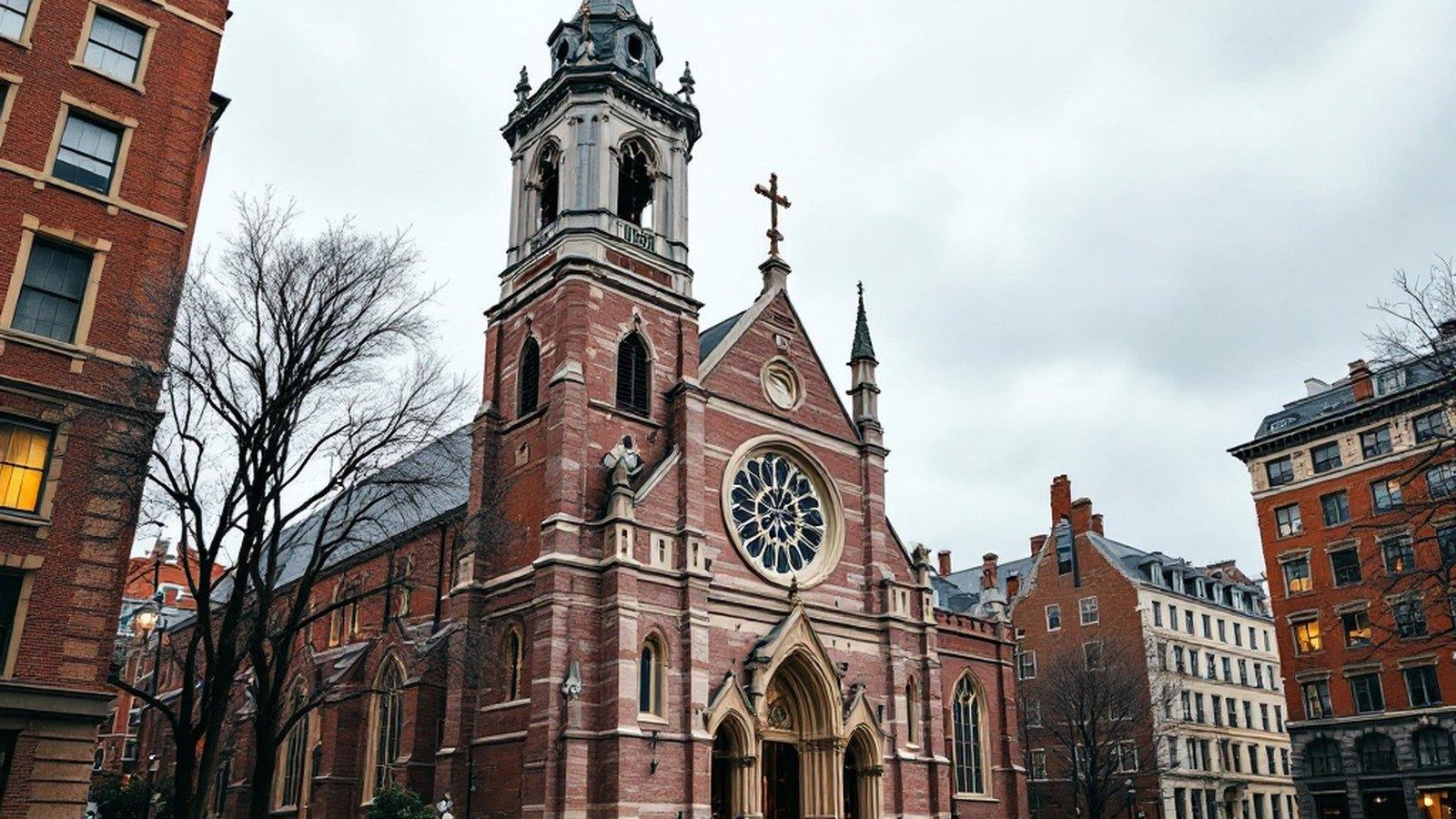
St. Anthony of Padua in New Bedford consistently surprises visitors who arrive expecting a modest parish church. Founded in 1895 to serve the city's French Canadian Catholic community, it was built on a frame of red sandstone quarried in East Longmeadow — the same warm-toned stone familiar from Springfield and the Connecticut River Valley. The spire rises to 256 feet, placing it among the tallest church spires in New England.
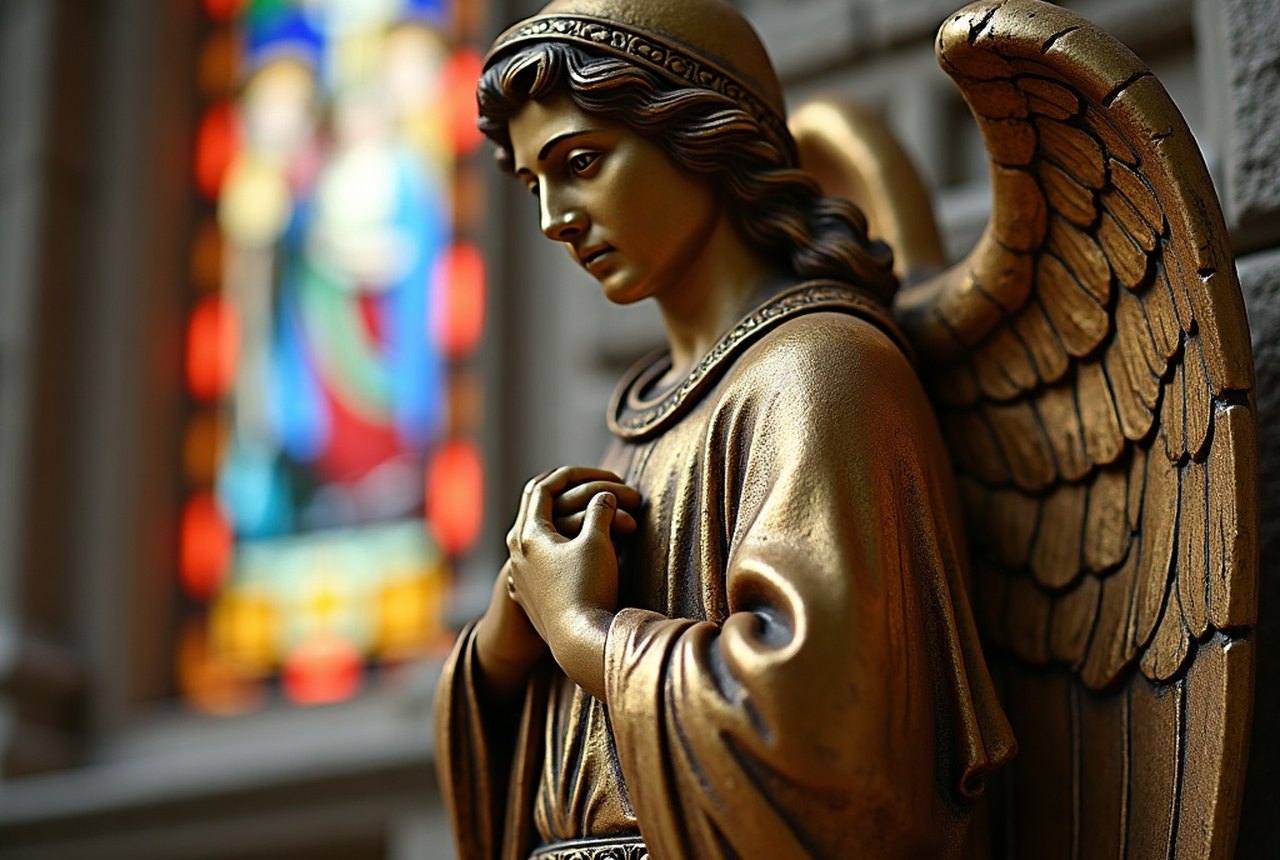
The interior is where the ambition fully declares itself. Sculptor John Castagnoli populated the nave and transepts with thirty-two angel figures, each standing twenty feet tall — an unusually concentrated program of figurative sculpture for a regional parish. Ceiling-height stained glass completes the decorative scheme, ensuring that no surface is left unaddressed. The effect is less modest parish church than compressed cathedral, all of it funded by a working-class immigrant congregation in a post-whaling city navigating its own uncertain transition.
A Dense, Varied Record
Massachusetts preserves one of the densest and most varied records of American ecclesiastical architecture in the country. The three buildings above span Romanesque and Gothic Revival, Episcopal and Catholic patronage, immigrant ambition and institutional confidence — all within an hour of one another. They share, whatever their differences in style or denomination, a conviction that a sacred building should stake a serious claim on its city. In Massachusetts, that conviction rarely went unfulfilled.
Massachusetts rewards the architecture hunter at every scale — soaring downtown landmarks and quiet neighborhood parishes alike
- 1875Cathedral of the Holy Cross completed, Keely's Gothic Revival design
- 1877Trinity Church consecrated, Richardson's American Romanesque landmark
- 1895St. Anthony of Padua founded in New Bedford; spire rises to 256 feet
Massachusetts preserves one of the densest and most varied records of American ecclesiastical architecture in the country